nearly a thousand arches to solve a water problem
The Mosteiro de Santa Clara was founded in 1318 right on the banks of the river Ave, and yet never had proper drinking water despite that. The river water wasn't usable, and for nearly four centuries the supply was managed by a water wheel. The first attempt at an aqueduct, ordered in the late 1620s by the abbess D. Maria de Meneses, failed: an error in calculating the gradient, works abandoned, ruins. Only in 1705 did another abbess, D. Bárbara Micaela de Ataíde, restart the project, and the work was completed on 20 October 1714. Nearly four centuries after the monastery was founded, the convent finally had water.
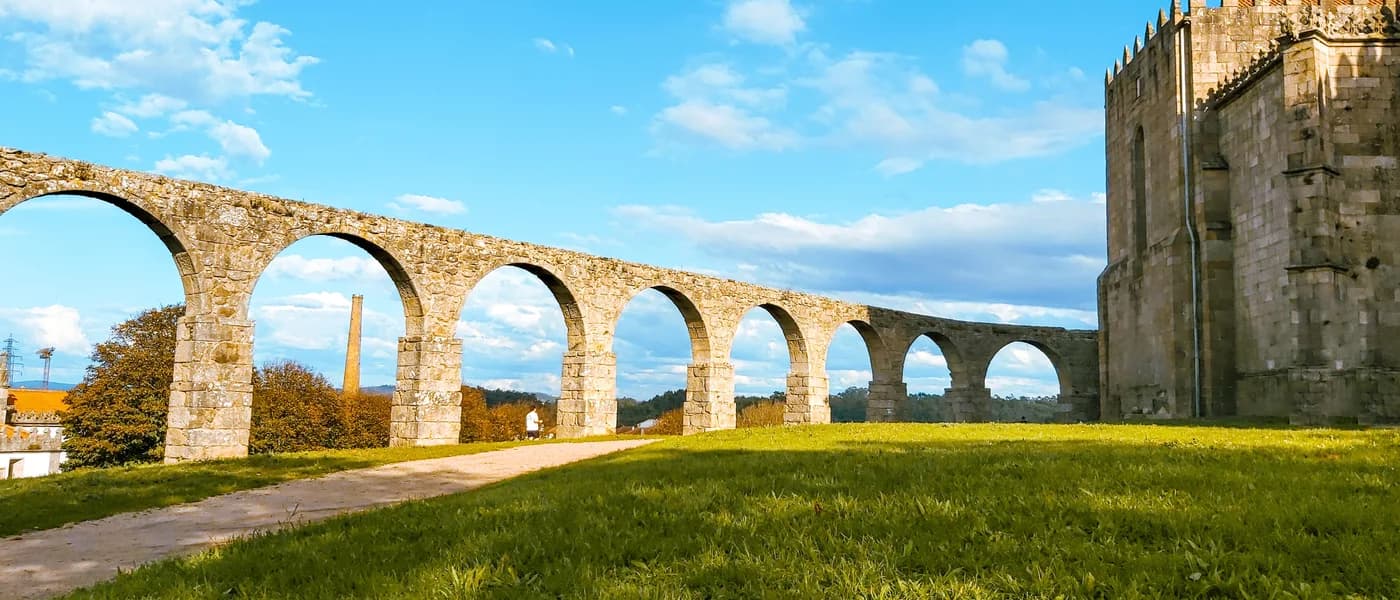
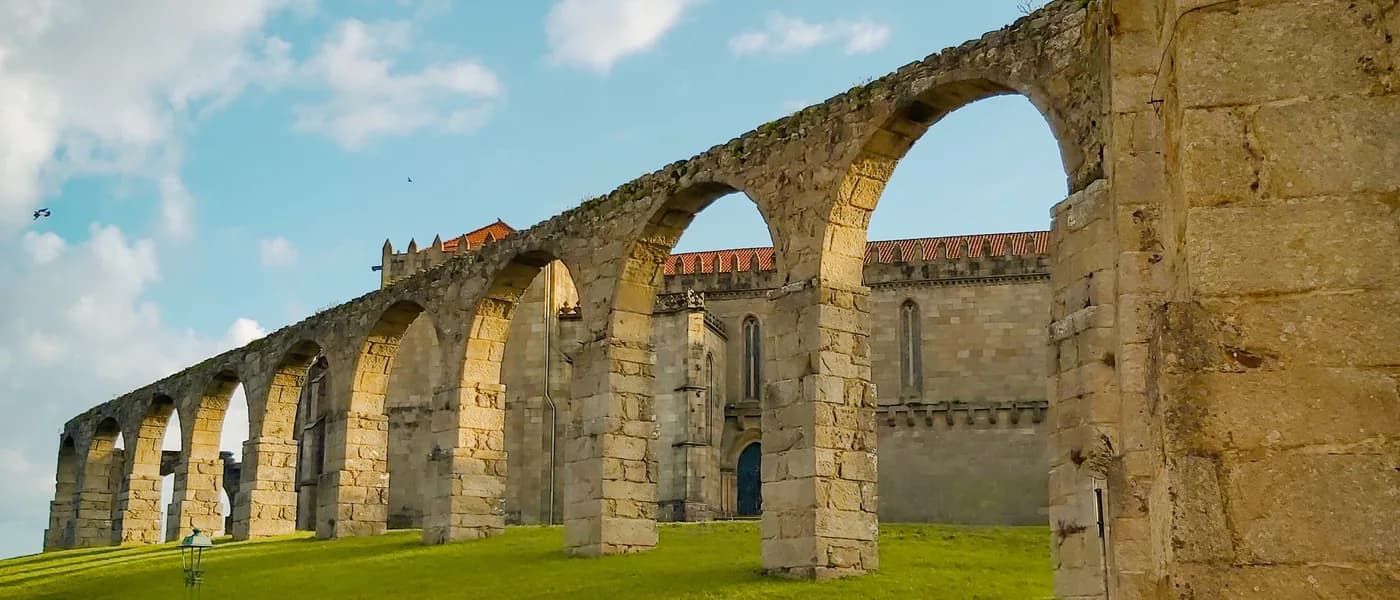
The scale of the solution is what makes the aqueduct special. The water came from a spring at Terroso, in Póvoa de Varzim, and travelled several kilometres from there to Vila do Conde. The initial section is underground as far as Beiriz, and from that point the visible structure begins: a line of round arches stretching across the landscape to the monastery. Local tradition speaks of 999 arches (a symbolic and probably fantastical number), but serious studies point to a total of between 907 and a thousand, depending on how the registers are counted. Either way, it's one of the longest aqueduct structures in the country, and the only one in the north built at this scale.
The best-preserved section is in the final arches near the monastery, on Rua Dom Nuno Álvares Pereira. There you can walk alongside the structure, watch the arches progressively lower towards their final destination, and understand the scale. Other sections are scattered along the route, some integrated into private properties, others in newer urban areas that have grown up around them. There's no unified walking circuit from start to finish, but there are several stopping points where the view is clear.
The patron saint of the aqueduct is Santo António, and at the original spring in Terroso there's a niche with an image of the saint, placed there on the completion of the work in 1714. It pairs well with a visit to the Mosteiro de Santa Clara (right next to the final section) and with the Vila do Conde waterfront, with the historic pencil factory, the beach, and the old town centre.
what you'll find
- 18th-century aqueduct between Terroso (Póvoa de Varzim) and the Mosteiro de Santa Clara
- between 907 and a thousand round arches along the visible route
- final section on Rua Dom Nuno Álvares Pereira, walkable on foot
- project resumed in 1705 and completed in 1714, after an earlier failed attempt
- patron saint Santo António, with original image at the Terroso spring