the port that built the caravels, now telling its own story
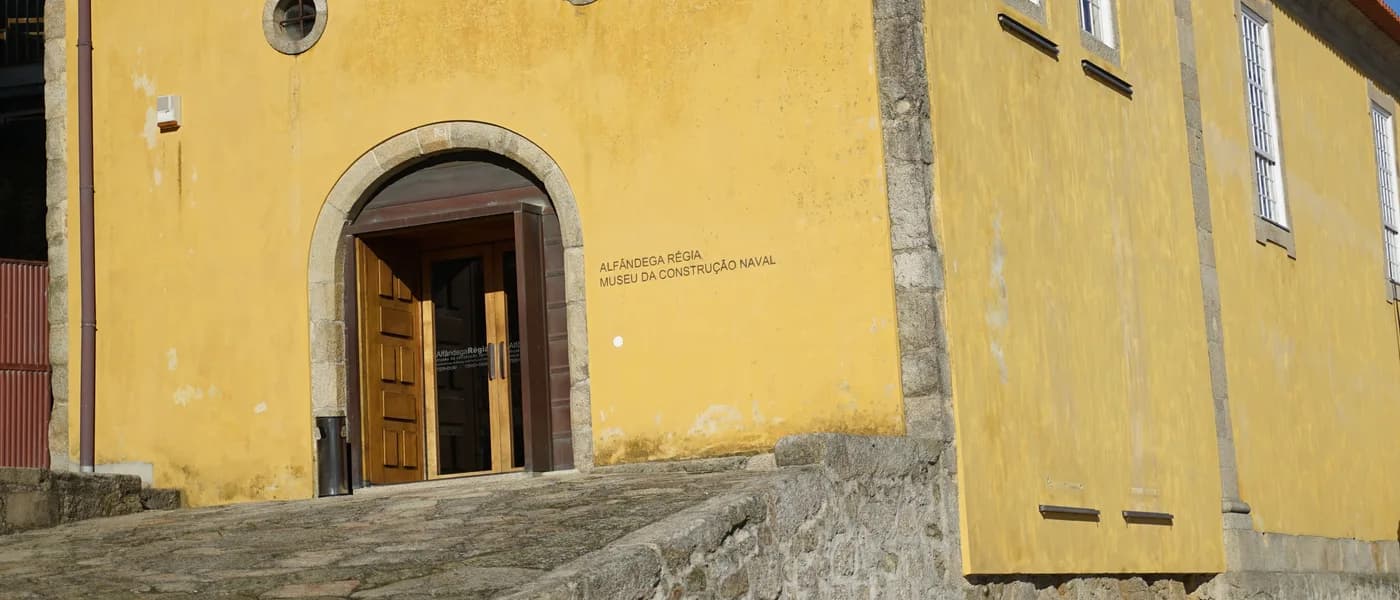
The Alfândega Régia de Vila do Conde was created by D. João II by charter on 27 February 1487. It was the height of Portuguese maritime trade, and the port of Vila do Conde was one of the busiest in the kingdom, with shipyards building the naus and caravels that would set sail for India, Africa and Brazil. The building, in the riverside area by the river Ave, was extended repeatedly during the eighteenth century to meet growing traffic. In 2001 it opened as a municipal museum under the name Alfândega Régia, Museu de Construção Naval, part of the Museu de Vila do Conde network.
The permanent exhibition is organised around three strands that weave together the original building's history and the memory of Vila do Conde's maritime activity. The first is Portuguese navigation, with a specific focus on the routes that had their origin or destination in Vila do Conde in the fifteenth and sixteenth centuries. The second is the actual workings of the Alfândega Régia: how goods were cleared through customs, who the officials were, what products circulated, what taxes were levied. The third is shipbuilding, covering the types of vessels built in local yards (naus, caravels, fishing boats) and the traditional techniques of wooden naval carpentry. The exhibition was recently renewed with new technologies, and there are now digital circuits (urban and navigational) that let you explore sixteenth-century Vila do Conde from reorganised rooms.
The complement that makes the visit worth more than the building alone is the Nau Quinhentista. It has been permanently moored on the river Ave, a few metres from the museum, since 2007. It's not an original sixteenth-century vessel: it's a full replica, designed by Admiral Rogério d'Oliveira from rigorous historical research, recovering the ancestral knowledge of local carpenters and caulkers. It's a high-sided round ship. Inside you walk the deck, the hold, the cabins, the cargo storage areas, and see navigation instruments, cartography, artillery, and a reproduction of the ship's pharmacy. It's one of the few ways in Portugal to understand, at full scale, what it was like to be on board a nau bound for India in 1500.
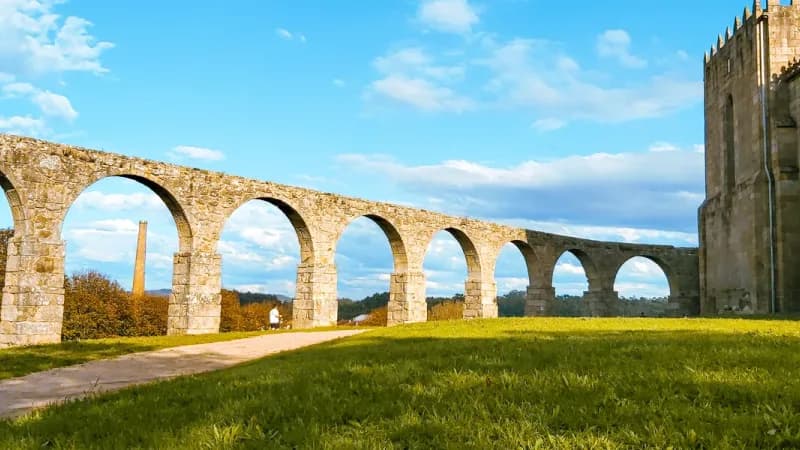
On the same premises, CEDOPORMAR, the Centro de Documentação dos Portos Marítimos Quinhentistas, operates as a specialised extension of the Arquivo Municipal de Vila do Conde, focused on research into Portuguese maritime towns of the expansion period. For researchers and curious visitors with a deeper interest, this is where to access primary documentation. The combined visit (museum plus ship) takes between one and a half and two hours, and pairs well with the rest of Vila do Conde's riverside circuit, with the Mosteiro de Santa Clara opposite, the Aqueduto de Santa Clara ending just nearby, and the historical city centre.
the full picture
- royal customs house created by D. João II in 1487, at the height of Portuguese maritime trade
- museum opened in 2001, with recently renewed exhibition
- three exhibition strands: Portuguese navigation, customs house workings, shipbuilding
- full replica of a Nau Quinhentista moored on the river Ave since 2007, open to visitors inside
- CEDOPORMAR on the same premises, with documentation on fifteenth-century maritime ports