where the douro barely let anyone through
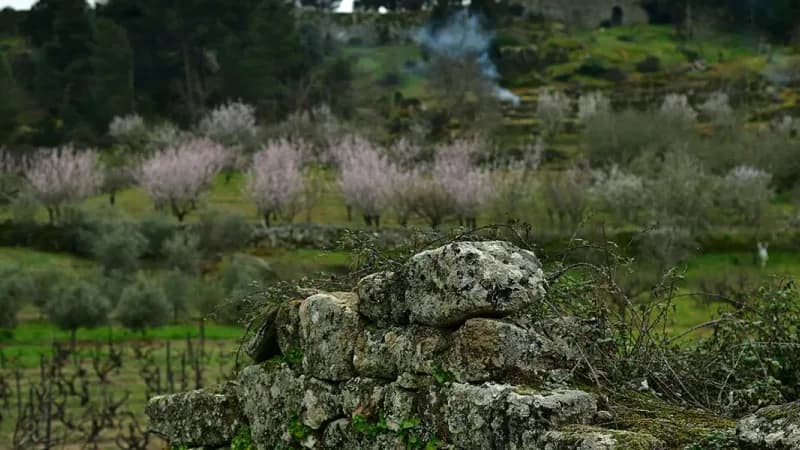
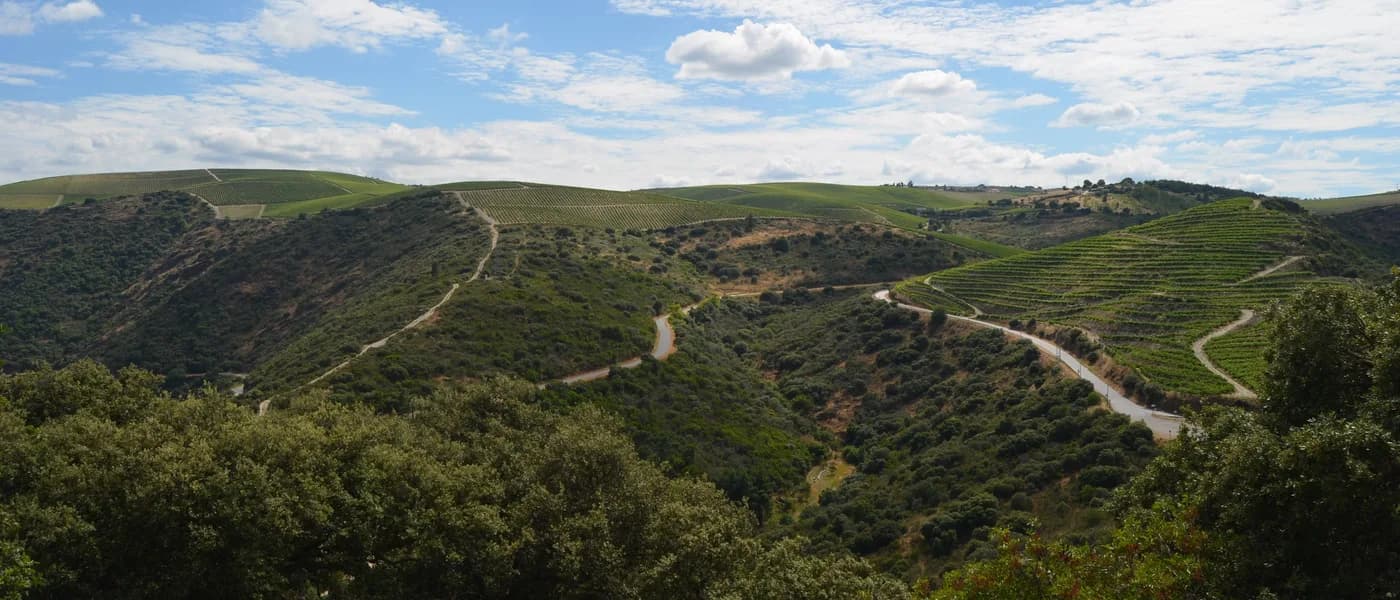
There's a point on Monte do Ermo, at around 493 metres, where the river seems to fold back on itself down below. The slopes drop sharply. The vineyard terraces cling to the rock as best they can. And you realise you're looking at one of the landscapes that earned the Alto Douro Vinhateiro its UNESCO World Heritage status.
The Miradouro de São Salvador do Mundo sits on the left bank of the Douro, on the way to the Barragem da Valeira. From here you can see the Cachão da Valeira, the stretch where the river was so treacherous that Rabelo boats had to moor, carry the cargo overland on their backs and restart the journey further on. It was on that same stretch that Baron Forrester, the man who mapped the Douro more precisely than anyone in the 19th century, drowned in 1861. The landscape in front of you has memory.
The view is wide. From the same point you can make out Ferradosa, the place where a railway bridge stood before the dam raised the water, and the Douro railway line below, with trains appearing when you least expect them. It's not just vineyards: it's one layer of time on top of another.
the hill that was a sanctuary before it was a viewpoint
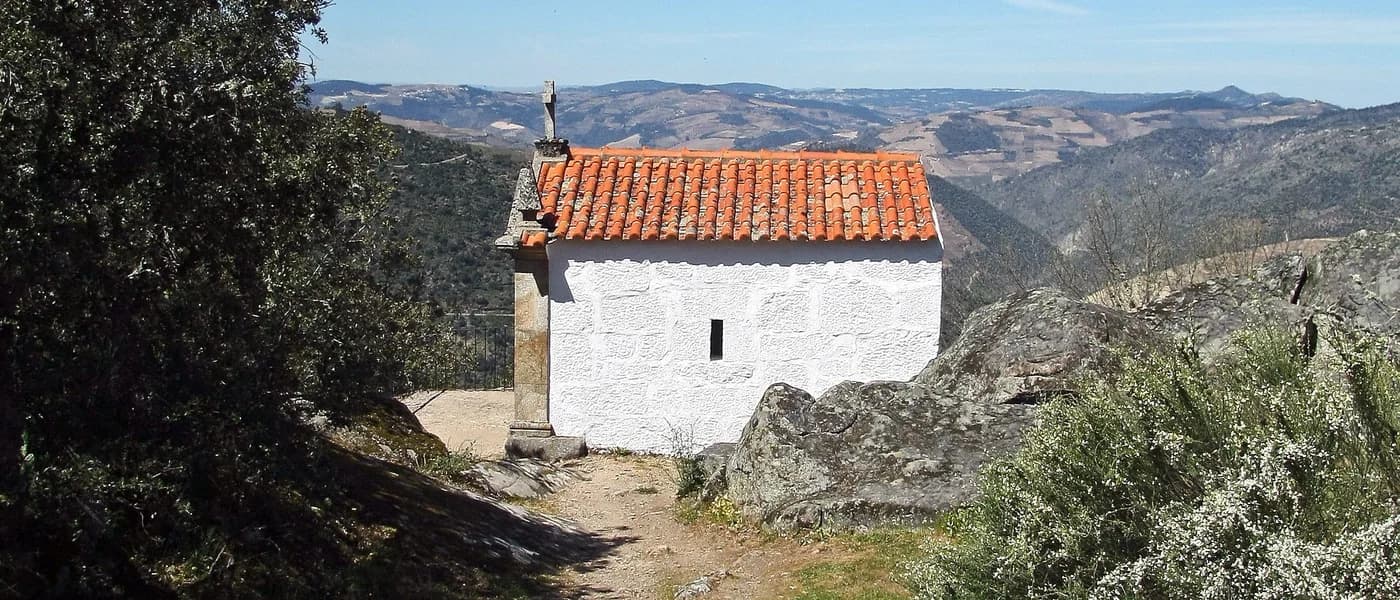
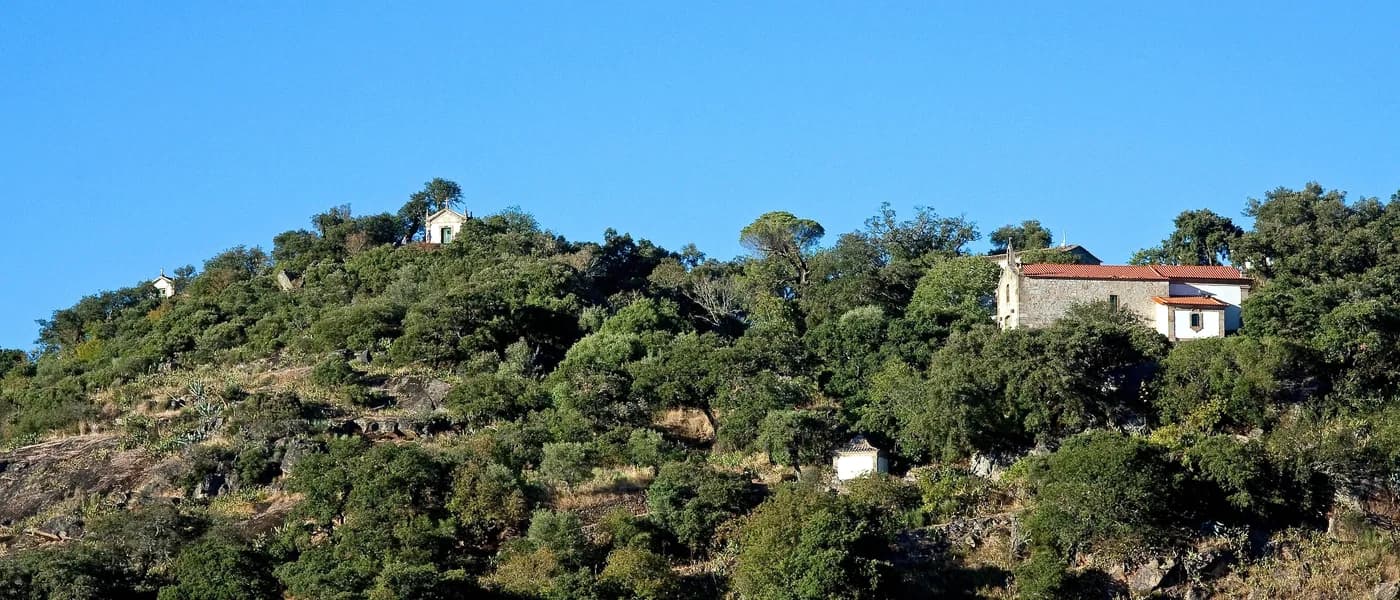
The place was inhabited long before any tourist arrived. In the second half of the 16th century, Frei Gaspar da Piedade settled on this remote hillside after pilgrimages to Rome and Palestine, brought a relic (a bone from the arm of São Jerónimo), and built the first chapel. Before that, the archaeological remains here point to human occupation since the pre-Roman period.
Today the complex is the largest sanctuary in the Alto Douro Vinhateiro. Ten chapels climb the hillside, most from the 16th century, tracing the Stations of the Cross. On Corpus Christi, the place fills with pilgrims. And there's a persistent tradition: young women who want to marry come up to the viewpoint, tie a knot in the broom shrubs that grow all around, and wait for the outcome to follow. The hill has many uses.
what you'll find
- view over the Cachão da Valeira and the Barragem da Valeira, in the same frame
- ten 16th-century chapels along the path up
- broom shrubs everywhere (and a legend thrown in)
- the Douro railway line below, with a train appearing if you're lucky
- access by paved road, between São João da Pesqueira and the dam