the fortress that never stopped being one
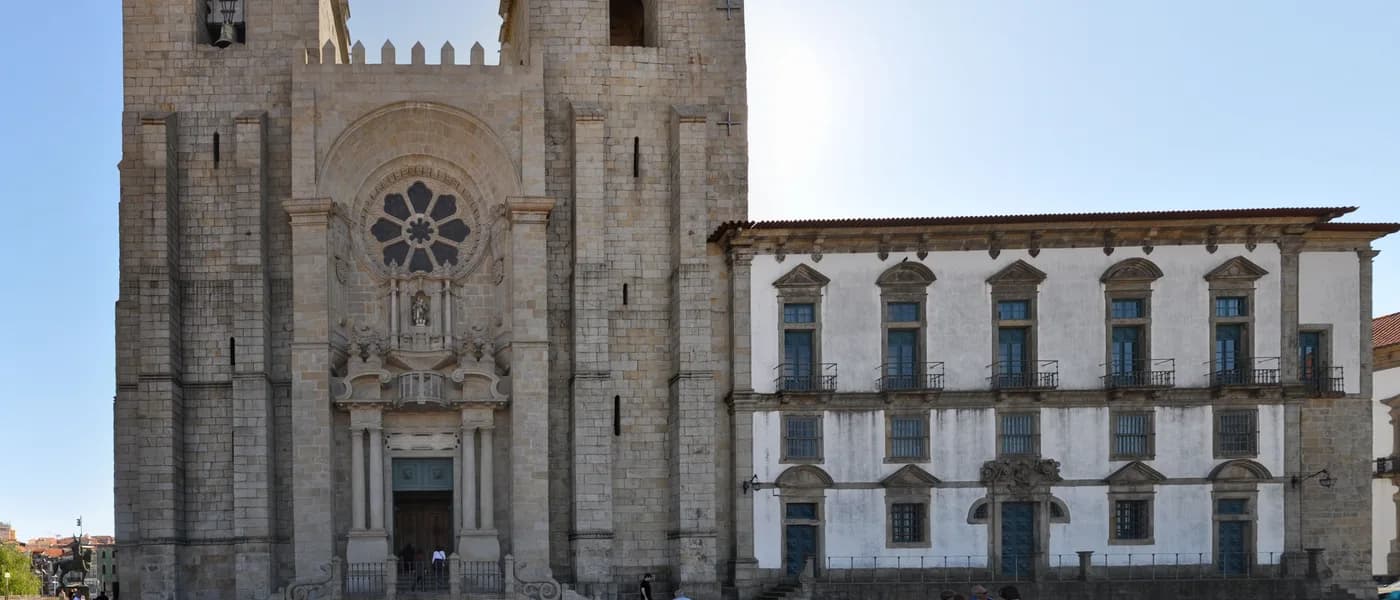
Granite walls with battlements on the inside. The Sé do Porto doesn't hide its origins: it was designed as a church and a defensive structure, and that tension is still there when you walk in. The central nave presses in on you with its clustered pillars and the vaults that rise without asking permission.
The building layers centuries without ceremony. The rose window is from the 12th century. The lantern tower, from the 16th. The lateral galilee, facing the city, is by Nicolau Nasoni and dates from 1736. Each addition responds to its moment, and the result is a stone palimpsest that doesn't try to look coherent.
Inside, two places ask for specific attention. The Santíssimo Sacramento chapel holds the so-called silver altar, built in successive phases between 1632 and the 19th century, with dense biblical iconography and an unusual scale for Portuguese silversmithing. In the left transept stands Nossa Senhora da Vandoma, from the 14th century, patron of Porto. The city is, in diocesan tradition, "civitas Virginis", and this is where that's anchored.
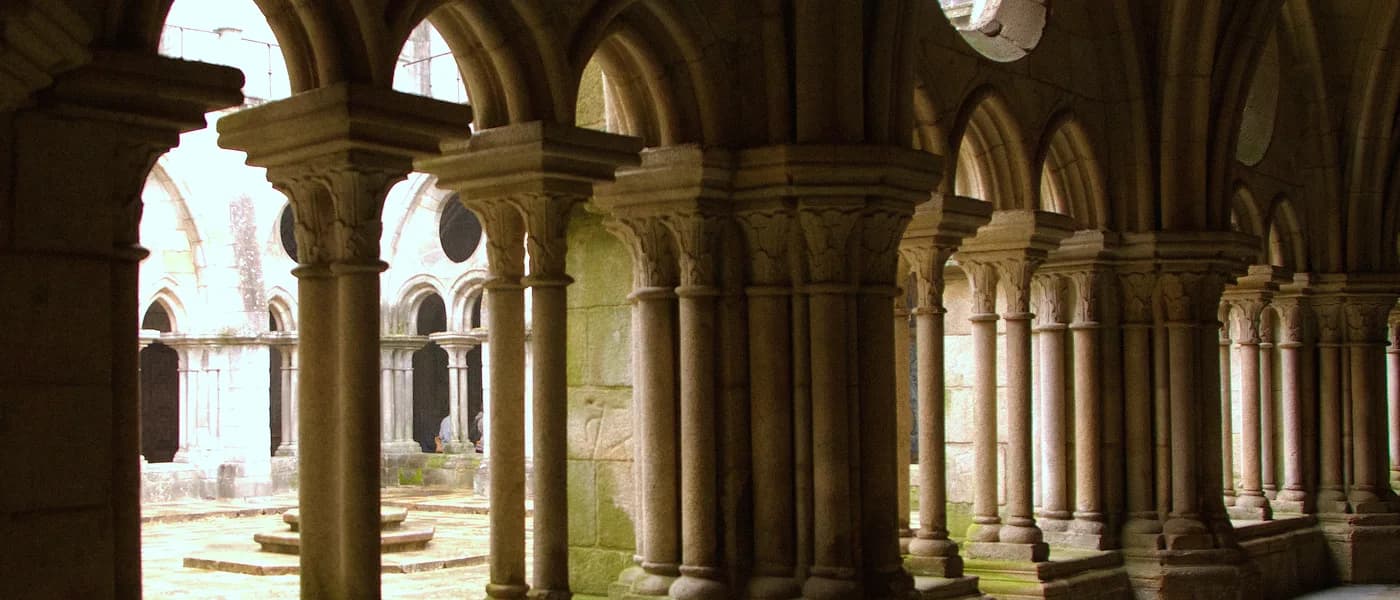
The Gothic cloister, begun in the late 14th century, is worth the visit on its own. The walls are covered with seven panels of azulejos from the second quarter of the 18th century with scenes from the Song of Songs, a reference to the mystical dialogue between God and the Virgin. In the Evangelista room sits the tomb chest of João Gordo, a Knight of Malta, with a 14th-century recumbent effigy. You walk past it without noticing, and it's exactly that kind of detail that makes the Sé.
what you'll find inside
- the Nasoni galilee, facing the city and the lower town
- the silver altar in the Santíssimo Sacramento chapel, built in successive phases between 1632 and the 19th century
- the two pipe organs above the chapter stalls, from the 17th and 19th centuries
- the cloister azulejos with the Song of Songs, in seven panels from the second quarter of the 18th century