the building where porto's money learnt to dress up
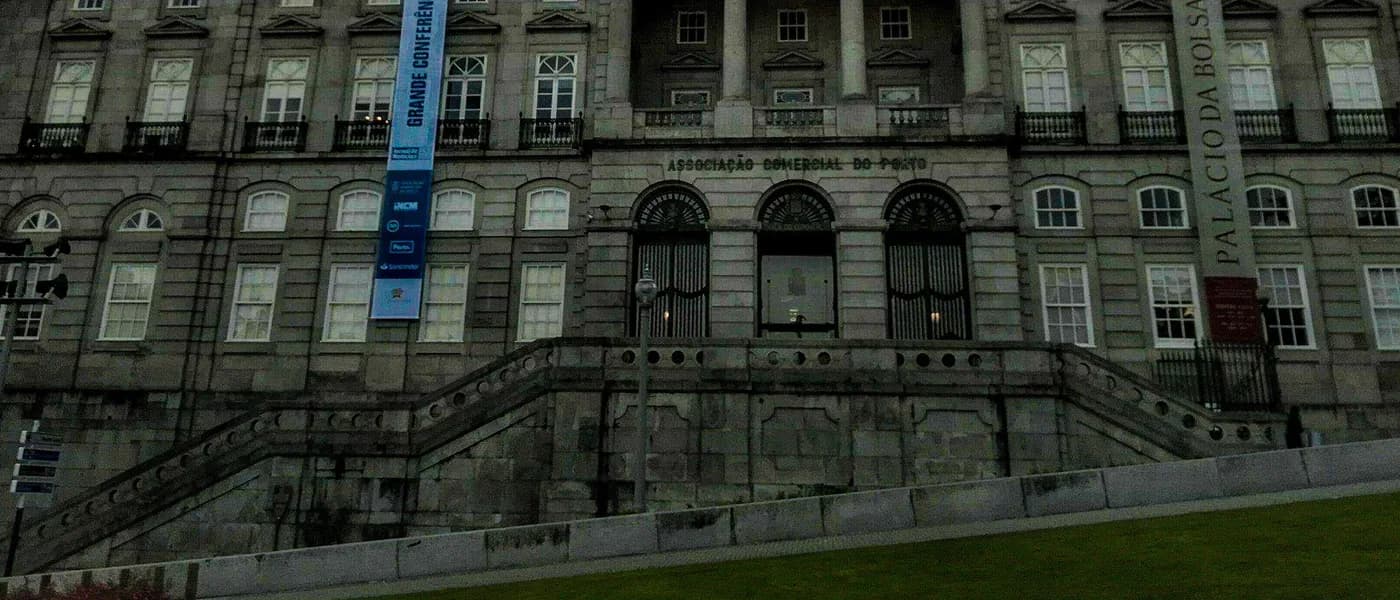
It started in 1842 with a not-so-glamorous urgency: Porto's merchants had been left without a house and were doing deals out in the open on Rua dos Ingleses. The fix was to put up one of the most aesthetically ambitious buildings in the city. The Palácio da Bolsa mixes 19th-century neoclassical, Tuscan architecture and English neo-Palladian touches, all in the same body, without apologising to anyone.
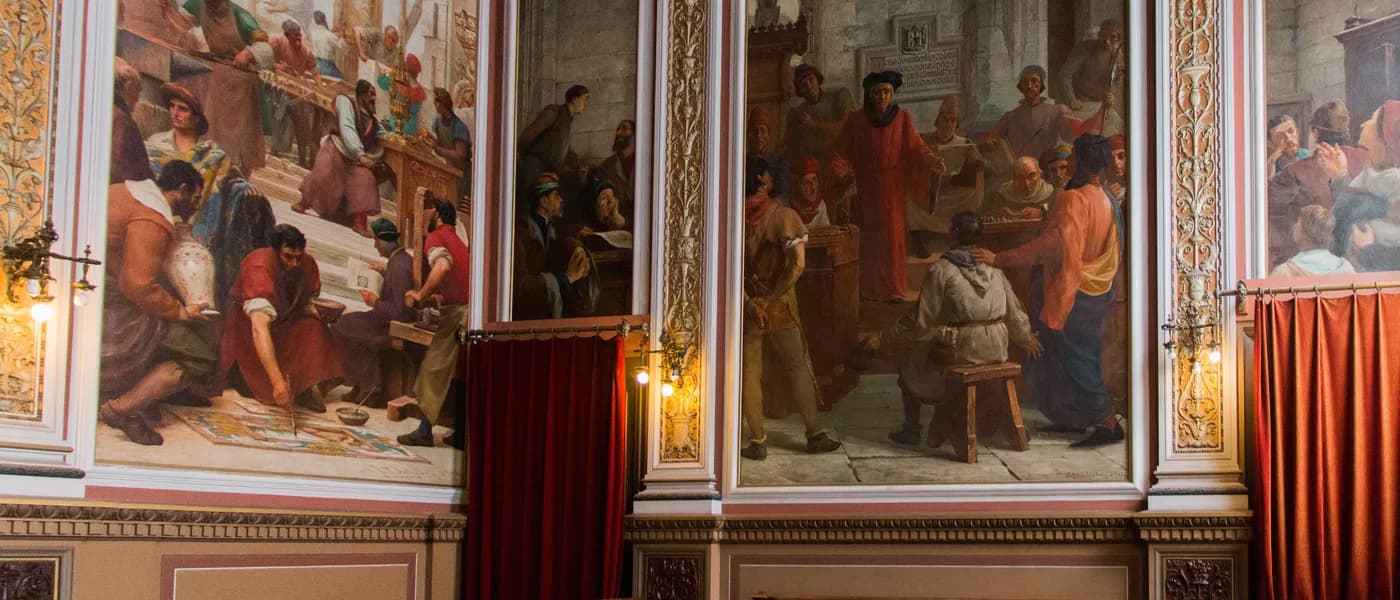
From the outside, the building already lands. From the inside, the scale shifts completely. The glazed courtyard, the iron and glass ceiling, the light coming in and hitting the stone, it all sets up what comes next.
the arab room and the three-year table
The Salão Árabe is the room no one forgets. It's not a decorative whim: the walls and ceiling are entirely covered in 19th-century stuccoes with gold Arabic inscriptions, repeating the phrase "Glory to Allah". The room was designed to host heads of state visiting Porto, and it still does the job. The combination of Islamic visual grammar and the context of a 19th-century merchant palace in Porto is, to put it mildly, unlikely.
In the Sala dos Retratos there's another object that deserves attention: a table by woodcarver Zeferino José Pinto that took three years to build. It was entered into international exhibitions and picked up distinctions. It's still there.
what you'll find
- gilded stuccoes with Arabic characters covering the ceiling and walls of the main floor
- a carved table that's, on its own, a life's work
- a guided tour you have to take to access the inner rooms
- crowds: this is one of the most visited buildings in Porto, come prepared
- the immediate context of Ribeira and the Sé two steps away, which shifts the reading of the whole place


