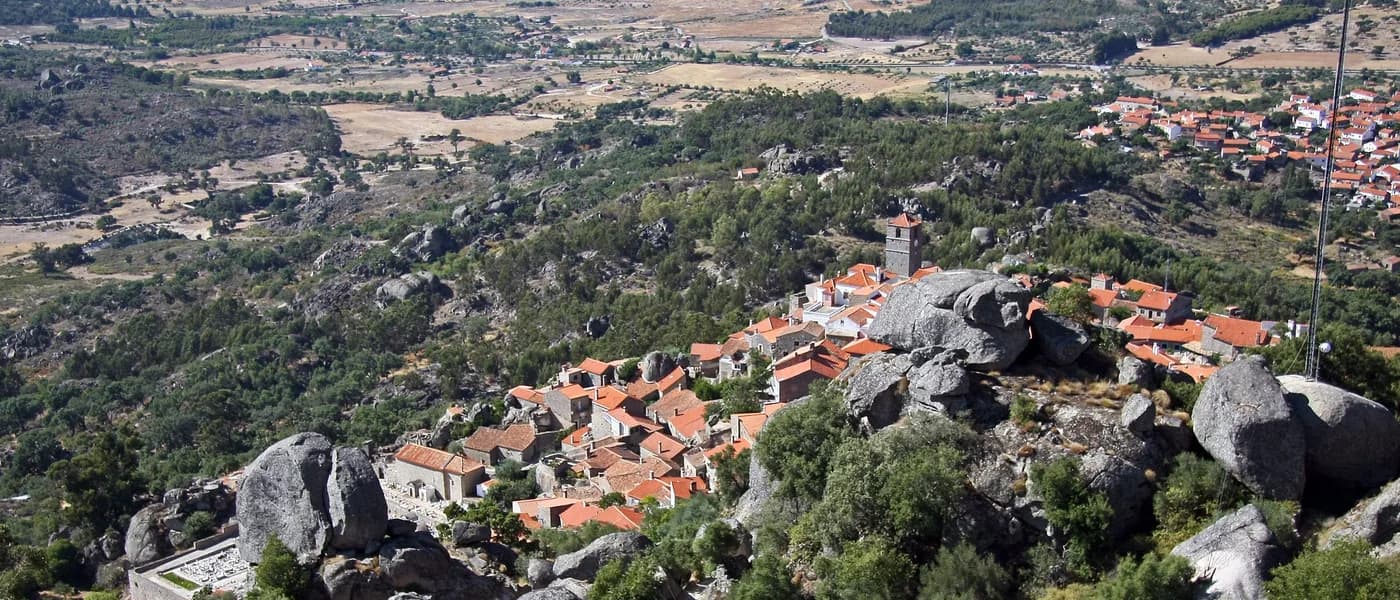
the village isn't on the granite, it's inside it
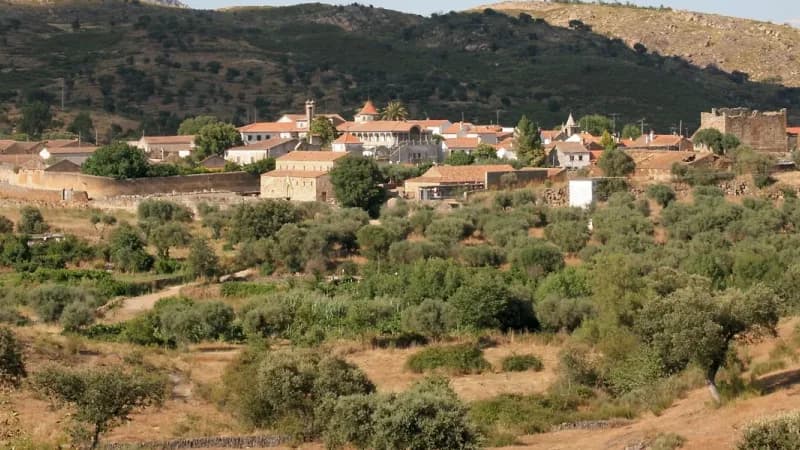
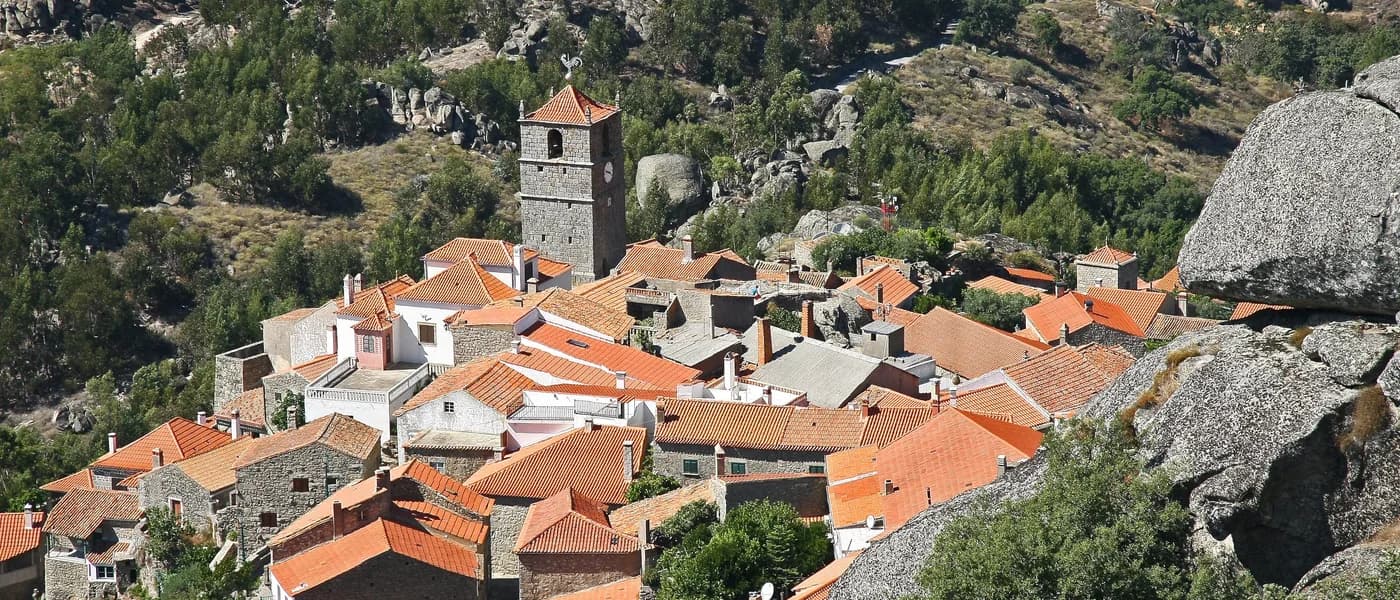
The hill of Monsanto is a granite inselberg that rises abruptly from the plain of the Beira Baixa, in the municipality of Idanha-a-Nova, and reaches 758 metres at the summit. The village clings to the slope, but the way it does so is what sets it apart from any other. The houses aren't on the granite: they're fitted into it. Blocks of several tonnes serve as wall, roof and floor. There are houses where a single stone covers the whole roof. Others grow around boulders that never moved. The streets narrow between rocks because no one dared (or managed) to shift them.
At the summit is the castle, or what remains of it. It was built by the Templars under D. Gualdim Pais from 1165, on an earlier occupation, and held out against successive sieges for centuries. In 1815, during the Peninsular Wars, lightning caused the ammunition magazine inside to explode. Little of the fortress remained: the Torre do Peão, ruins of the Torre de Menagem, sections of wall, and the two chapels still there (S. Miguel, from the twelfth century, a singular example of late Romanesque, and Santa Maria do Castelo, Baroque, from the eighteenth). You climb up the cobblestones and the view pays for the effort: the border plain opens all the way to Spain on a clear day.
In 1938 it was elected by the Estado Novo "the most Portuguese village in Portugal". The title brought attention and a stone marker at the entrance, but Monsanto kept its scale. It didn't fill up with shops at every turn or disguise itself as a facade. On 3 May the Festa da Divina Santa Cruz takes place, one of the most singular ethnographic festivals in the country: women climb to the castle with frame drums and with the marafonas (rag dolls with no eyes or nose, in a cross-shaped frame), and from the top of the wall they throw a whitewashed clay pot full of flowers. The gesture evokes the legend of the siege in which the besieged, to fool the enemy, fed the last calf with the last wheat and threw it from the walls: when it burst below, the spilled wheat led the enemy to believe the fortress still had provisions. The siege was lifted.
Go on a weekday out of season if you can. In July and August the climb is hot and crowded. In January you have the place almost to yourself, with the mountain wind coming through the stones. You park at the bottom and walk up, always. If you're combining this with something else in the municipality, Idanha-a-Velha is about fifteen minutes by car and is the exact opposite: flat, Roman, horizontal. Two villages in the same parish, two extremes.
good to know
- you park at the bottom and always walk up; the ground is uneven, old cobblestones with a serious slope
- only the Torre do Peão remains of the castle, plus ruins of the Torre de Menagem and two chapels; the rest disappeared in 1815
- the Festa da Divina Santa Cruz is on 3 May and fills the village; if you want to see it, plan ahead
- in July and August the sun hits the cobblestones with no shade and the climb is harder than it looks
- there are no shops; go up with water and whatever you need