castelo novo because there was already a castelo velho
The name first appears in 1208, in a will that gives "the land they call Castelo Novo" to the Templars. The name is literal: the new castle was built to replace a Castelo Velho, at the top of the Serra da Gardunha, abandoned when the fortification moved down to the eastern slope, at 650 metres. Castelo Novo today clings to that hillside, a small village of granite stacked in terraces, with bare rock appearing in the walls of the houses and in the paving of the streets.
The castle itself is a ruin. Of the Templar fortress from the early thirteenth century, reinforced by D. Dinis at the end of the same century (the Dionysian merlons and wall-walks that can still be made out in sections of the wall are his), what remains are scattered wall sections and the Manueline bell tower. It was abandoned in the seventeenth century and never returned to defensive use. You climb the narrow stairs to the top and what pays for the effort is the view: the natural amphitheatre of the Gardunha opening below, with Castelo Novo fitted into the middle.
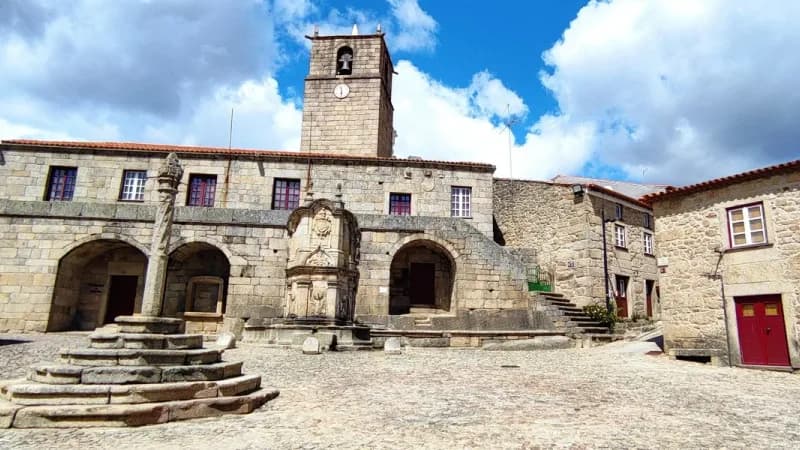
The heart of the village is the Largo do Pelourinho, where three architectural styles coexist in a tiny space without getting in each other's way. The pillory is Manueline, from the reign of D. Manuel I, with an octagonal shaft at the base and a cylindrical one at the top. The Casa da Câmara e Cadeia, leaning against the bell tower, was ordered built by D. Dinis in 1290 and renovated by D. Manuel I in 1510, who added the royal arms, the cross of the Order of Christ and the armillary sphere; today it works as a small museum, with pieces from the castle excavations. And the fountain built into the facade of the Casa da Câmara is Baroque, from the reign of D. João V (eighteenth century), with the royal coat of arms and three spouts. Medieval, Manueline and Baroque arguing politely a few metres from each other.
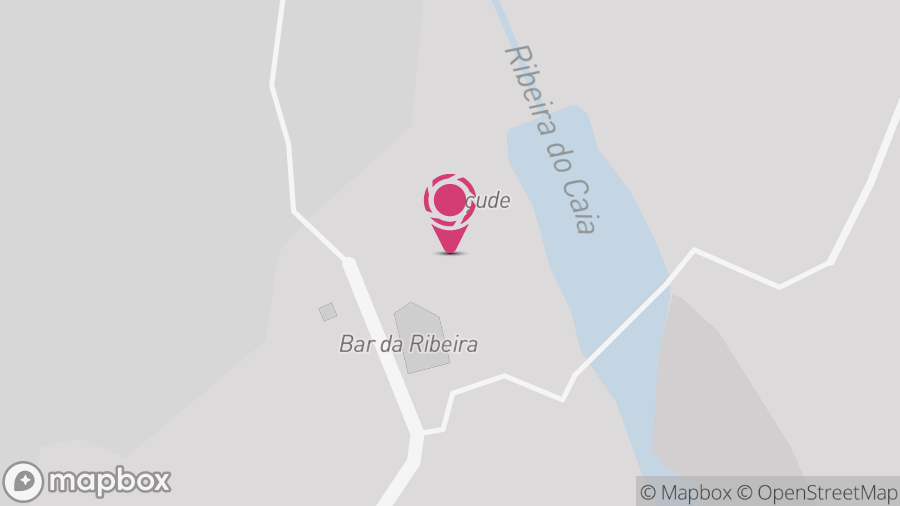
Go on a weekday out of season, if you can. In January or February you have the place almost to yourself, with the downside of the cold: the Gardunha is right above you and the wind doesn't mess around. In summer the village fills up, especially at weekends, but it has a compensation that few of its peers have: at the entrance, on the Alpreade stream, is the Praia Fluvial de Castelo Novo, with four pools at different levels and cascades between them. The village is about 700 metres above, and the PR11 trail climbs from the beach to the top passing through the houses. You swim and climb, or climb and swim.
good to know
- the castle is a ruin; you climb the narrow stairs to the top, with uneven ground and a real slope
- the fountain in the Largo do Pelourinho is Baroque D. João V, not Manueline as is often assumed
- the Casa da Câmara now works as a small museum, with pieces from the castle excavations
- the river beach at the village entrance is open in July and August, with no lifeguard
- there's no cluster of shops or a restaurant at every corner; go up and come back with what you need