wide sand, pine trees and a nearly extinct fishing art
Getting to Tocha means crossing the pine forest. The road cuts through the trees for kilometres before opening onto a wide, exposed stretch of sand, with little around except sea and pines. Praia de Tocha belongs to the municipality of Cantanhede, although most people associate this coastline with Coimbra or Aveiro, never with this inland council.
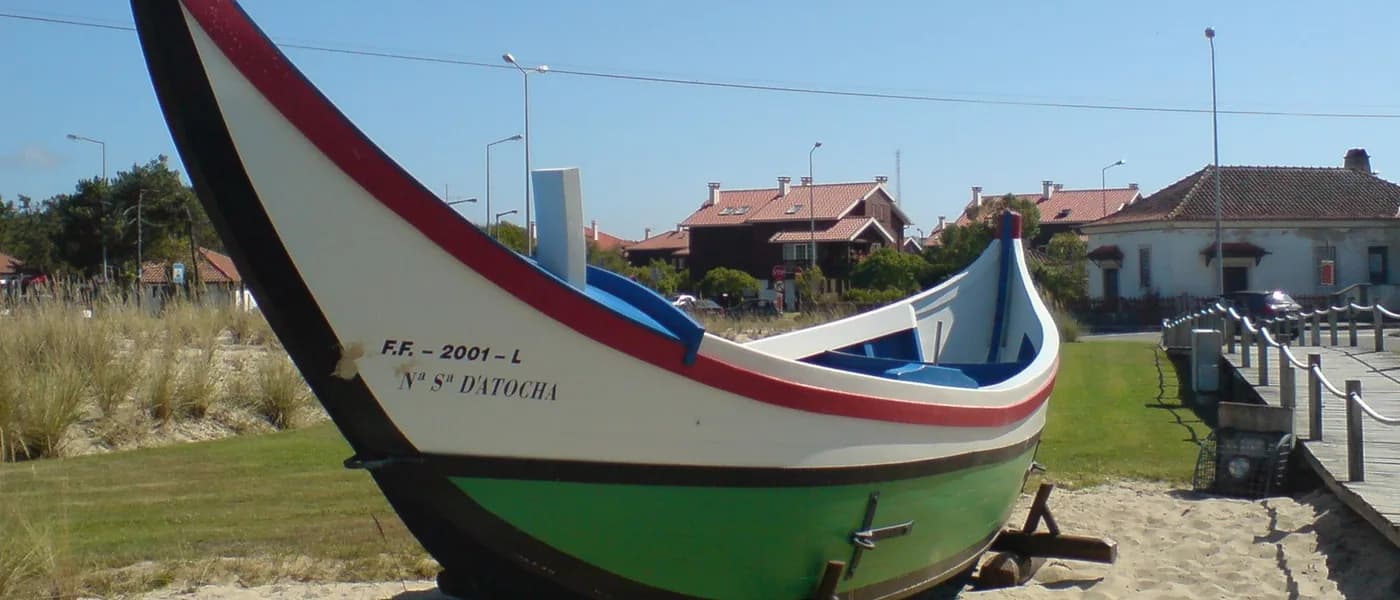
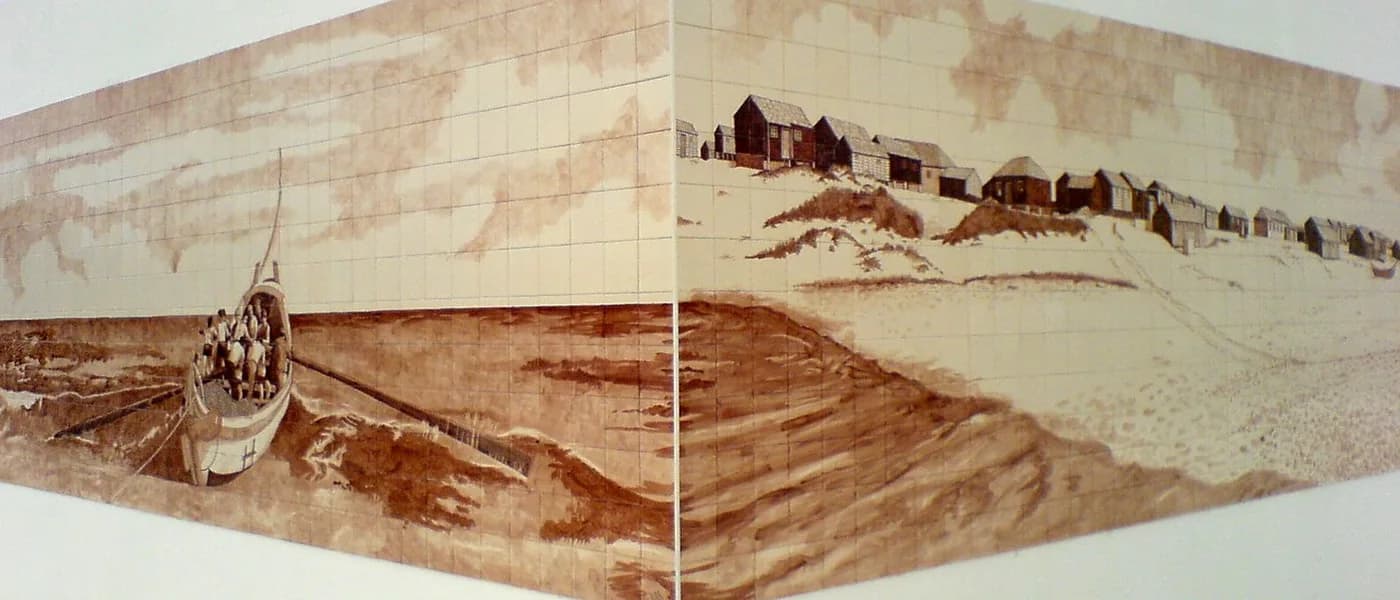
What sets Tocha apart from the neighbouring beaches is the arte xávega. It's still practiced here: boats that head out to sea casting nets, then hauled back by hand (or by tractor) directly onto the sand. It's not staging for tourists. It's fishing, with its own calendar and uncertain outcome. You might see it, you might not. But the possibility exists, and very few stretches of the Atlantic coast still have it.
The beach has adapted access for people with reduced mobility, which widens who can reach the water's edge. The coast here is Atlantic for real: strong swell, frequent wind, flags that change. You come for the landscape and the scale of the place, not for the shelter of a cove.
The feeling of being at Tocha is of standing at the edge of the world: pines ending, sand beginning, endless ocean ahead.
the arte xávega
The arte xávega is a coastal drag-net fishing technique with medieval roots on the Portuguese coast. In Tocha it remains active, tied to the local community of the village of Tocha, a few kilometres away. The process involves a traditional boat (the meia-lua), long nets cast in a semicircle and the retrieval done directly on the beach.
At other points along the coast, this practice has disappeared or survives only as demonstration. Here it still has real economic weight, however residual. Watching the tractor pull in the nets with a group standing around isn't an organised show, it's simply what happens when the tide and the season coincide.
go prepared for
- fine sand but very exposed to the north wind
- variable Atlantic swell, not always suitable for swimming
- the pine forest as context: the beach exists inside a coastal woodland corridor
- the possibility of finding the arte xávega in action, with no set time
- lots of space, low density even in peak season