everything's intact, except the castle that went up in flames
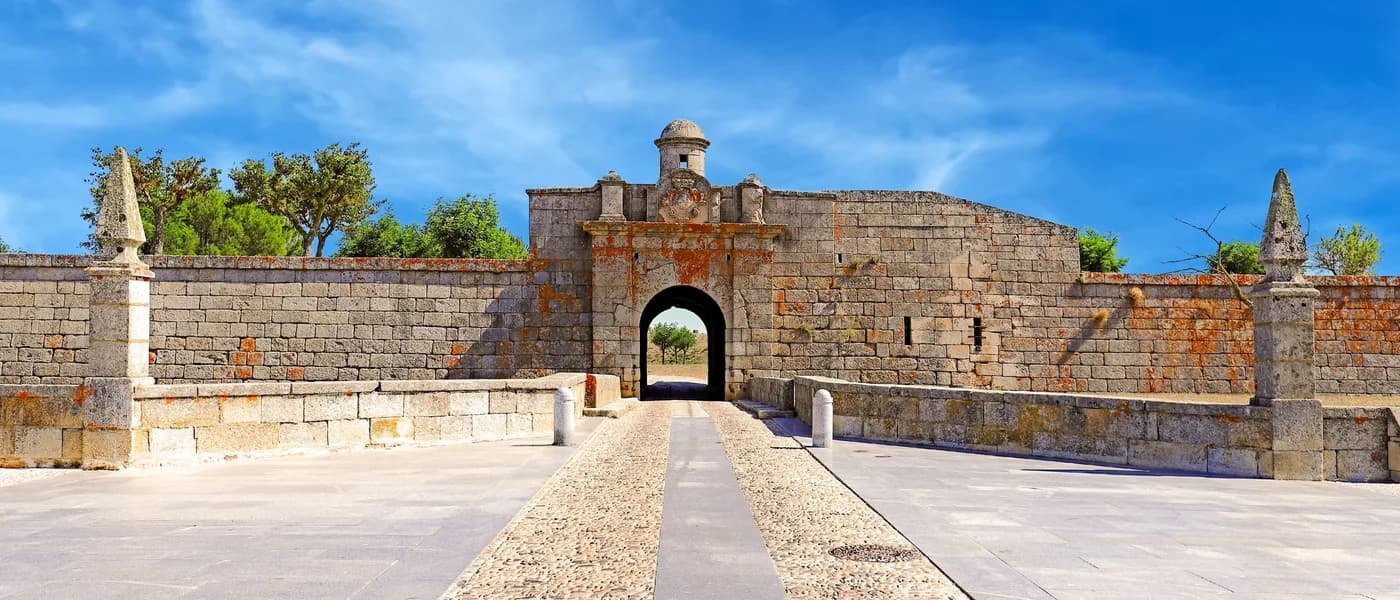
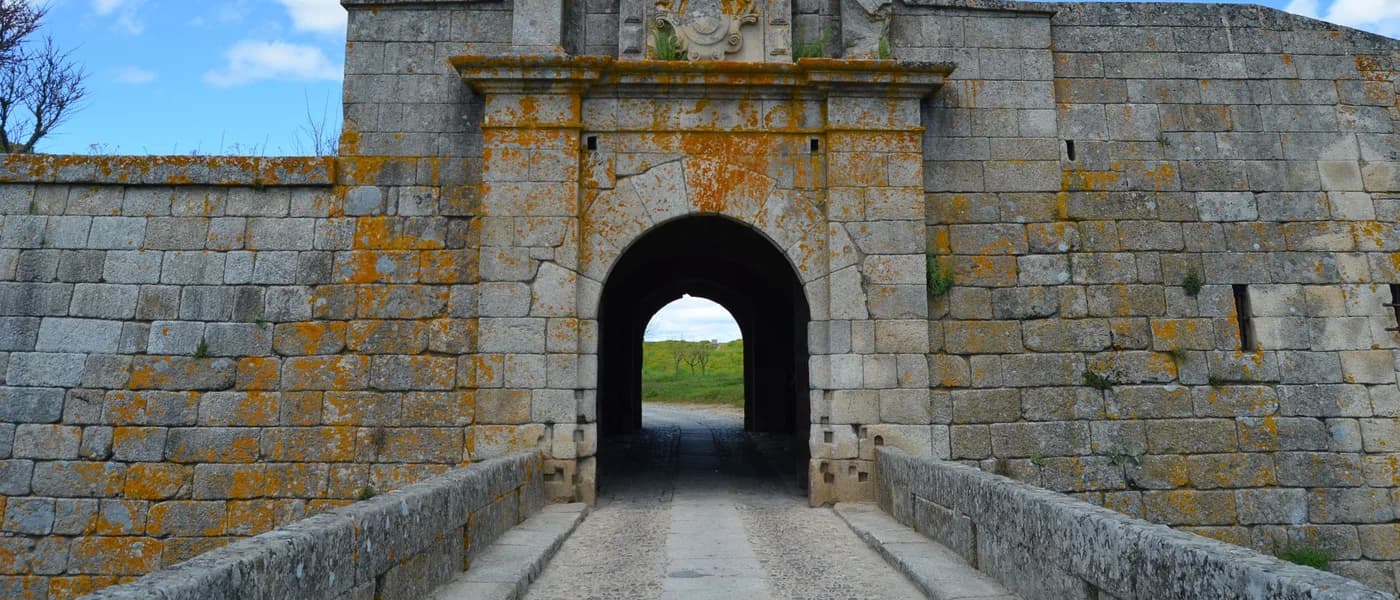
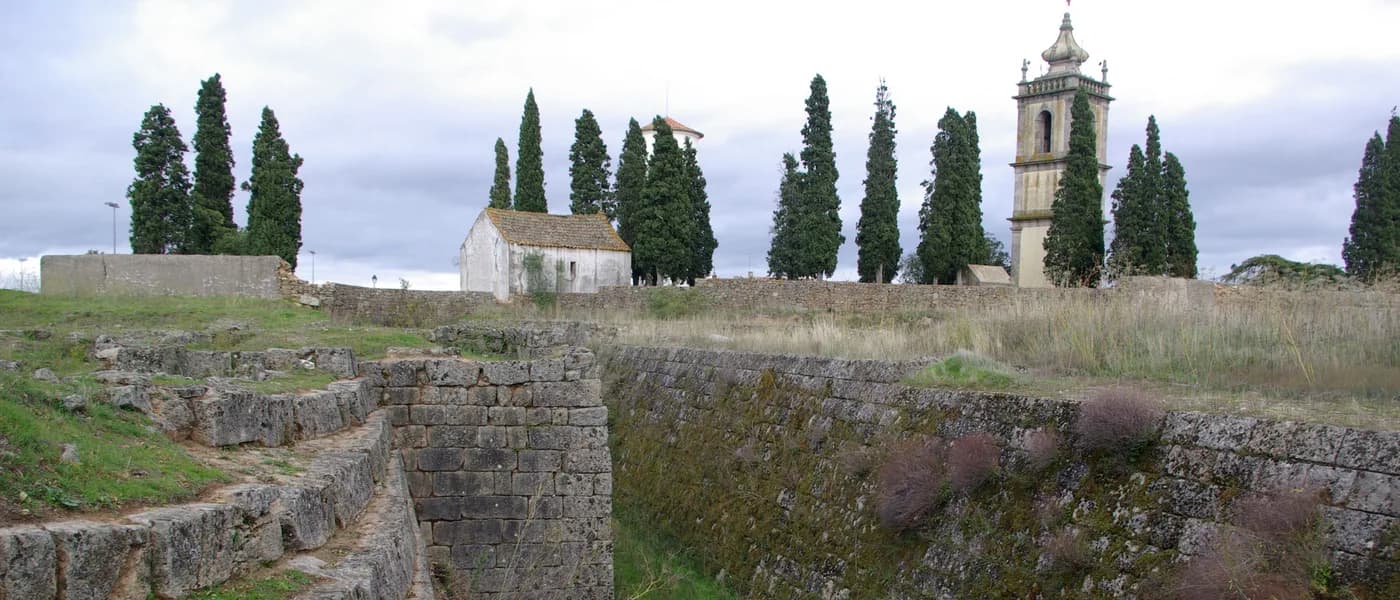
You enter through a double gate in a vaulted tunnel, with the royal arms above. There are two of them: the Portas de Santo António and the Portas de São Francisco. Inside stretches a still-inhabited town, fitted into six bastions and six ravelins, in a wide and deep moat. All of this is still standing. Only in the middle will you find a stone crater: that's what was left of the medieval castle after the explosion.
Almeida guarded the border between the Tejo and the Douro for centuries. In 1663 it held out against a Castilian siege led by the Duke of Osuna, a feat carved on the obelisk of the Restauradores in Lisbon and on the Arc de Triomphe in Paris. The bastioned structure you see today was started in 1640, in Vauban style, and was refined over the following decades. On 26 August 1810, during Marshal Massena's siege, a French grenade hit a trail of gunpowder left between the castle's powder magazine and the bastions. Around five hundred men died, the medieval castle disappeared in seconds, and the fortress surrendered the next day in the Casa da Guarda, next to the Portas de São Francisco.
It's one of the twelve Aldeias Históricas de Portugal and the only one that's also a star fortress. It makes a counterpoint to the neighbouring Castelo Mendo, in the same municipality, which froze when the border moved in 1297; Almeida kept building for war for another five hundred years.
good to know
- you enter through a vaulted tunnel on a bridge over the moat; there are two gates, Santo António and São Francisco
- the Castelo de Almeida in the centre has been foundations and loose stone since 1810; it marks the exact point of the explosion
- the casemates are underground galleries where the population sheltered during sieges; they also served as Miguelist prisons
- on the same border, Castelo Rodrigo and Marialva are the neighbouring Aldeias Históricas to chain into the same day


