the bank that became a museum of gold and linen
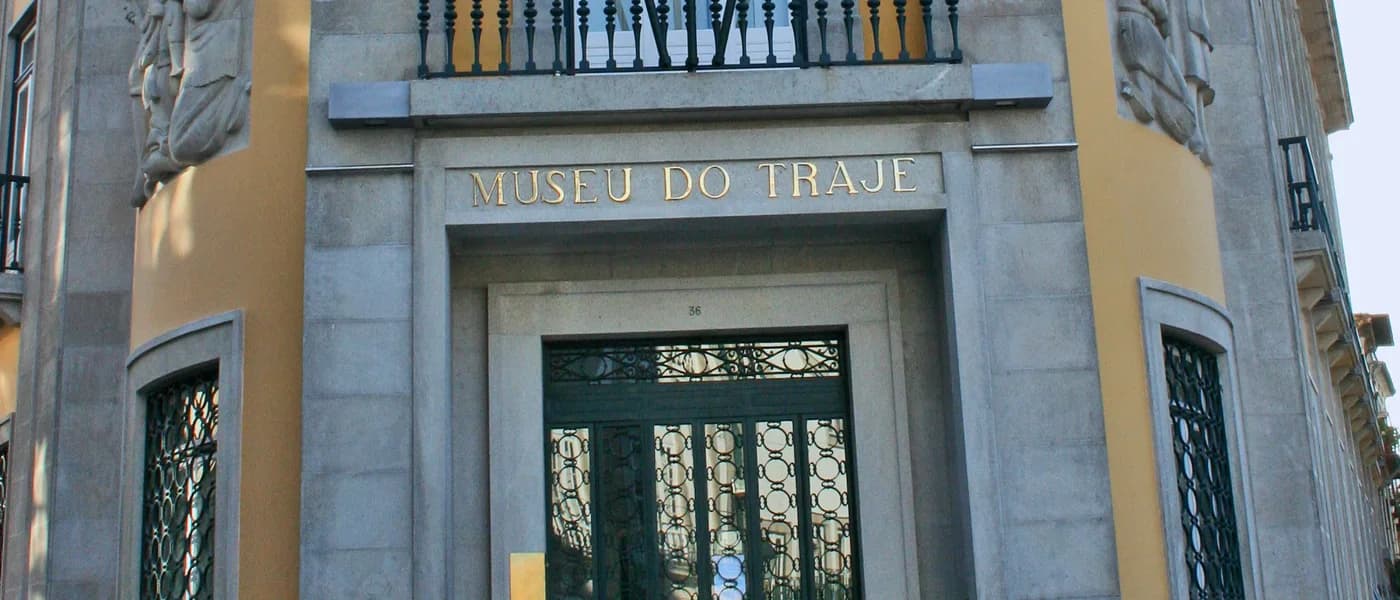
The building was once money. Between 1954 and 1958 it was built to be the Banco de Portugal branch in Viana do Castelo, and that's what it stayed for nearly forty years. In 1997 the money left and the costume came in. The Estado Novo architecture stayed, with all the soberness that implies, and today it frames pieces that are the exact opposite of that restraint.
The Museu do Traje de Viana makes sense in this city and in no other. The Viana costume is one of the most recognisable visual languages of the Minho, with its gold embroidery over linen, the filigree, the stacked necklaces. It's not shelf folklore: it still takes to the street at the festivals, especially the Romaria d'Agonia in August, when the historic centre fills with women carrying that weight of gold around the neck.
The museum sits right in the historic centre, which means the visit doesn't stay isolated. You step out into a street that keeps the same scale of centuries, and understanding where the costume comes from helps you read the city around it.
what you'll find inside
- embroidery and dress documenting a living tradition, not an extinct one
- the contrast between the building's sober architecture and the visual weight of the pieces
- ethnographic context linking the costume to the festivals and the Minho's identity
- a small space, walked without rush but without scattering