six kilometres of arches to bring water to the convent
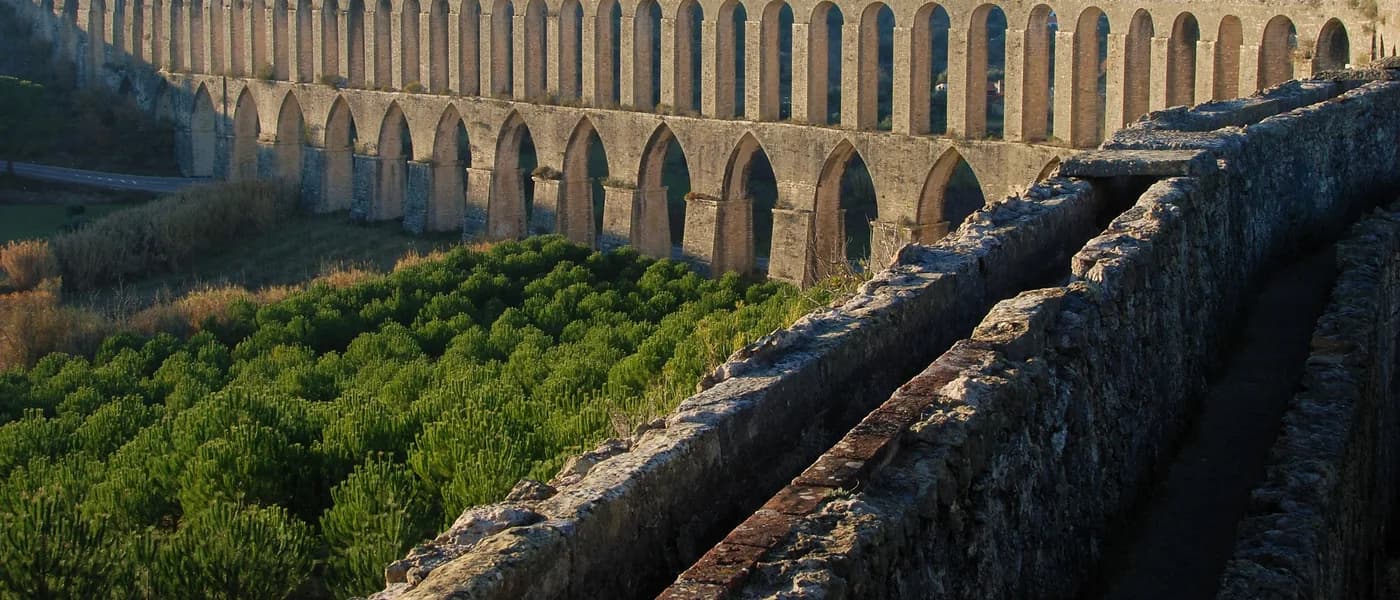
The Aqueduto dos Pegões (or Aqueduct of the Convento de Cristo) extends for about six kilometres between four springs on the outskirts of Tomar and the Convento de Cristo, at the top of the city. There are 180 round arches along the whole route, and the most spectacular section is in the Vale dos Pegões, where the structure descends into the valley and climbs back up the other side: there, over the largest drop, the round arches rest on a set of 16 pointed arches below, a double architectural register that makes the site unmistakable.
The work was commissioned by Philip I during the Iberian Union, and the design dates from 1584, by Italian architect Filippo Terzi, then the chief architect of the kingdom. Works began in 1593 and were directed by Terzi until his death; they then passed to Pedro Fernandes de Torres, and the first phase was completed in 1614, with the inauguration by Philip II during his visit to Portugal. The Latin inscription carved on the aqueduct records the date. This isn't a medieval Portuguese piece: it's a Philippian Iberian architecture work, with a similar model to the aqueducts of Elvas and Évora, which later served as a reference for the aqueduct of Vila do Conde.
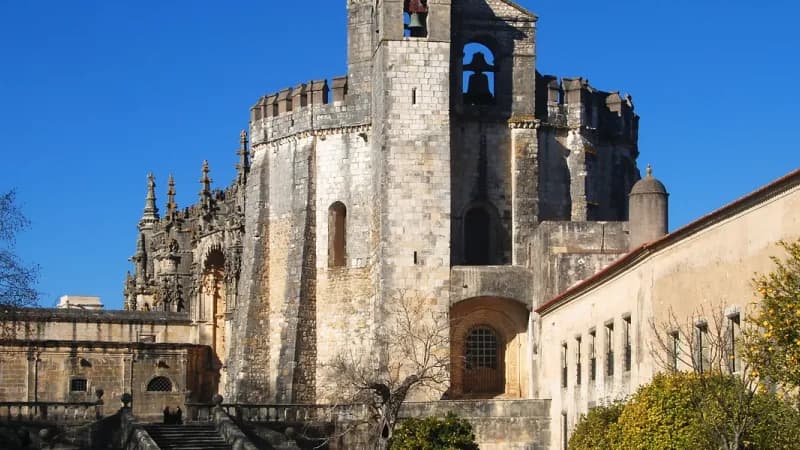
The highest section, over the Vale dos Pegões, can be walked on top, along the coping. You walk above the arches, several metres off the ground, with the water channel still visible alongside. The walk gives you the scale of the structure in a way no photograph can. Below, the perspective of the arches receding under the buttresses is the framing that makes the trip worthwhile. It's been classified as a National Monument since 1910 and is part of the classified heritage area of Tomar, with the Convento de Cristo at the top of the hill (which is a UNESCO World Heritage Site).
It's on the outskirts of the city, to the west of the centre. Go by car: access is signposted from the road out of Tomar towards Mata do Convento. There's parking near the main section. In July and August it fills up around midday, but late afternoon usually has fewer people, and the low light marks the arches with long shadows. It pairs well with a visit to the Convento de Cristo, which is at the top of the same hill and a few minutes on foot.
what you'll find
- six kilometres of aqueduct between springs and the Convento de Cristo
- 180 round arches along the route
- double architectural register in the Vale dos Pegões, with pointed arches below supporting round arches above
- walkable on top along the coping, in the high section
- National Monument since 1910, close to the Convento de Cristo (UNESCO World Heritage)