some museums exist to confront you, not to entertain you
Most museums in Portugal are comfortable. You get tiles, you get paintings, you get a narrative that sends you out feeling the country is old and dignified. These aren't those. They're places that chose to deal with the part of history nobody wants on a tourist leaflet, and they do it well. You leave with questions, not photos.
The Núcleo Museológico Rota da Escravatura, in Lagos, sits in the building where, in 1444, the first public market for African slaves in modern Europe took place. The museum doesn't dress it up. It tells you what happened on that specific ground, with names, numbers, and the direct link between the Discoveries you learned about at school and human trafficking. It's small, you read through it in just over an hour, and it sticks.
Move inland, near the Spanish border, and you find the Museu Vilar Formoso Fronteira da Paz. It's set up in the old train station where, in 1940, thousands of refugees passed through fleeing the Nazis. You'll see the files, the passports, the objects they carried. The place works because it's the place: the same platform, the same walls. Aristides de Sousa Mendes, who signed the visas against direct orders from Salazar, takes up a big chunk of the narrative, but without sainthood. It's all there, including what was done to him afterwards.
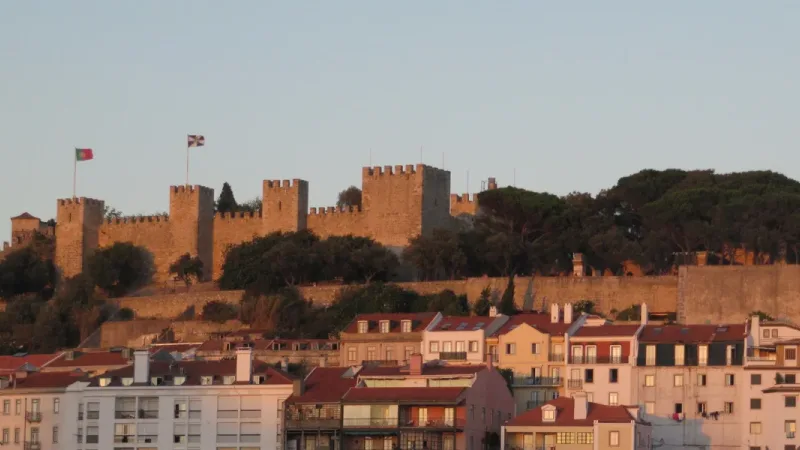
The story carries on in Peniche, at the Museu Nacional Resistência e Liberdade. It's the fort that served as a political prison under the Estado Novo for decades. You visit the cells, you see where they slept, you read the accounts of PIDE torture. The recent museography is sober, no cheap drama. If you want to understand what country your grandparents actually lived in before 25 April, this is one of the most direct places to do it.
In Porto, in a quiet residential neighbourhood, sits the Museu do Holocausto. Opened in 2021, it's the first of its kind on the Iberian Peninsula. It tells the story of the Shoah in general, but also the Portuguese link: the Jewish communities that found refuge here, the ones that didn't. There's a memorial space with names, dates, photographs. Entry is free and the team there knows how to answer the questions you're going to have.
The last one is different in form but not in weight. The Museu Mineiro do Lousal, in the Alentejo, occupies the old buildings of the pyrite mine that ran until 1988. The memory here is one of class, of hard work, of an entire community that lived and died by what was underground. You see the galleries, the tools, the photographs of the shifts. There are no heroes, just people.
None of these places asks to entertain you. They ask for time and attention, and they give you back a less polished version of the country. If you want to build a route, open the map and pick the order that makes sense to you. There's no right sequence, there's yours.