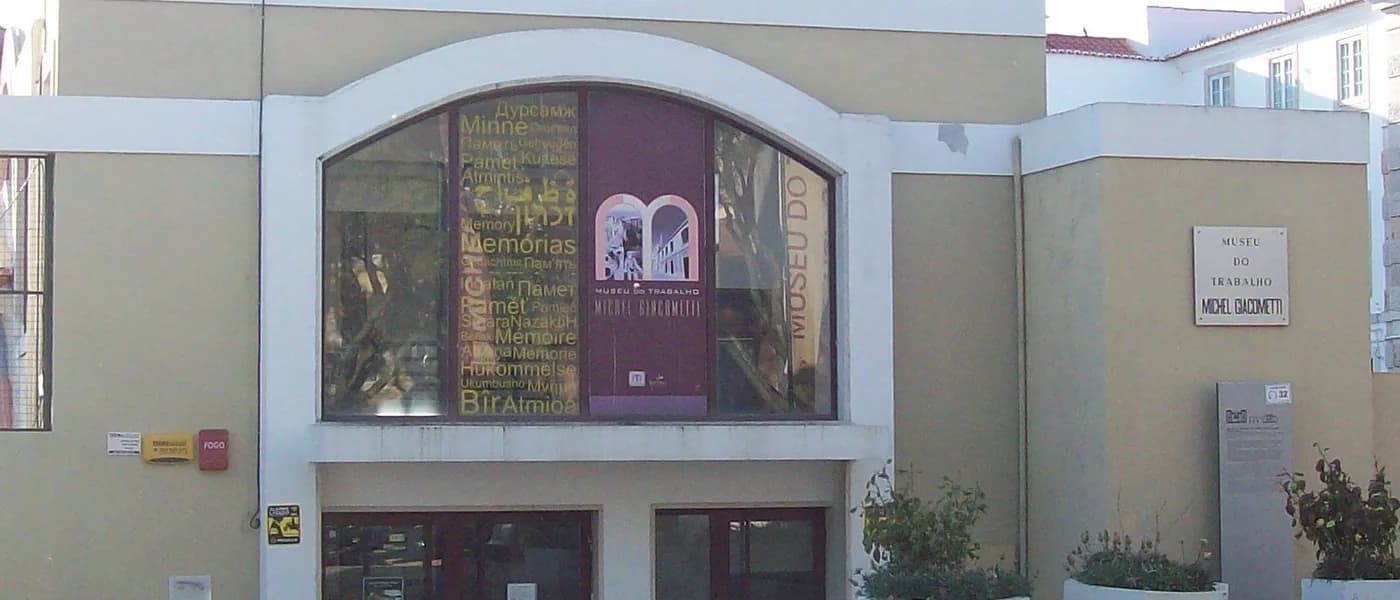
where work was engraved in the walls
A cannery that still smells of industrial memory. The building was put up at the start of the twentieth century to tin fish, and the machines, the benches and the layout of the space still tell that story without needing captions. It's not a museum that imitates a factory: it's a factory that became a museum.
The Museu do Trabalho Michel Giacometti takes its name from the Franco-Portuguese ethnologist who spent decades documenting Portuguese popular culture before it disappeared. That obsession is present in the collections: tools, everyday working objects, records of trades that no longer exist. The human scale of labour, not the heroic version from the monuments.
Setúbal had one of the most important canning industries on the Iberian Peninsula, and this space is one of the few places where that history has physical form. It's not reconstructed folklore: it's the place where the city's women worked for decades, with their hands, gutting fish. Leaving here with the feeling that you know the city better than when you walked in is almost inevitable.
what you'll find
- original cannery machinery still in place
- ethnographic collections gathered by Giacometti across Portugal
- early twentieth-century industrial architecture preserved
- direct context with the working-class history of Setúbal


