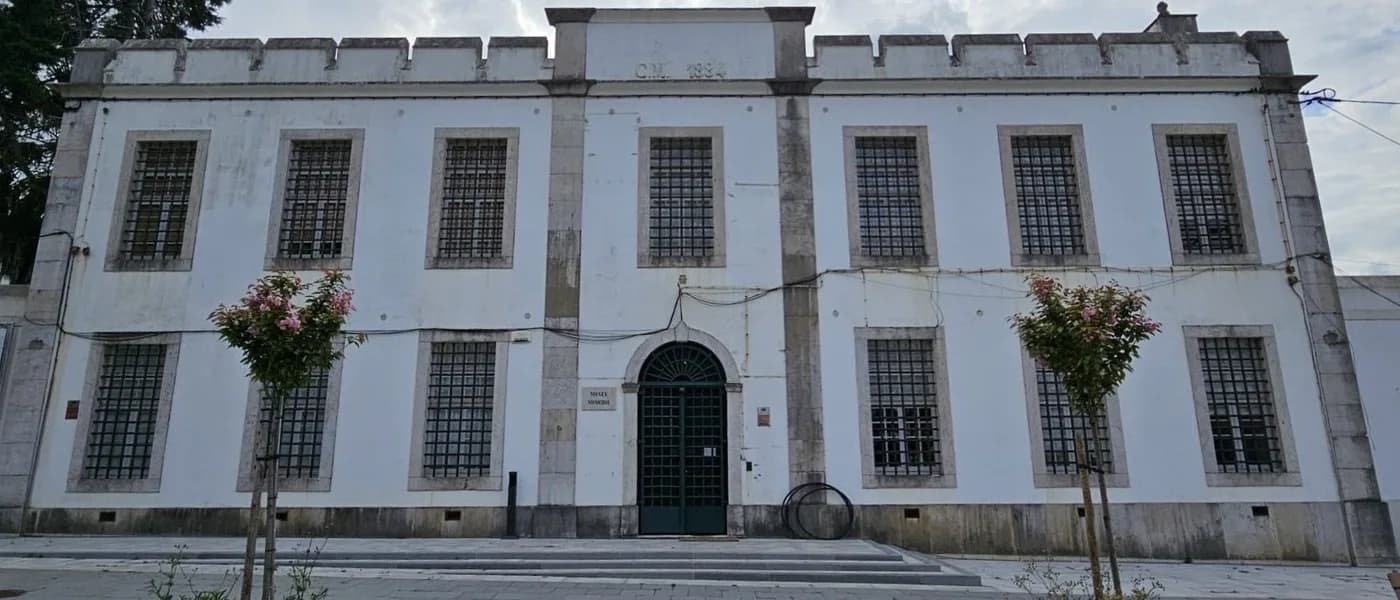
the museum in the old jail, with a recreated Alentejo kitchen inside
The Museu Municipal de Santiago do Cacém is housed in the building that from 1885 to 1968 served as the village's county jail, on the Praça do Município, opposite the town hall with a public garden between them. The building was designed by architect Chiapa Monteiro, a fine example of nineteenth-century civic architecture, and you can tell it was conceived as a prison: austere, solid, functional. The only decorative concession is the revivalist merlons topping the main façade, a historical whimsy in an otherwise plain building. The jail operated until the new courthouse was built in 1968, and in 1972 the building was converted into a municipal museum after conservation and adaptation works.
The founding of the museum as an institution predates the building itself: it was created in 1930 at the initiative of Dr. João da Cruz e Silva (1881-1948), a local physician who spent decades assembling a personal collection of archaeology and numismatics which he eventually donated to the municipality. That collection is the founding core, and archaeology and numismatics remain two of the three most significant strands of the collection today (the third is ethnography).
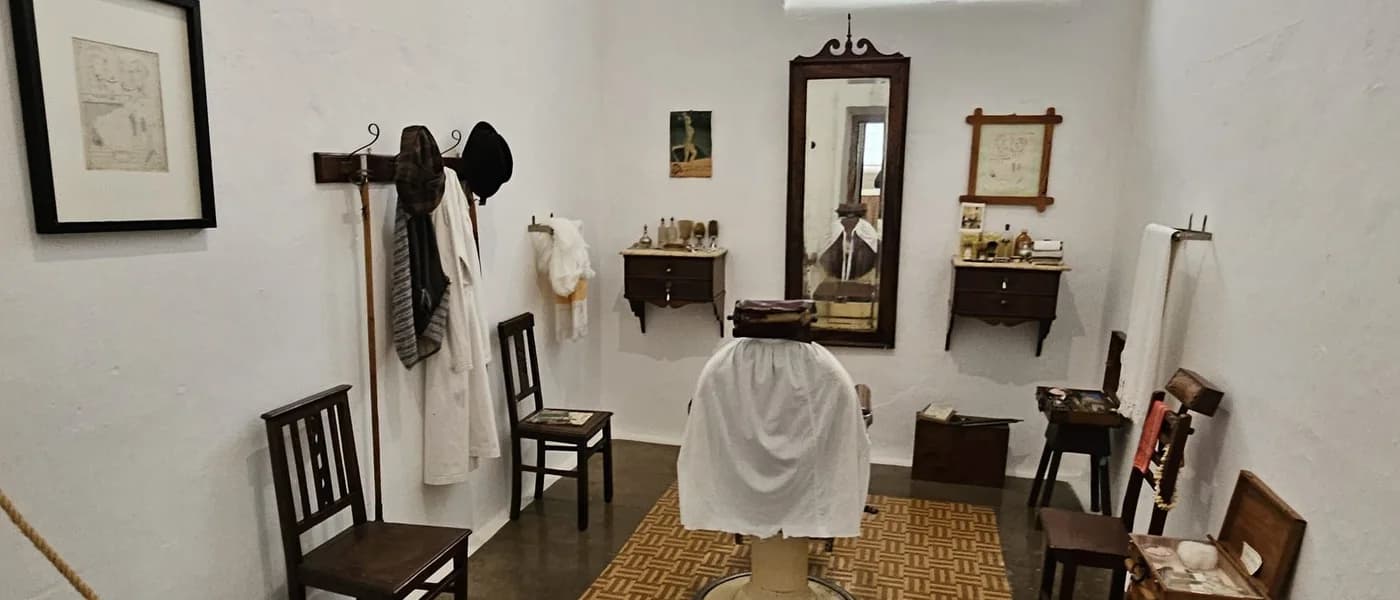
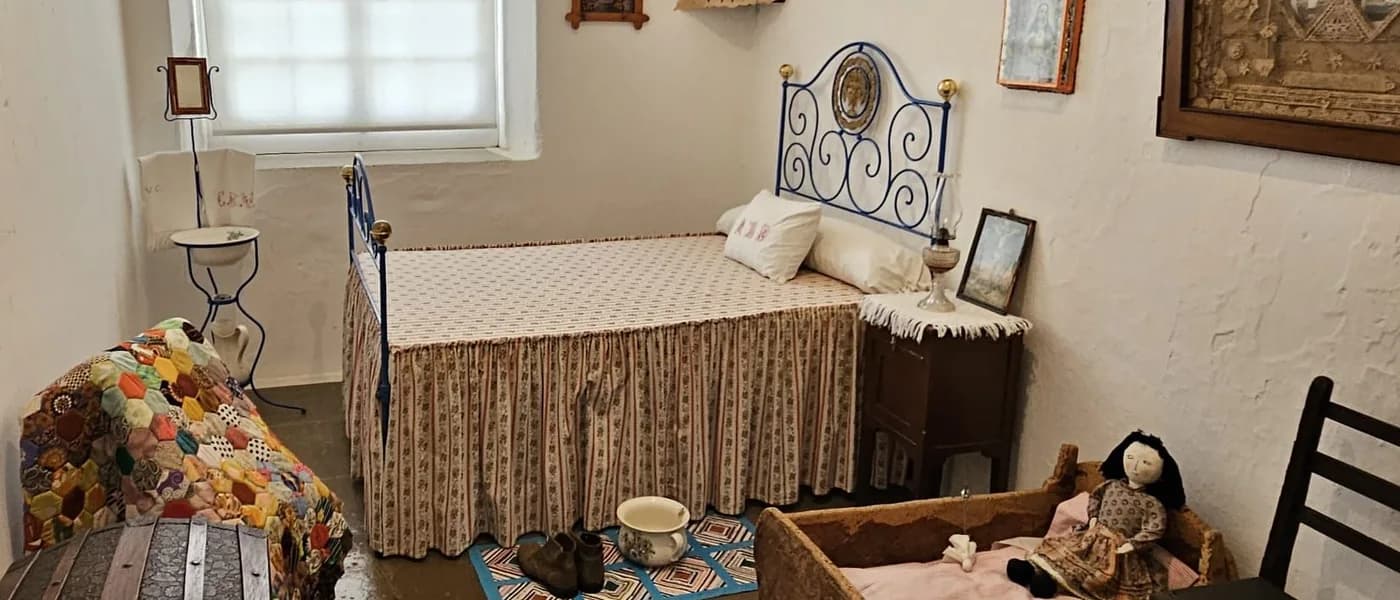
The numismatic collection is probably the densest part of the museum for anyone interested in the subject. It includes coins from the third century BCE through to the advent of the Portuguese Republic in 1910, with banknotes closing the timeline, and works as a parallel reading of local and national history. Ethnography is the third pillar of the museum and the most visually memorable part of the visit: a traditional Alentejo kitchen has been recreated at full scale, complete with fireplace, earthenware bowls, plates and the usual domestic equipment, and a modest bedroom recreated with the same fidelity. It's the best way to understand, in three rooms, what life was like in an Alentejo household before electrification.
The museum also holds individual works ranging from decorative arts to painting, furniture, ceramics, sculpture, textiles, documentation and photography. Among the pieces worth attention is a series of portraits of the Condes de Avilez family, with historical weight for the region, along with rotating temporary exhibitions (sculpture, painting, seasonal). It's not a museum for a long visit: an hour and a half is enough, two hours maximum if you want to linger in the ethnographic kitchen and bedroom. It pairs well with a walk up to the Castelo de Santiago do Cacém afterwards, a few minutes on foot and offering views over the Litoral Alentejano.
the full picture
- museum housed since 1972 in the former county jail, a nineteenth-century building by Chiapa Monteiro
- collection founded in 1930 by a donation from João da Cruz e Silva, a local physician
- numismatic collection spanning from third-century BCE minting to the proclamation of the Republic
- Alentejo kitchen and modest bedroom recreated at full scale, highlights of the visit
- archaeology from the Palaeolithic to the medieval period, currently not on display