the fortress that refused to be useless
A granite rock with a rounded shape. The resemblance to a cheese stuck, and so did the name. The Forte de São Francisco Xavier was born from this stone, in the 17th century, during the Wars of Restoration, when Porto feared attacks from Spanish squadrons at sea.
The funny thing is that the city's own councillors tried to get rid of it. In 1717, the Porto council asked D. João V to deactivate it, arguing that the Castelo do Queijo was "useless and superfluous" and expensive to maintain. The king refused. The fortress stayed, survived the Liberal Wars, was occupied by the Miguelists, bombarded, looted, and is here to this day capping Avenida da Boavista on the sea side.
Today it's managed by the Associação de Comandos and has a museum with weaponry from the Overseas War. The view over the Atlantic from the gun platform, with the historic cannons in place, is one of those experiences that urban Porto rarely lets on it has.
architecture with a vertex pointing to the sea
The plan is trapezoidal, based on an equilateral triangle with the vertex facing the ocean, a typology created by French military engineer Miguel de l'École that served as a model for other coastal batteries between the Douro and the Minho.
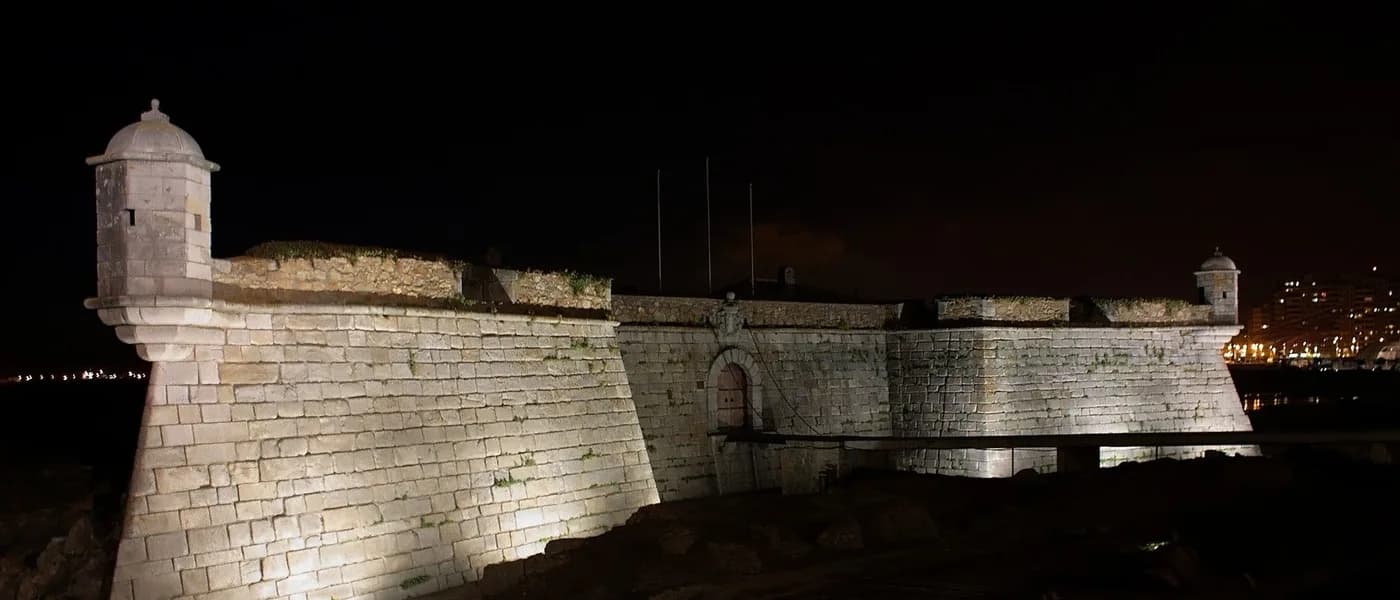
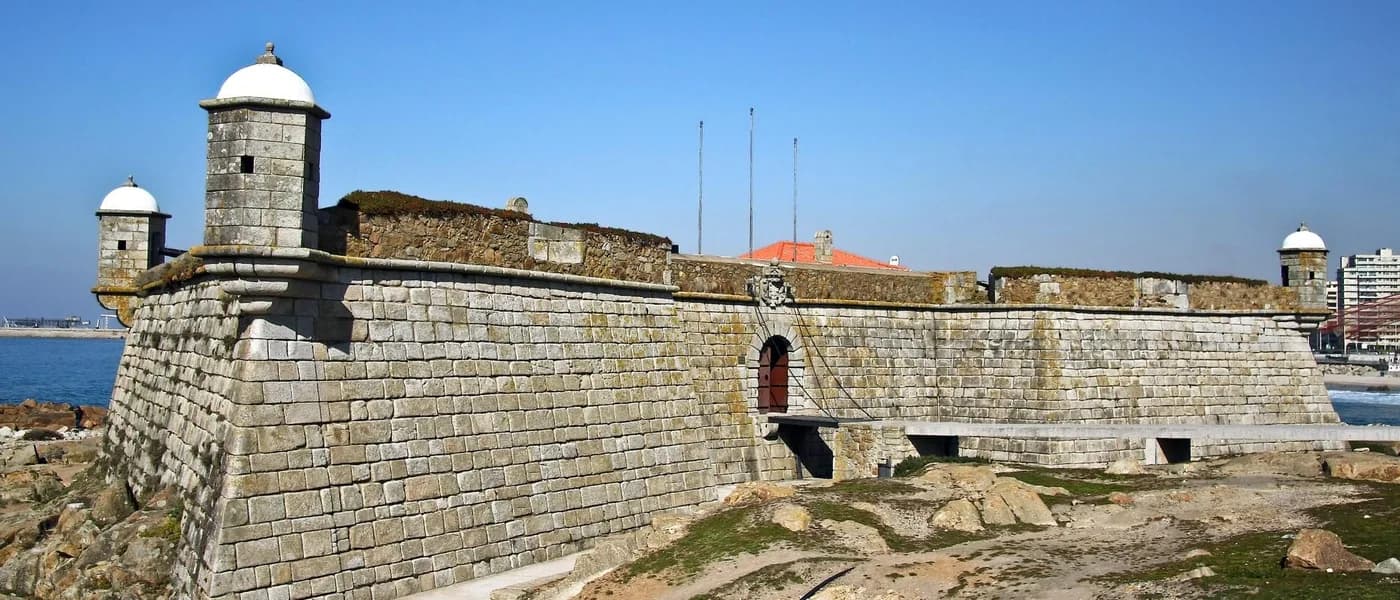
Granite ashlar walls, pentagonal sentry boxes at the vertices with domes and pinnacles, moat, drawbridge, and a monumental portal in a round arch topped by the national coat of arms. On the landward side, the gate in a recessed plane. On the seaward side, the battery open to the wind. Inside, the Casa do Comando, the barracks and the cistern.
what you'll find
- granite rock visible right inside the fort
- Associação de Comandos museum with 20th-century weaponry
- historic cannons on the gun platform, with the Atlantic as backdrop
- position between Porto and Matosinhos, at the visual mouth of the Douro