640 metres above the douro
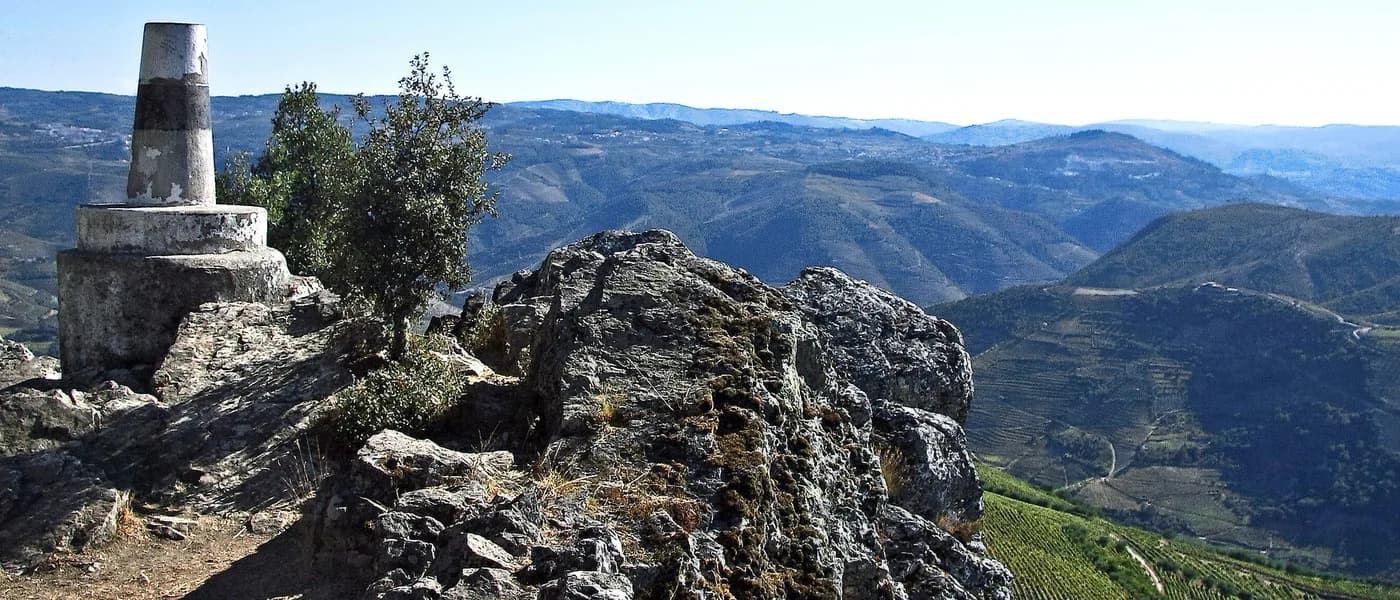
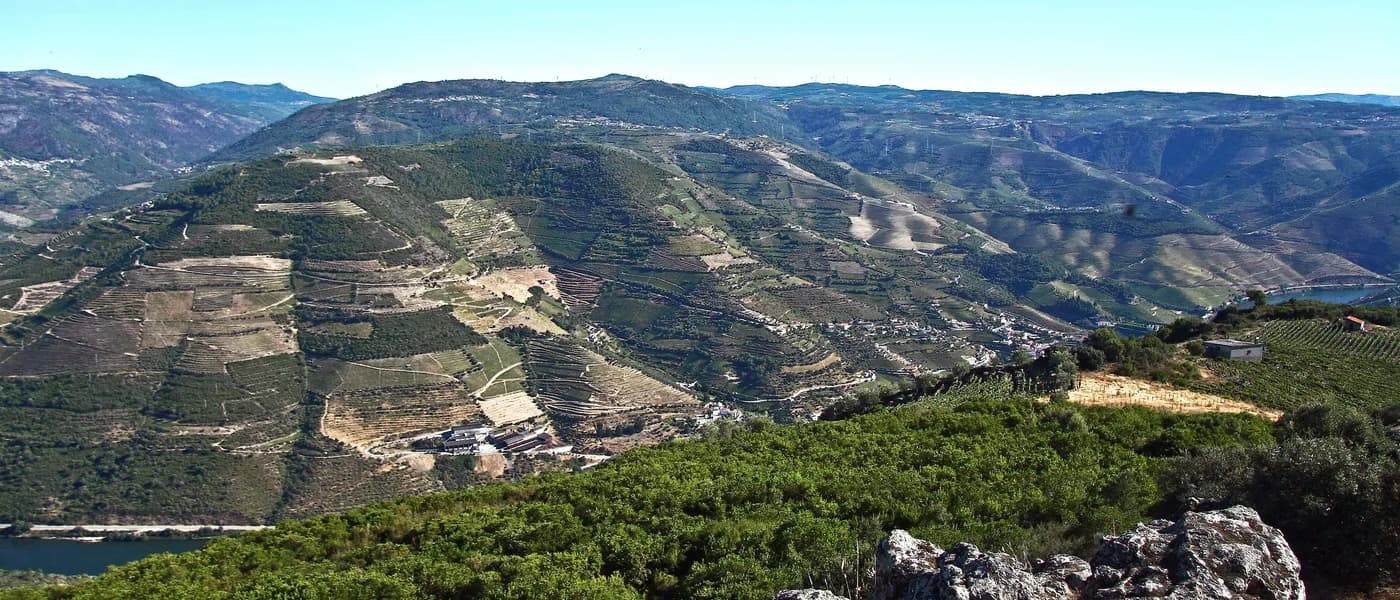
There's a stone at the summit with words carved into it. They're by Miguel Torga, who called the Douro "an excess of nature" and who kept coming back to this hill like someone returning to a place they can't leave behind. It sits at the edge between altitude and emptiness, with the river below curving between slopes covered in vineyard terraces.
The road up follows tight bends along the N313-1. It's not a view that appears suddenly: it's one that announces itself as the valley opens. When you reach the top, the Douro appears straight below, serene, separating whole regions. Armamar, Sabrosa, Tabuaço, Valença do Douro are spread across the horizon like points on a map you never studied but somehow recognise.
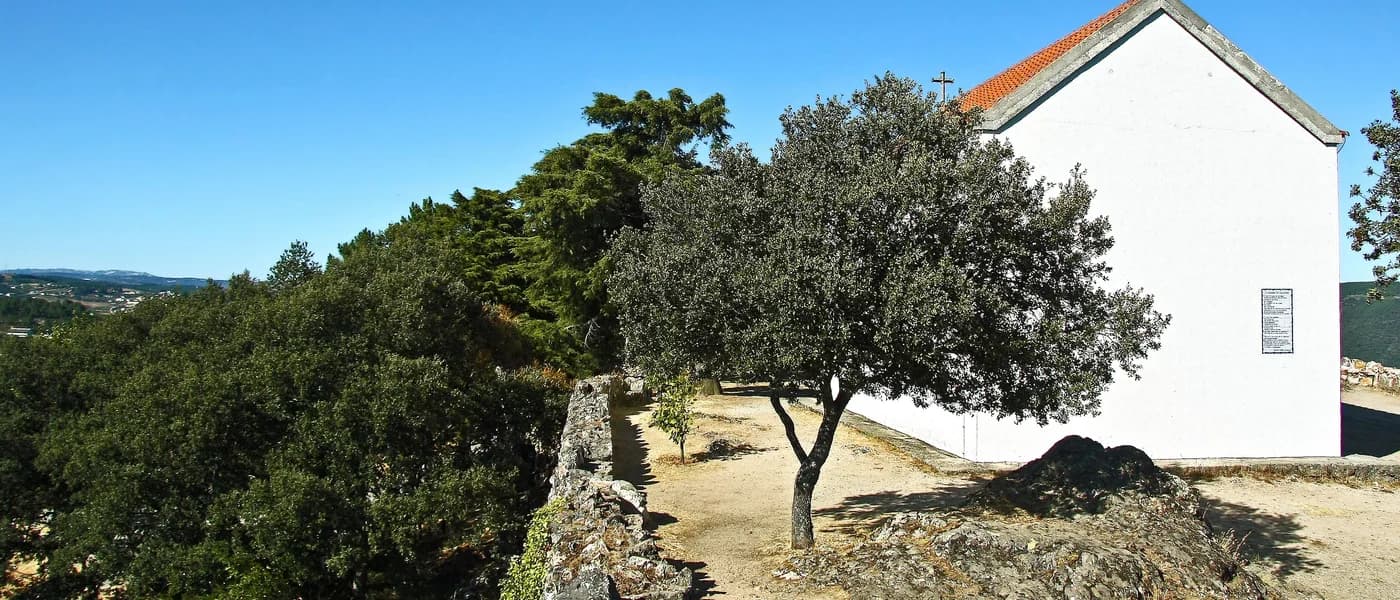
The hill has history that predates the view. There was a Roman castro here, governed by someone called Galafre, who ended up lending his name to the parish. Below ground, flint and quartz; at the surface, the remains of Roman wells dug to extract ore, some still very deep today. At the top there's a small chapel. There's also a picnic area. The place has the texture of spots that endure for reasons beyond tourism.
torga, the douro and the stone with words
Miguel Torga wrote a poem bearing the name of this place. It's not a vague dedication: it's a text that uses the terraces themselves, the vineyards and the horizons of the Douro as its material. The carved stone at the viewpoint reproduces an excerpt, and some people come up just for that, to check whether the place lives up to the words. It usually does. The Douro that Torga described is the same one you see from here: the river that doesn't rush, the slopes that frame it, the light that changes with the hours.
what you'll find
- rocky ground with flint and quartz at the summit
- 360° view over the Douro valley and several neighbouring districts
- stone carved with an excerpt from Miguel Torga
- small chapel at the highest point
- access road with tight bends: allow half an hour from Régua