between stones and blood, the religion rome didn't erase
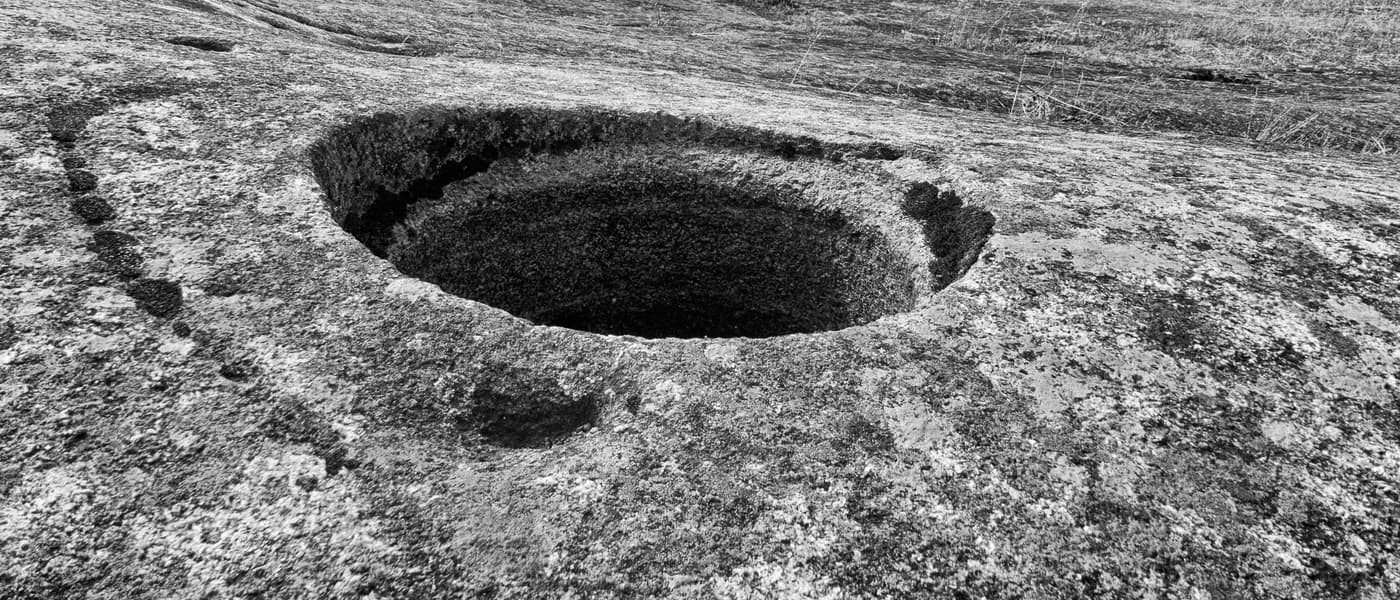
Three granite boulders by the side of the road. At first glance, they look like just huge rocks someone left there a long time ago. But the holes carved into the stone, the Latin inscriptions, the pits for offerings, tell another story: this was one of the most important rock sanctuaries of the Roman West, dedicated to Eastern mystery cults in a remote corner of the Iberian Northwest.
Panóias is the name of the whole site. The excavations revealed that rituals involving animals, blood and libations were practised here, in an initiatory process documented by the very inscriptions carved into the stone by Gaius Calpurnius Rufinus in the 3rd century. That's rare: instead of guessing what was going on, you have the direct testimony of the person who commissioned the sanctuary.
The interpretation centre sits next to the boulders and gives context to what you see outside. Without it, the holes in the rock are just curious. With it, you grasp the ritual sequences, the hierarchy of the spaces, the link to the cults of Serapis and other deities that reached the Douro from the eastern Mediterranean. It's one of the few sites in Portugal where the archaeology and the interpretation are actually in the same place, literally side by side.
You leave with the sense that Vila Real has a lot more under the surface than anyone has told you.
what no one notices
- the Latin inscriptions still legible directly on the stone, with no display case
- the pits come in different sizes: each one had a distinct ritual function
- the cult documented here is Eastern, not classical Roman nor local
- the archaeological site is open-air, right by the side of an ordinary road