the museum born from a drowned village
There's a village at the bottom of the Alqueva. It isn't a metaphor: the village of Luz was submerged when the dam filled up, in the early 2000s, and its inhabitants were rehoused in a new Luz built from scratch a few kilometres away. The Museu da Luz was born precisely from that collective trauma, as a condition negotiated between the community and the State before the waters rose.
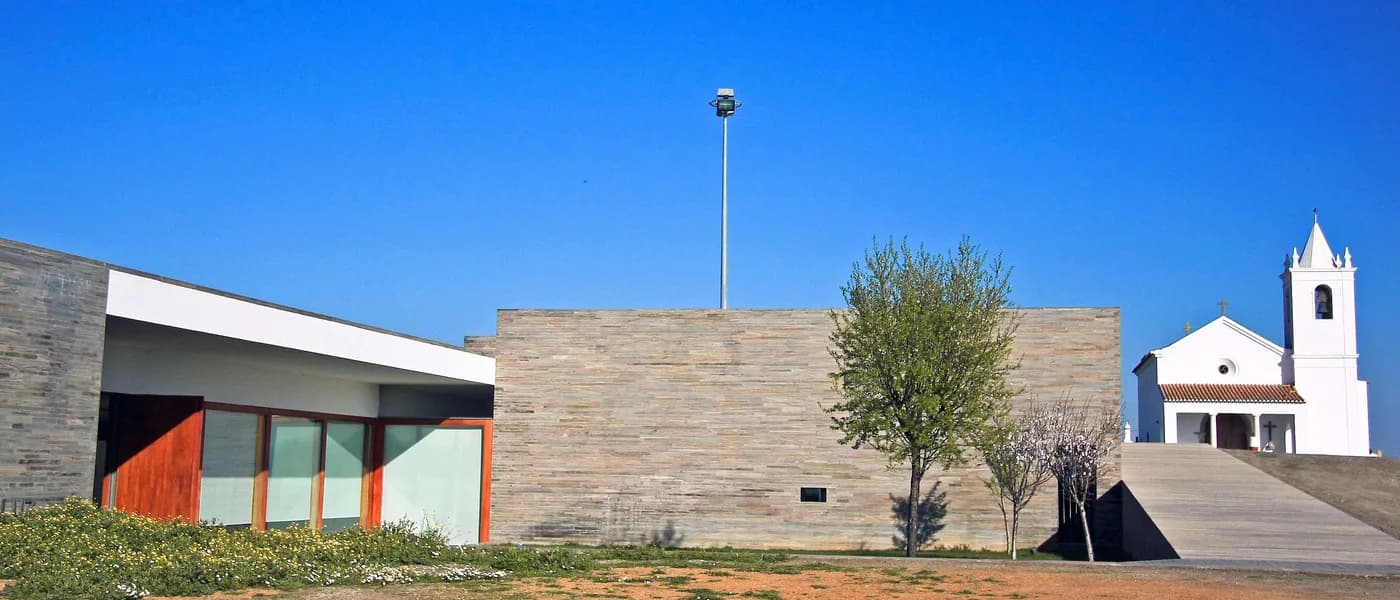
The schist building sits between the new village and the edge of the lake, and that position isn't accidental. The architecture, awarded several times, blends into the landscape without dominating it: local stone, restrained volumes, a direct relationship with the territory around it. You enter the museum and realise the building itself is already a statement.
What the Museu da Luz keeps isn't art or archaeology in the conventional sense. It's the memory of a community that had to move so that Portugal could have the largest artificial lake in Europe. Everyday objects, photographs, audiovisual records, an ethnographic collection documenting a life that was literally submerged. The museum also keeps an ongoing research project about the former residents of Luz, publishing articles regularly.
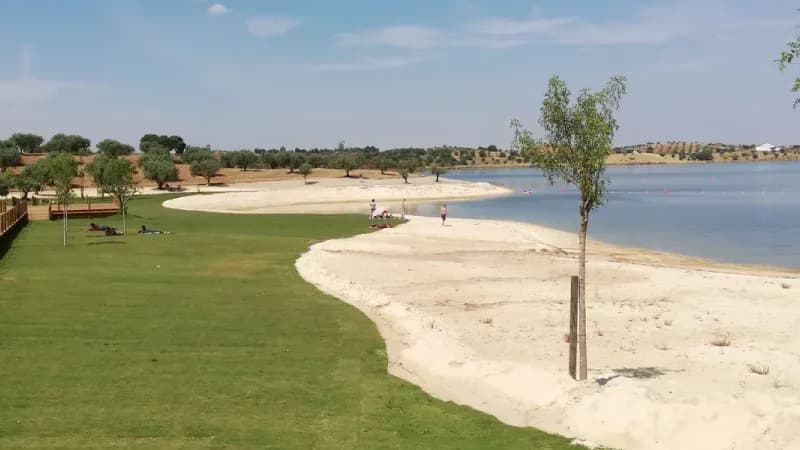
You leave here and the lake is right in front of you, immense and still, and somewhere down there is the old church, the cemetery, the streets that the people of Luz still know by heart.
memory as a cultural programme
The museum doesn't work as a passive archive. The programming includes temporary exhibitions with contemporary artists, an "Object of the Month" that highlights pieces from the collection with their own context, artist residencies and initiatives for schools. Each exhibition starts from the same central questions: what is identity? What happens when a place disappears?
The archaeological collection documented finds from the area before the submersion. The photographic and audiovisual archive records faces, voices and spaces that no longer physically exist. There's a depth here you won't find in another Alentejo museum.
what you'll find
- the schist building as the first piece of the visit
- the permanent exhibition on the submersion of the village and the rehousing of the community
- the "Luzenses de Outros Tempos" project with published research on the former inhabitants
- temporary exhibitions by contemporary artists based on the territory
- the view over the Alqueva right as you leave