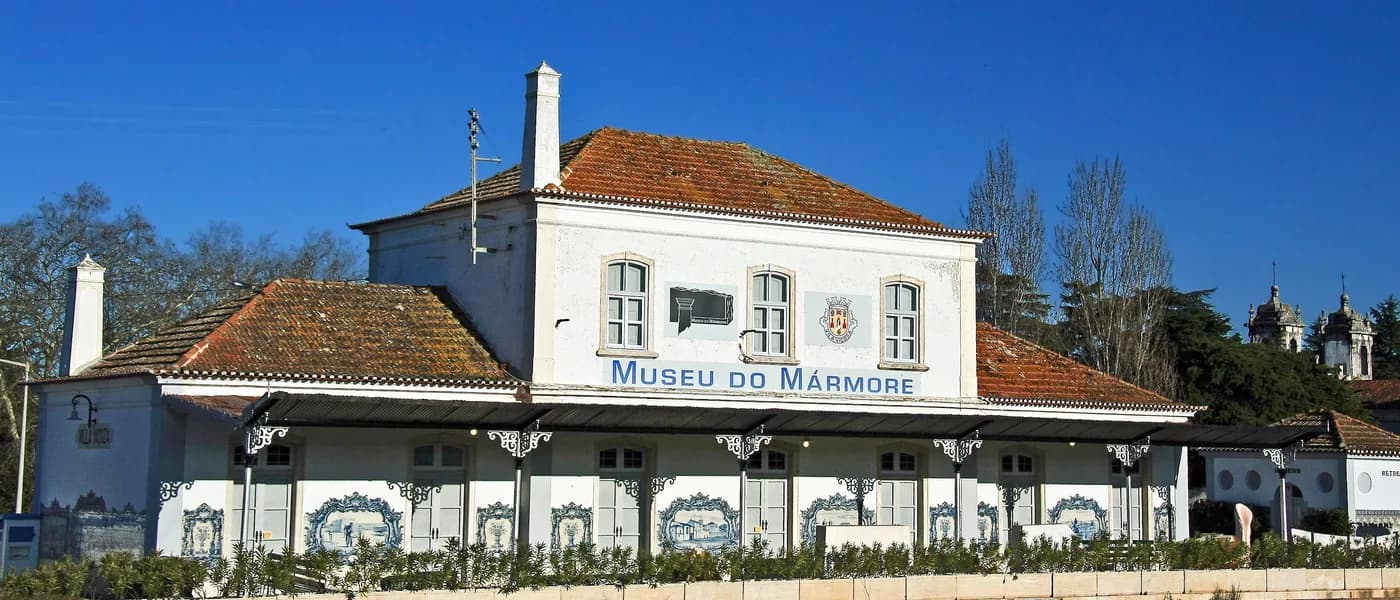
stone that fed an entire region
You have marble floors in plenty of Alentejo homes. But understanding where it comes from, how it's pulled out of the ground and what it cost the people who extracted it is another conversation. The Museu do Mármore, set up in an old quarry in Vila Viçosa, answers that conversation with real objects, worn tools and panels that don't prettify the work.
The marble triangle of Estremoz, Borba and Vila Viçosa is one of the largest marble deposits in the world, and this area is its historic centre. The museum exists precisely here because it couldn't exist anywhere else: the marble extracted from these fields reached palaces, churches and monuments across Europe, and the quarrying shaped the economy, the landscape and the identity of the region for centuries.
What you find isn't an exhibition about pretty stone. It's a record of how people lived around a heavy industry, with everything that implies in risk, technique and dependence. The extraction equipment, the models of the processes and the gathered testimonies create a portrait of the Alentejo that the usual tourist circuits rarely show.
Leaving here and looking at the quarries cut open in the landscape around Vila Viçosa carries another weight.
extraction as heritage
The marble of Vila Viçosa isn't a local curiosity. It's in the Palácio de Mafra, in the Mosteiro dos Jerónimos, in public buildings in Lisbon and in works scattered across Europe. The scale of that historic export gives a different idea of what this small Alentejo town means in the context of European building.
Quarrying also created a very specific craft culture, with terminology, work hierarchies and techniques that the museum documents with rigour. It isn't folklore: it's a record of a sector that still employs a significant part of the region's population today.
what you'll find
- used extraction tools, with real wear
- models and panels about the cutting and transport processes
- historical context of the marble industry in the Alentejo
- a direct link to the territory visible outside, in the open quarries


