the first museum of islamic art in portugal, set up in a granary
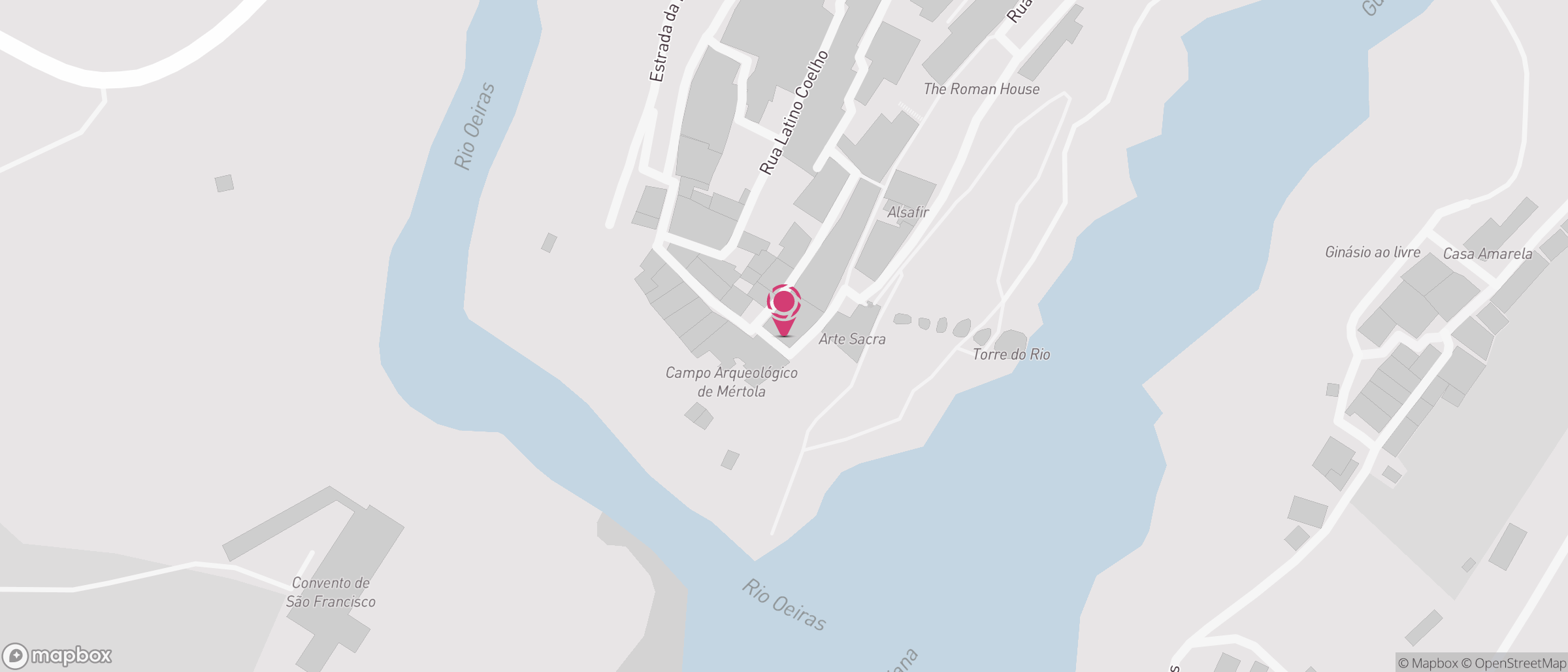
Forty years of archaeological excavations in Mértola fit inside an old granary next to the Porta da Ribeira. The building belonged to the Casa de Bragança and served as a warehouse for the region's produce; today it holds funerary headstones, ceramics, glass and architectural elements from the 9th to the 13th centuries, gathered mostly in the town's citadel.
The Núcleo de Arte Islâmica was the first museum dedicated to this theme in Portugal, opened in 2001. Much of the collection comes from a 12th-century neighbourhood that stood next to the citadel, which gives the pieces a very concrete context: they aren't loose objects, they're the material record of a specific community, in a specific place, on the bank of the Guadiana.
Inside the space there are two elements worth particular attention: the model of the old mosque, since converted into the parish church that still dominates the town, and the dome of the atrium, built according to architectural models from the Maghreb. The dome isn't decorative, it's a statement that the museum was conceived to make sense alongside what it shows.
Mértola is one of the few towns in the country where the islamic layer wasn't erased or turned into folklore, and this collection is the strongest argument for understanding why.
four centuries condensed into one collection
The holdings cover the 9th to the 13th century, a period when Mértola was an active river port with a direct link to the Mediterranean by the Guadiana. That position explains the quality and diversity of the materials: the glass and the metalwork aren't crude local production, they're objects that circulated in long trade networks.
The funerary headstones bear inscriptions in Arabic and are read in the museum with precise archaeological context, you know where they came from and under what conditions. That sets this collection apart from ones built by acquisition: there's an archaeological chain of custody here that you rarely find in museums of this scale.
what you'll find
- ceramics, glass and metalwork from the islamic period with documented provenance
- funerary headstones with inscriptions in Arabic
- a model of the old mosque, today the parish church visible a few metres away
- a Maghreb-inspired dome in the building's atrium
- a 19th-century granary reconverted without losing its original structure