a reservoir with a mineral history and a blue flag in the deep Alentejo
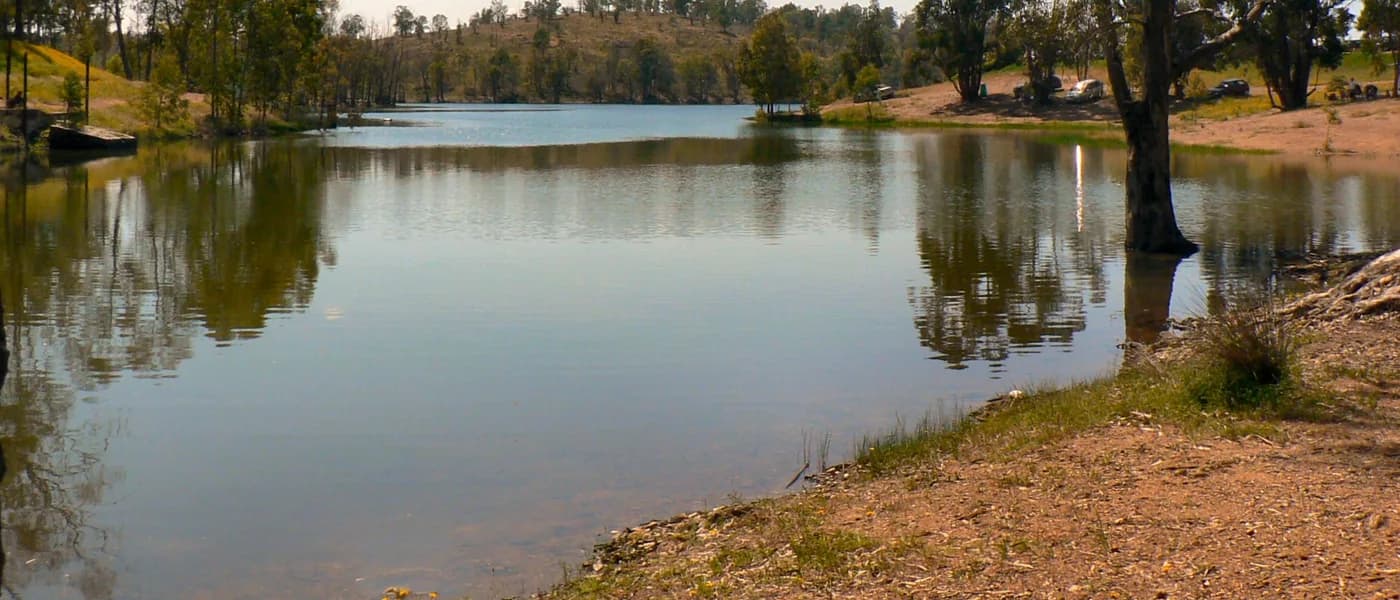
There was ore to extract here and water to make that happen. The Tapada Grande reservoir wasn't born as a beach: it was built by the Mason & Barry company in the 19th century to supply the wet processing of low-grade minerals, in one of the most intense mining operations in southern Europe. The Mina de São Domingos shaped everything in this area, including the body of water you now use to swim.
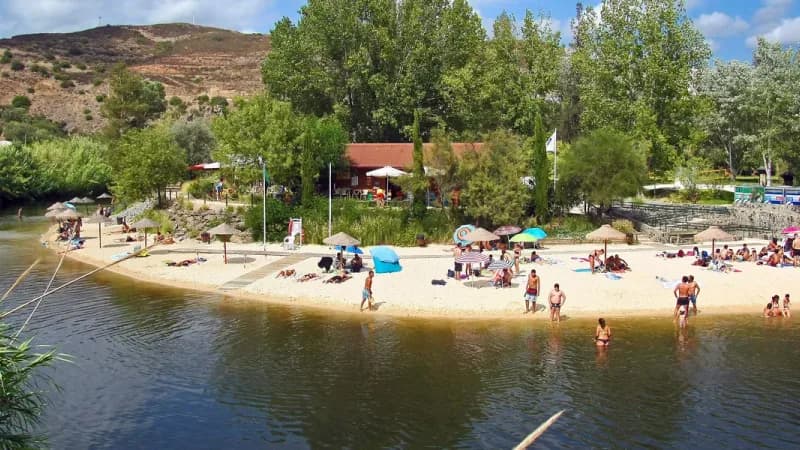
The conversion worked. Since 2012 the beach has had a Blue Flag, which in this context, an artificial reservoir wedged into the Alentejo interior, is no small detail. It's also part of the Programa Praia Acessível, with facilities designed for people with reduced mobility.
What you find around goes beyond the water: an open-air amphitheatre, a picnic area, a children's space. It's a beach with structure, not an improvised spot beside a stream. The village of Mina de São Domingos is right there, with its English-company buildings and the ghost-town atmosphere of a place that hasn't yet realised it's over. You come for the water, you stay for the context.
what you'll find
- a reservoir of industrial origin with supervised, certified water
- facilities with adapted access for people with reduced mobility
- an open-air amphitheatre built into the bathing area
- a Victorian mining village a few metres away, almost uninhabited