when the hunt was still under sail with harpoon in hand
In Lajes do Pico, the harbour has a history most people don't imagine when they reach the island. Until 1987, oared and sailing boats went out from here to chase sperm whales in the Atlantic, without an engine, without locating technology, with a harpoon and the arm of whoever threw it. It was the last place in Portugal where that happened.
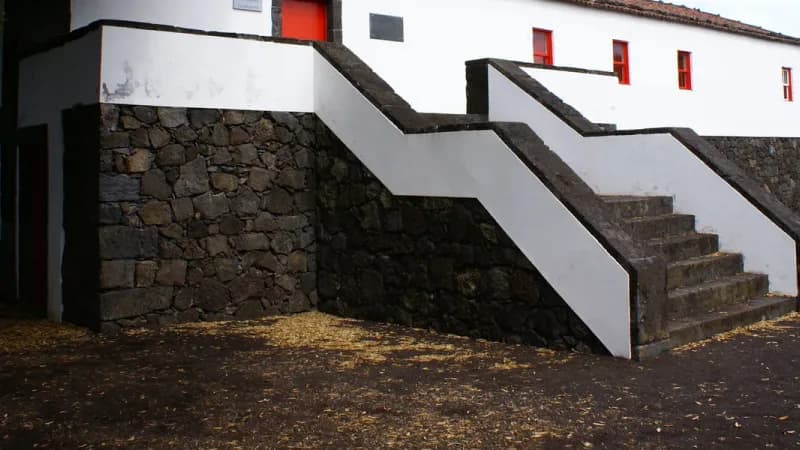
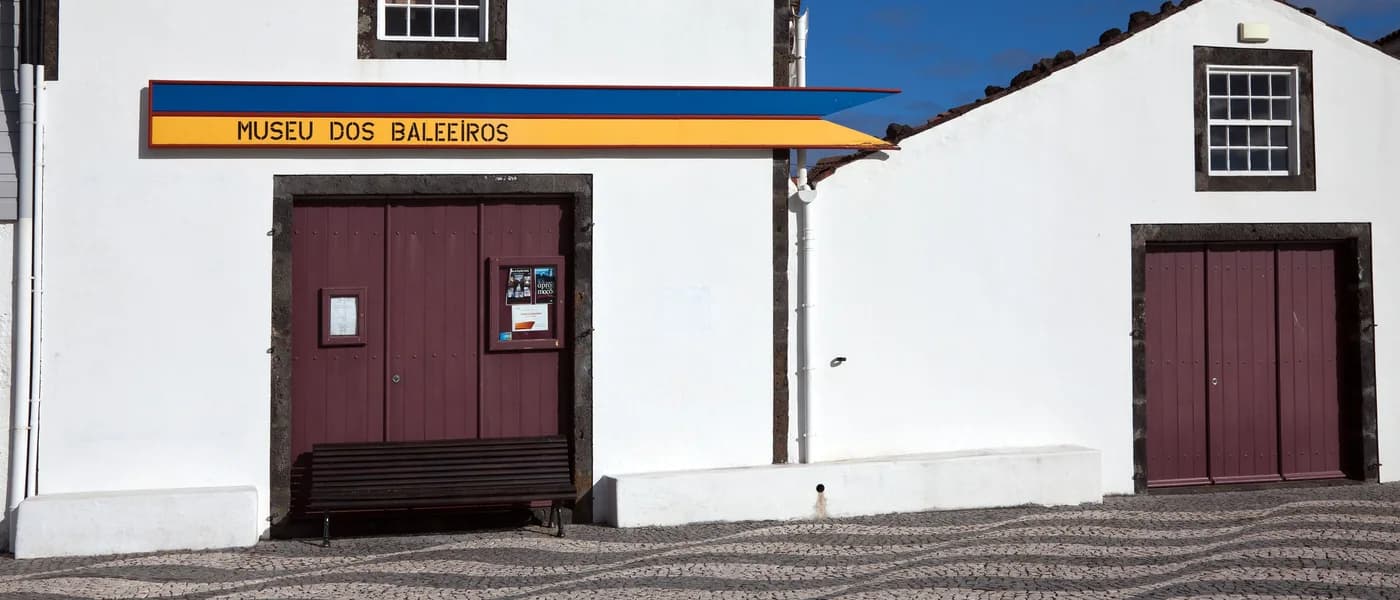
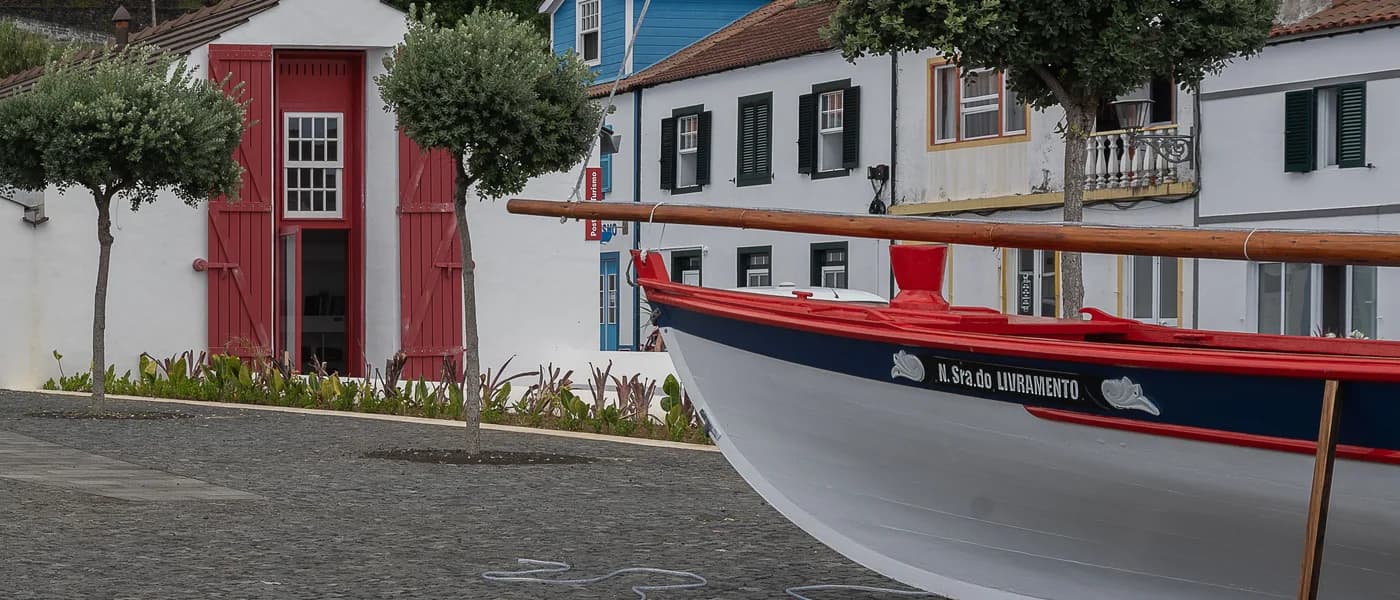
The Museu dos Baleeiros occupies three 19th-century sheds where those very boats were once kept. The building has been classified as a Property of Public Interest since 1980, and the architectural recovery that turned the old "boat houses" into a museum earned an honourable mention from the Association of Portuguese Architects in 1993. There's a coherence between the space and the subject that you feel before reading a single caption.
Outside, on the small square at the entrance, is the reconstruction of a traiol: the structure where the dismembered pieces of the sperm whales were melted over direct fire. It isn't a model. It's the whole process in the concrete, in the open air, right there.
the memory of the craft, section by section
The permanent exhibition is split into five areas: the Azorean whaleboat, the blacksmith's tent, the whaler on land, naval carpentry and whaling art. The last includes scrimshaw, which is the practice of engraving or carving sperm whale bone and ivory, a form of expression the whalers developed in the long waits between catches.
There's also a library specialised in whaling, with original maps and logbooks, and a small auditorium where the film "Os últimos baleeiros" is shown. It's one of the few museums in Europe with this theme, and the only one in Portugal. That isn't marketing, it's a verifiable fact.
what you'll find
- Azorean whaleboats in a real context, not in a glass case
- scrimshaw: engraving on sperm whale bone, made by the whalers themselves
- the traiol outside, which explains the industrial scale of what was done here
- a library with archival documentation on the whaling trade
- a film that closes everything you saw with concrete faces and voices