museum or time machine, you decide
At the end of October, the factory guard would ride on horseback to the village of Pragança and wake the workers with a horn. Before sunrise, the men broke the ice sheets by hand, piled up the fragments and carried them to the silos. That's how Lisboa had ice in summer.
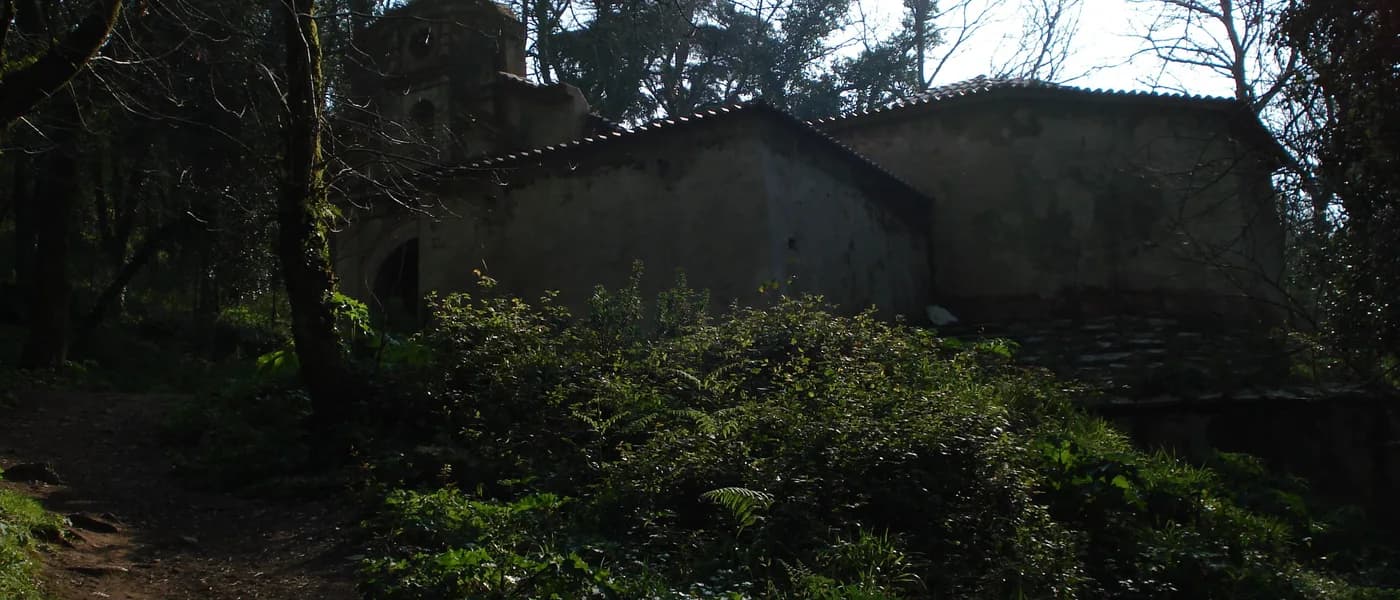
The Real Fábrica do Gelo was built by Dominican friars before 1741, on the serra de Montejunto, because it was the only elevation near Lisboa with the right conditions to freeze water in winter. Julião Pereira de Castro, ice supplier to the Royal Household, expanded the complex in 1782 and went on to control the ice monopoly in Portugal. The family owned a large portion of the cafés in Baixa de Lisboa.
Here you can see the whole chain: the 44 shallow tanks where water froze in communicating terraces, the storage building with cylindrical silos nearly ten metres deep, and the pink mortar marks that indicated the exact fill level. Ice left here wrapped in straw, came down the mountain on donkey back, crossed the Tejo on what were called "snow boats" and reached the Court and the cafés. In 1885 it closed, overtaken by industrialised ice.
It's a National Monument unique in the country and one of the rarest of its kind in Europe. Climbing Montejunto to understand how an entire city depended on this cold hillside has its own logic that urban museums rarely manage to convey.
the engineering nobody expects to find
The freezing tanks aren't simple containers. They were built on three terraces with calculated slopes, communicating through openings ten centimetres from the bottom, to accumulate exactly the right amount of water. The main tank had a pink mortar mark that served as a measure: when the water reached it, you knew there was enough to fill all 44 shallow tanks.
The two storage silos are completely different from each other. The larger one is cylindrical, nearly ten metres deep, with access through two doors. The floor of the preparation building slopes towards the centre and has rectangular pits where the ice compaction benches were set. Every detail was designed for an industrial process that ran for over a century.
come prepared for
- climbing the serra de Montejunto to get there: the location is part of the experience
- the 44 shallow tanks arranged in terraces, still with the pink level mark visible
- the cylindrical silos nearly ten metres deep
- understanding the full circuit, from the mountain to Café Martinho da Arcada in Lisboa