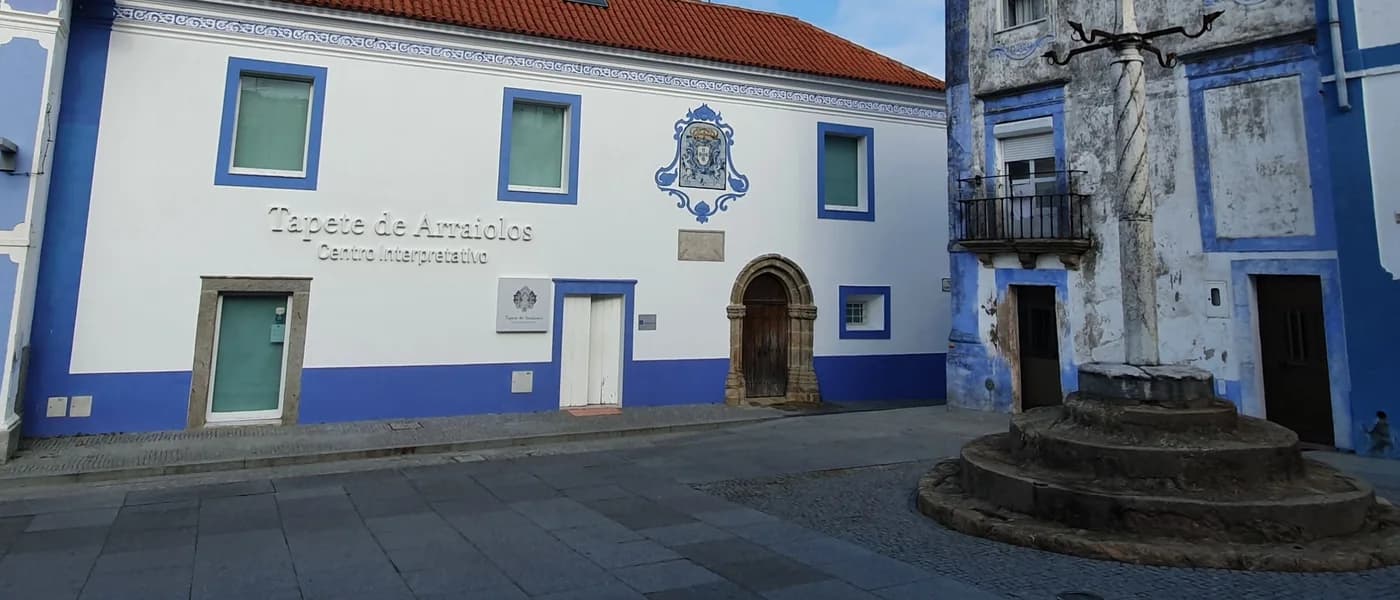
the museum that explains why this town is unlike any other
There's one thing that's done only in Arraiolos. Not anywhere else in the Alentejo, not anywhere else in the country: weaving rugs in cross stitch in wool, on hemp or linen, with patterns that mixed Persian, Moorish and Portuguese influences over the centuries. The Centro Interpretativo do Tapete de Arraiolos exists precisely to explain how that happened and why it still happens.
The CITA occupies a building that also holds local archaeology, an ethnographic collection and holdings from the parish of Nossa Senhora dos Mártires. But it's the rug collection that organises everything around it: old and contemporary pieces that show how the same object changed hands, from noble houses to export, from subsistence craft to a product with a bid for UNESCO Intangible Heritage.
The programme of temporary exhibitions makes this place something more than a repository. Contemporary art has passed through here, Alentejo painting, the memory of the 25th of April with Salgueiro Maia as the central theme. It isn't a museum that closes in on itself.
Leaving here and walking the streets of Arraiolos with a different head has a direct logic: in many houses and workshops of the town, the rug is still made by hand, and knowing what you're looking at completely changes what you see.
what you'll find
- a permanent collection of rugs with centuries between them
- archaeological and ethnographic holdings of the region
- temporary exhibitions that cross the rug with contemporary art and history
- an educational service with guided visits and a programme for groups
- a documentation centre with a consultable catalogue of works


