the largest medieval cathedral in the country
Out front, two medieval towers flank the portal, and twelve stone-carved apostles stand between them. The statues are from the 14th century, ten of them attributed to Mestre Pero. The cathedral sits at the top of the city: the terrace is the highest point in Évora, with views across the plain to the Serras de Ossa and de Portel.
Construction began in 1186, it was consecrated in 1204 and only completed in 1250. All in granite, it shows the transition from Romanesque to Gothic: thick walls, already-pointed arches, ogival vaults inside.
Inside, three naves crossed by a transept. In the central nave, the statues of Nossa Senhora do Ó in polychrome marble and the Angel of the Annunciation in gilded wood, attributed to the Flemish sculptor Olivier de Gand, both Gothic. The choir loft and pipe organ are from the 16th century. The chancel is from the 18th, commissioned during the reign of D. João V, with marble from Estremoz and sculptures from the Mafra school.
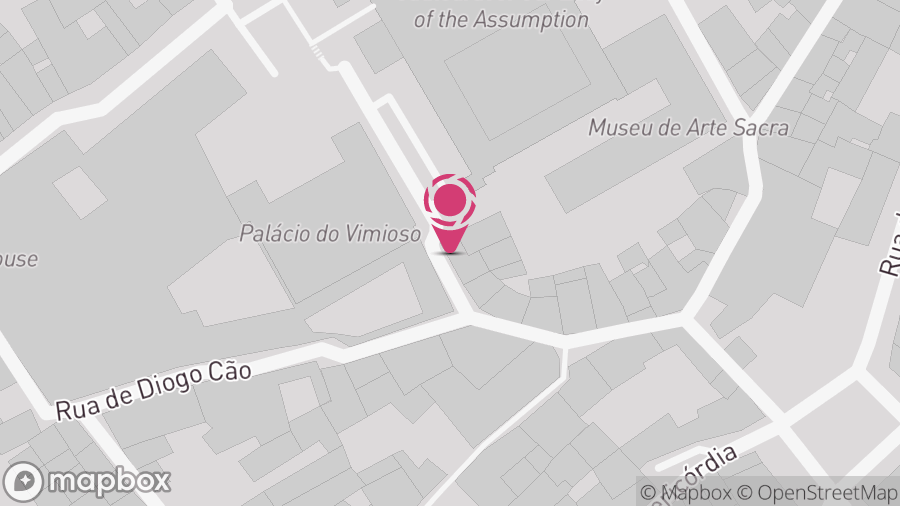
The Museu de Arte Sacra is part of the monumental complex and shows pieces from this cathedral's history, including the 13th-century Virgem do Paraíso and the crozier of Cardinal D. Henrique. The Gothic cloister was built between 1322 and 1340; in the corners, the four evangelists in stone. Go up to the terrace before you leave.
what you'll find inside
- twelve stone apostles flanking the portal, from the 14th century
- three naves crossed by the transept, in granite
- the statues of Nossa Senhora do Ó in marble and the Angel of the Annunciation in wood, both Gothic
- the Neoclassical chancel from D. João V's reign, in Estremoz marble
- the Gothic cloister from 1322-1340, with the four evangelists in the corners