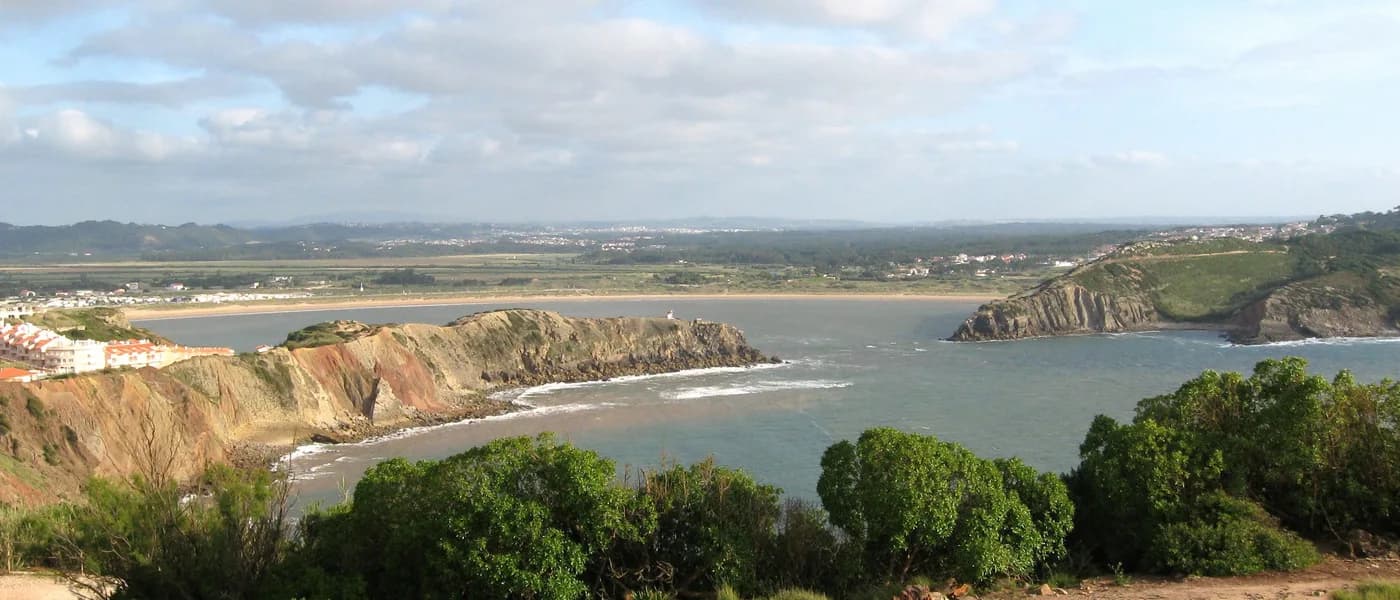
the bay that's not quite a beach, not quite a lake
A few metres wide. That's all that separates the bay from the open ocean. The shape is scallop-perfect, to the point of looking engineered, and the water is so still it reflects the seafront buildings like a mirror split in half by the tide.
The history of this geometry predates humans. The Serra da Pescaria and Serra do Bouro were a single island in geological time. When they split, they left this pocket of sea enclosed between them. São Martinho do Porto grew up inside that accident.
The 19th-century elite spotted the opportunity early. The village became known as "the marquesses' bidet" (a wry jab at how the aristocracy used the calm water as a private bathing spot) and the beach district already had the feel of a second home by around 1885. There's a kind of late-resort architecture you can still sense in the seafront facades: not mass tourism, not a forgotten village.
From the Morro de Santo António, where a small lighthouse shares the space with a chapel of white and blue tiles, you have the whole bay below you. It's one of those angles that explain why this specific stretch of coastline, and not any other, ended up in brochures for a hundred years.
the tunnel that changes everything
The bay has a discreet exit: a narrow pedestrian tunnel that opens directly onto the Atlantic. On one side, the still water of the cove. On the other, the ocean battering the rocks with a violence that catches you completely off guard.
It's such an abrupt physical contrast that it seems deliberate. Two states of the sea, separated by a few metres of carved granite.
go prepared for
- parking is a nightmare on the seafront, even outside peak season
- a fossil dune with a red sandstone core, in Salir do Porto, a few minutes away
- ruins of a customs house where caravels were built for D. Afonso V and D. João II
- the Outeiro lift, connecting the lower and upper parts of the village


