the first artist's house turned museum in portugal
The studio still runs. Not as historical re-enactment or backdrop for guided tours: the workshops at Casa-Museu Teixeira Lopes are, today, the main statue-modelling workshop in Portugal. Around 90% of the statuary produced in the country in recent years came out of here. When you walk in, there's a continuity of real work that few museums manage to have.
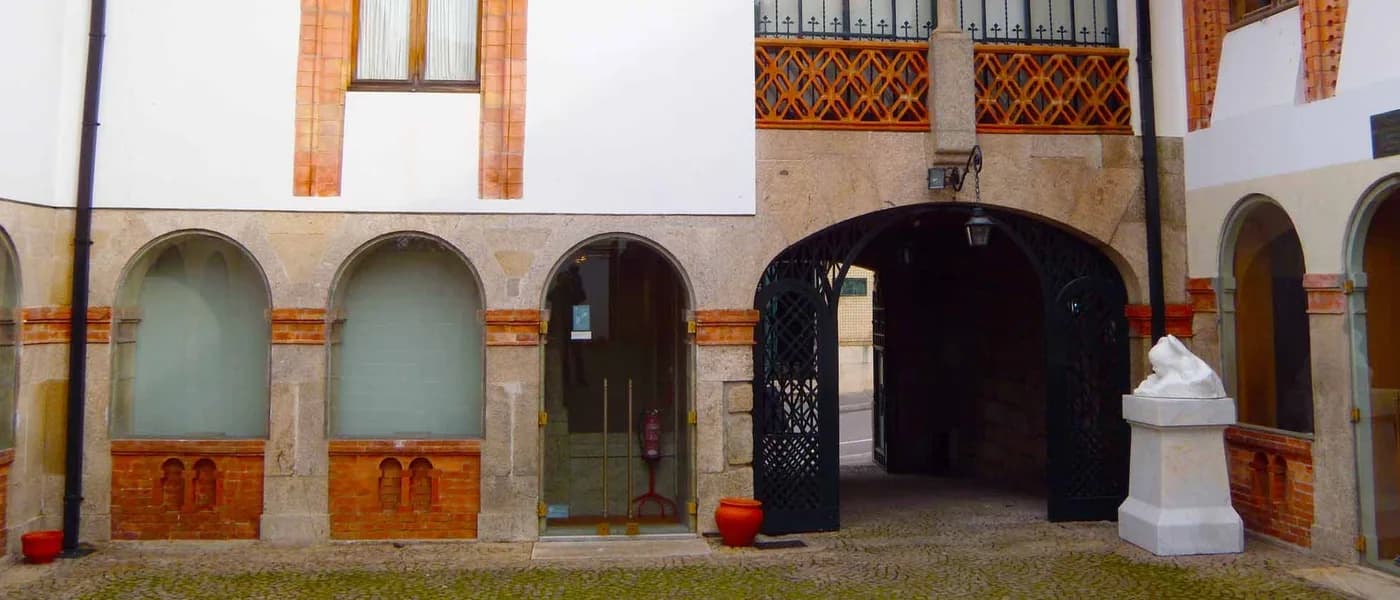
The house was built in 1895 by the sculptor's brother, the architect José Teixeira Lopes, to be both residence and workplace. António Teixeira Lopes lived and sculpted here until he died in 1942, but he had already given everything to the Gaia municipality in 1933, becoming the first Portuguese artist to turn his own house into a museum. The courtyard with its wide stairway and works scattered in the corners gives you, right away, the scale of what you're going to find inside.
There are really two collections in one: Teixeira Lopes's house preserved with the sculptor's estate, and the Galerias Diogo de Macedo in an annex inaugurated in 1975. The galleries bring in names like Amadeo de Souza-Cardoso, Almada Negreiros and Diego Rivera sharing space with sculptures and decorative arts that go all the way to Indo-Portuguese ivories and ceramics from Gaia factories that no longer exist.
Gaia is right there across the river, two steps from Porto, but this place doesn't show up on the quick weekend rounds. Which is exactly why you should go.
gaia ceramics before the wine cellars
One of the least-known parts of the collection is the decorative arts holding, with hundreds of pieces from Gaia ceramic factories. Factories like Devesas, Carvalhinho or Cavaquinho defined Portuguese ceramic production for decades, and much of what's left of them is kept here.
It's not a thematic display with explanatory panel and dramatic lighting. It's integrated into the whole, which forces you to look more carefully. But anyone who knows the historical weight of Gaia's ceramic industry gets that this holding has its own substance, independent of the rest.
what you'll find
- the courtyard with open-air pieces before you even step inside the house
- the active studio where statuary is still seriously modelled
- paintings by Rodin and Gustave Doré sharing walls with names from the Portuguese school
- ceramics from Gaia factories that no longer exist
- two collections with different logics in the same museum complex