museum or portal through time, you decide
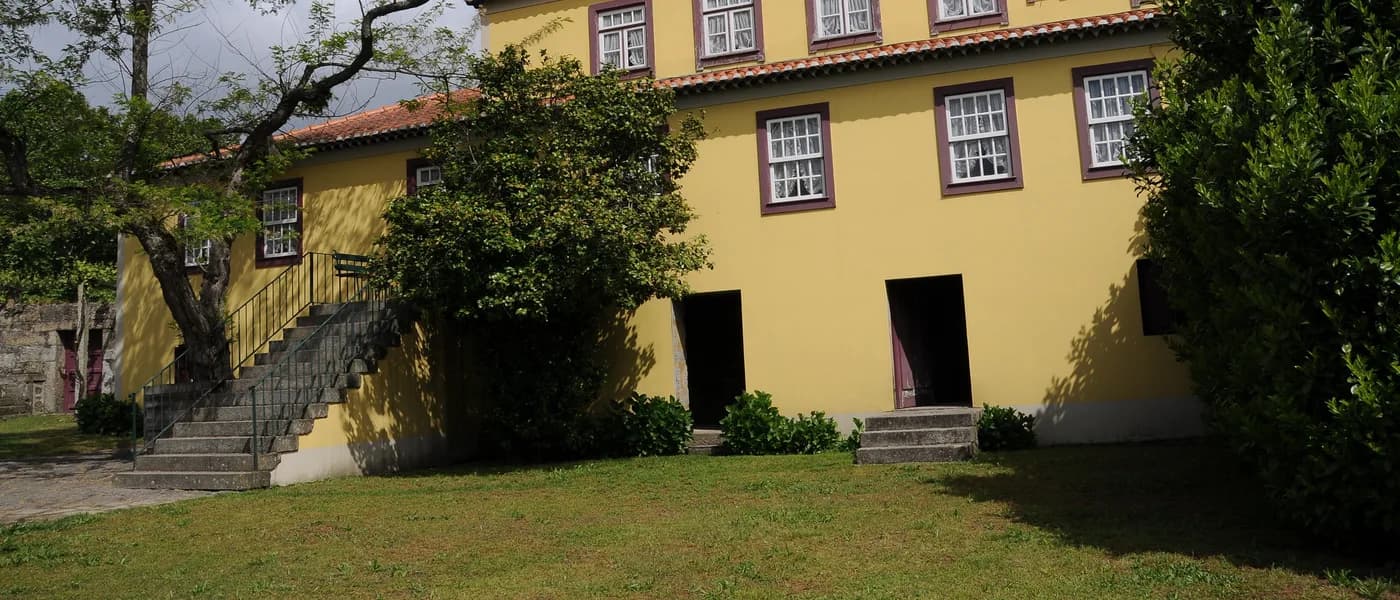
You've walked into a house that burnt down, was rebuilt, went back to being a house and ended up a museum. The Quinta de S. Miguel de Seide carries the weight of a place that refused to disappear. Camilo Castelo Branco lived here for about 26 years, with Ana Plácido, and it was here that, in 1890, he ended his life. The reconstitution is so carefully done that the space feels lived in, not laid out.
The house itself was built around 1830 by Pinheiro Alves, Ana Plácido's first husband, with money brought back from Brazil. Camilo arrived after his death, in 1863, because the estate belonged to Ana's son. It's that kind of story, with overlapping layers of lives, that you feel as you move from room to room.
In 2005, Álvaro Siza Vieira signed the Centro de Estudos Camilianos on the plot across the way, with an auditorium, exhibition rooms and a library. The two buildings, separated by a few decades and by a fire, work today as a single complex. The Casa dos Caseiros has educational services and a kitchen with a Camilian menu, and there's a drying shed and outdoor space dedicated to recreating 19th-century daily activities.
Seide sits inland in the Famalicão municipality, away from the bustle of the centre. When you leave, the Minho landscape around the estate tells you exactly where you are.
what you'll find
- the house reconstituted with furniture and objects from Camilo's time
- the Álvaro Siza Centro de Estudos, a few metres away
- an obelisk on the grounds, built on Ana Plácido's orders in 1866
- temporary exhibitions with work on the Camilian oeuvre
- regular programming for adults and for kids