a palace with a heavy CV and a controversial rebuild
Built in the 15th century on orders from D. Afonso, illegitimate son of D. João I, this Guimarães palace stood abandoned for centuries before anyone decided it was worth saving. Between 1937 and 1959, the Estado Novo ordered a full-on rebuild from a project by architect Rogério de Azevedo: the result is technically faithful to the original Burgundian style, but the intervention still divides historians and architects to this day.
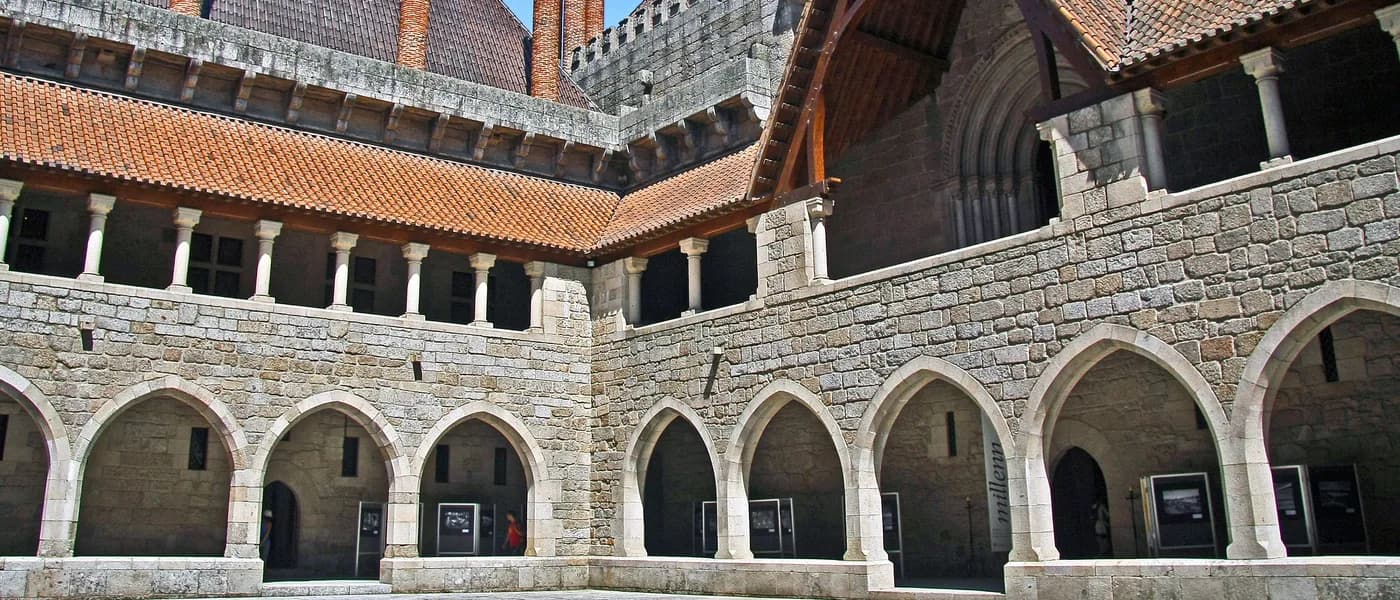
The Paço dos Duques de Bragança works as a museum, as the official residence of the President of the Republic in the north and as an active cultural space, all at once. On the first floor, the collection includes Flemish and French tapestries, Chinese porcelain, furniture and paintings like the portrait of D. Catarina de Bragança and a Paschal Lamb attributed to Josefa de Óbidos. They're pieces that don't really belong to the territory but that ended up here through the noble houses that passed through this place.
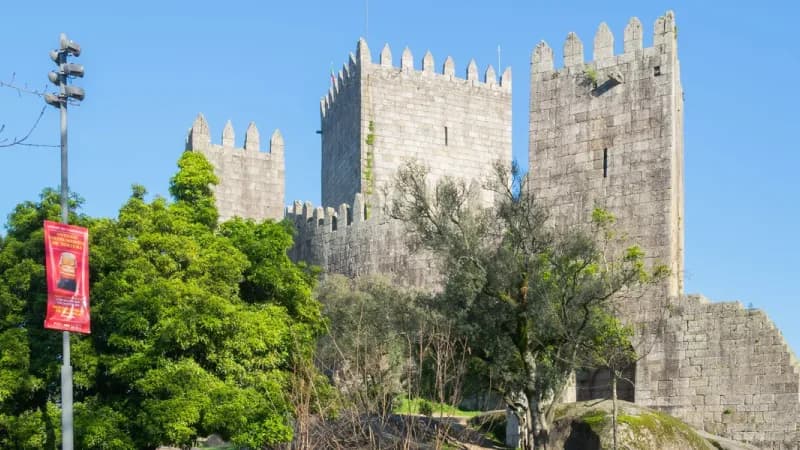
The building sits on the Monte Latito, next to the Castelo de Guimarães and the Igreja Românica de S. Miguel do Castelo. The three monuments are a few steps from each other and cover from the 12th to the 15th century without leaving the same hill. You can walk into the Paço and then go up to the castle on the same day, no car or taxi in between.
the weight of the building
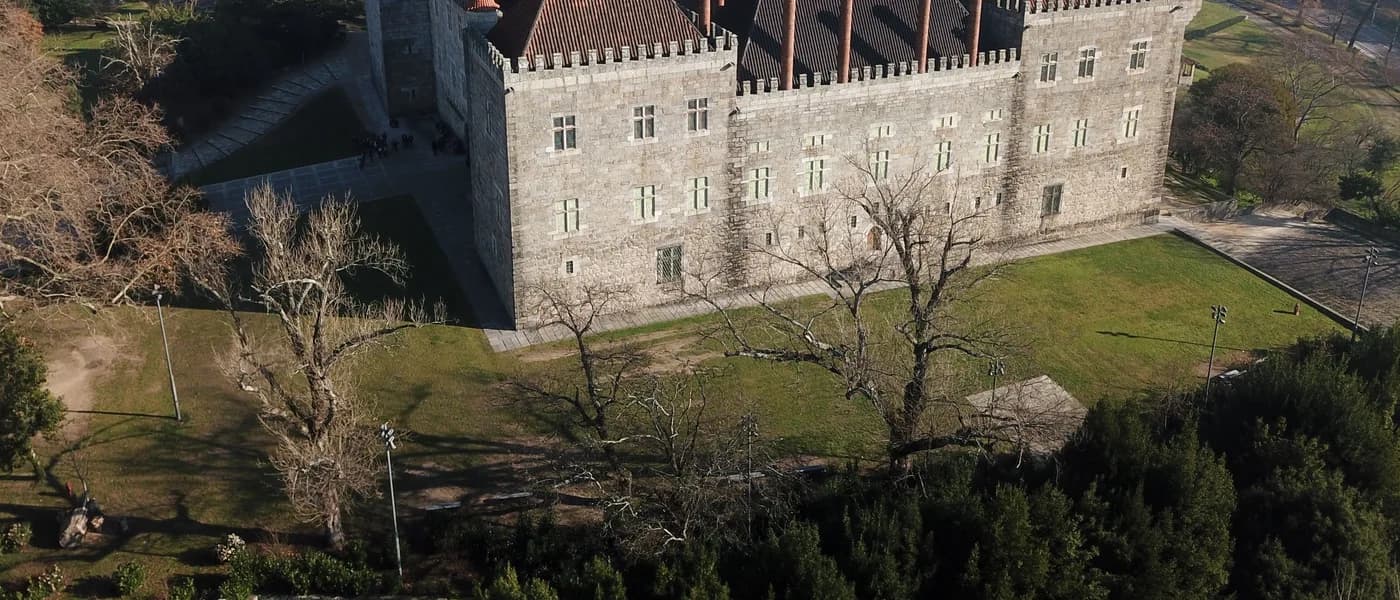
The 1940s reconstruction raises a question worth keeping in mind when you walk in: what you're looking at, is it the palace as it was, or as the Estado Novo imagined it should be? The honest answer is that it's both things at once. The Burgundian style, with the cylindrical chimneys that dominate the building's silhouette, reflects the taste D. Afonso brought back from his travels through Europe. The matter standing in front of you, that one, is from the 20th century.
Before the rebuild, the building spent almost 130 years as a military barracks, between the French invasions of 1807 and 1935. It's that overlap of functions, abandonment, military use and political reconstruction that makes the Paço more interesting than most national palaces.
what you'll find
- Flemish and French tapestries on the first floor, on a scale that lands
- the portrait of D. Catarina de Bragança, Queen of England and wife of Charles II
- the silhouette with Burgundian chimneys, easier to read from outside than from within
- a building that's at once a national monument, a museum and an active presidential space
- the castle and the Romanesque church less than five minutes on foot