where portugal began, or at least that's what the stone says
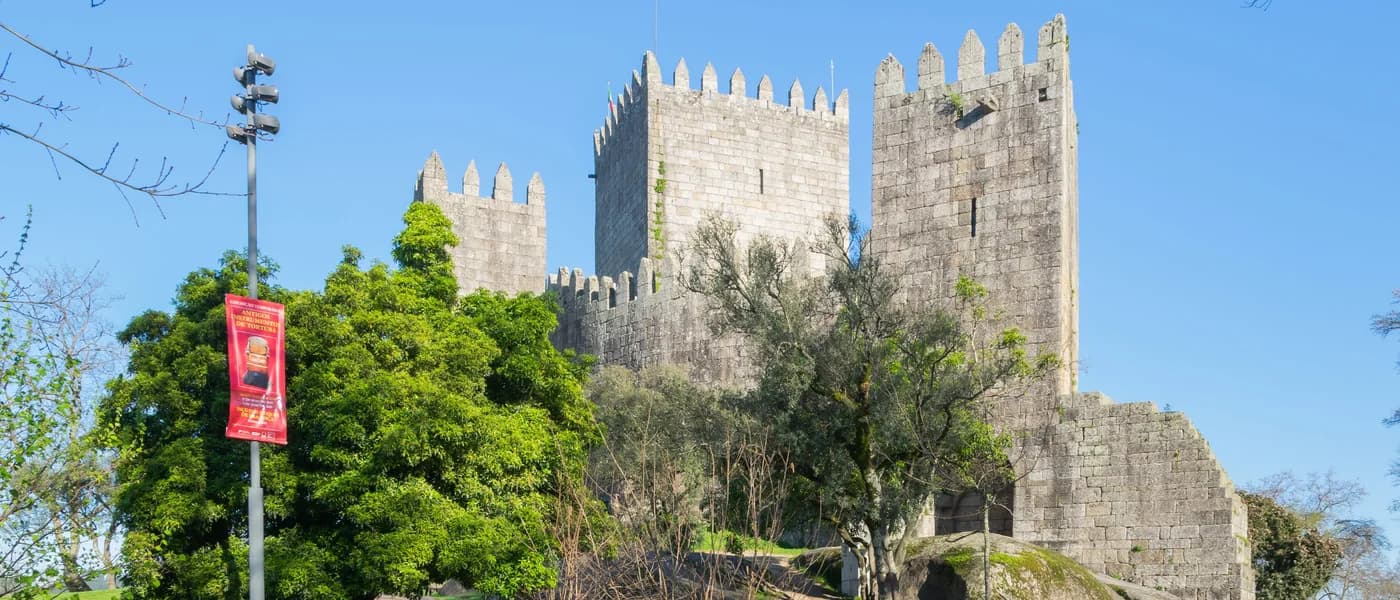
There's a phrase inscribed in collective Portuguese memory that this place claims with conviction: "here Portugal was born." The Castelo de Guimarães is not just a well-preserved medieval fortress. It's the physical argument for a founding, the site the national narrative chose to anchor its twelfth-century origins.
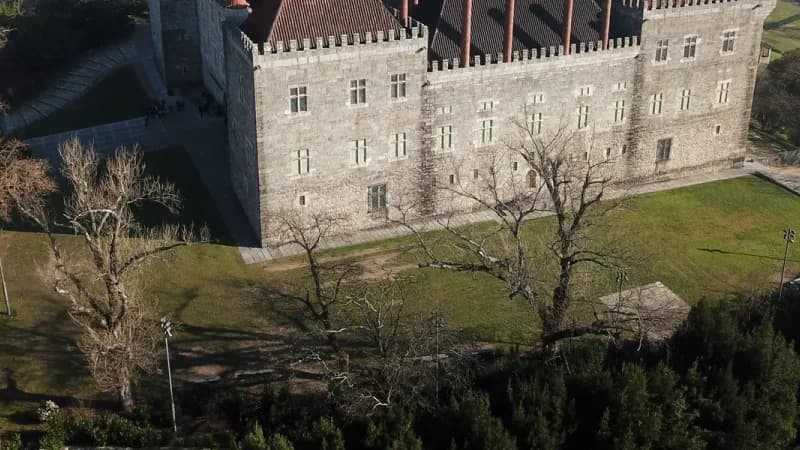
The structure you see today results from several building campaigns over the centuries, with a central role attributed to Count D. Henrique de Borgonha in the late eleventh century. It was here, or in its vicinity, that D. Afonso Henriques is said to have grown up before becoming the first king of Portugal. The castle shares Monte Latito with two other national monuments: the Romanesque Igreja de S. Miguel, associated with the baptism of D. Afonso Henriques, and the Paço dos Duques de Bragança, built in the fifteenth century.
Climbing the towers gives you a different reading of the city. Guimarães spreads out below with its intact historic centre, a UNESCO World Heritage Site, and you immediately understand why this hill was chosen to command the territory.
the monte latito ensemble
The castle alone already justifies the visit, but what makes this place distinctive is the historical density concentrated in a single elevated space. In a few metres you move from fortress to Romanesque church to ducal palace, three layers of power and devotion stacked between the eleventh and fifteenth centuries.
The Igreja de S. Miguel do Castelo is small, almost disproportionate to the symbolic weight it carries. The association with the baptism of D. Afonso Henriques is traditional, not definitively documented, but that doesn't diminish the impact of standing inside, with the floor of medieval gravestones right under your feet.
what you'll find
- towers and walls you can walk with views over the city
- the Igreja de S. Miguel a few metres away, with austere interior and floor gravestones
- the Paço dos Duques right alongside, with a permanent collection of decorative arts and weapons
- gardens on the hill linking the three monuments
- school groups and historical reenactments fairly often, especially during organised visit season