a castle in the middle of the river, not a figure of speech
An island in the Tejo. A castle on top of the island. No bridge, no walkway, no way to get there without a boat. That's the Castelo de Almourol, and it's exactly as cinematic as it sounds.
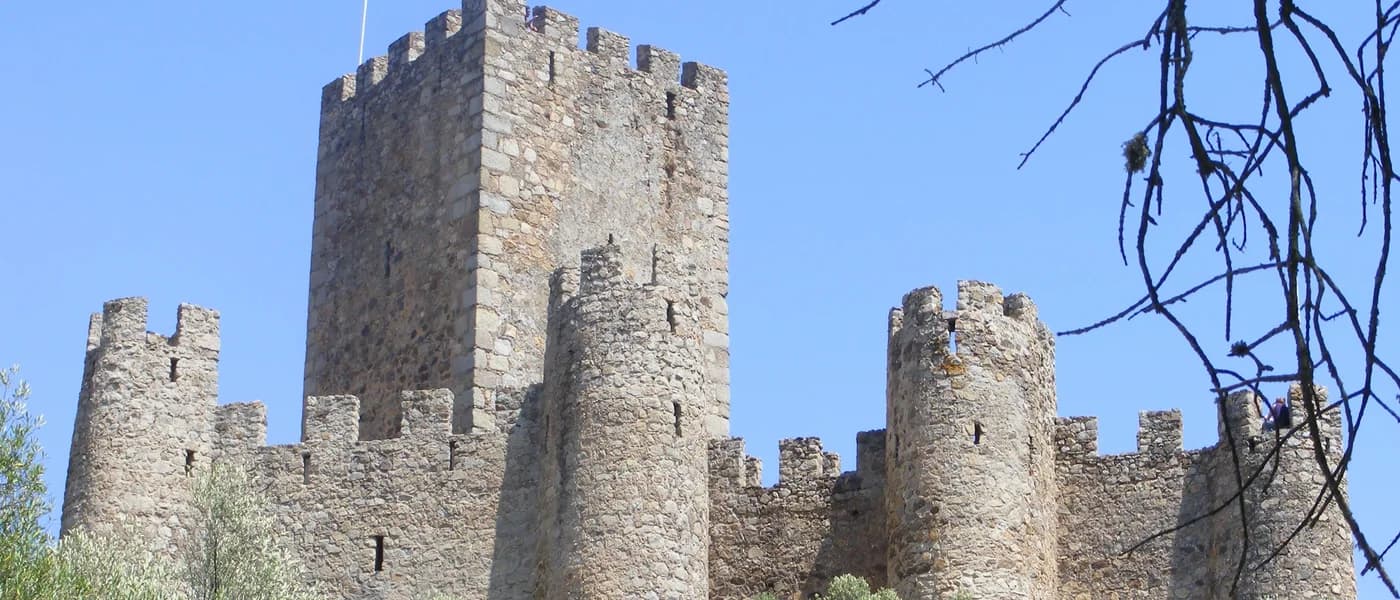
The island is maybe a hundred metres long. The castle takes up almost all of it, with a keep at the highest point that you can see from a long way off, from both banks. The site has been occupied since Roman and Templar times, but what's standing today is essentially medieval, with nineteenth-century interventions that gave it the look you see in photographs.
Getting there means taking one of the boats that leave from the banks of the Tejo. That short crossing is already part of the experience: the castle approaches slowly, reflected in the water, and you realise it's right there, isolated, with nothing around it to anchor it to the present. From inside, the battlements frame the river in both directions, with the plains of Ribatejo opening to the south and the hills of Tomar to the north.
the templars and what remained
The Order of the Temple received Almourol from D. Afonso Henriques in 1171, already after the reconquest from the Moors. Gualdim Pais, the order's provincial master in Portugal, is the one who oversaw the reconstruction that gave the castle the form you still recognise today. The keep, the ten towers along the wall, the central courtyard: all Templar, all twelfth century.
With the dissolution of the Order of the Temple at the start of the fourteenth century, the castle passed to the Order of Christ and was then gradually abandoned. The ruin lasted for centuries. The recovery in 1840 was ordered by D. Fernando II, the same king who commissioned the Palácio da Pena, and followed the Romantic taste of the time for medievalism. The result is a castle that is, in part, a nineteenth-century fantasy about the Middle Ages, built on foundations and walls that really are from the twelfth century.
what you'll find
- the boat crossing as a mandatory part of the visit
- an accessible keep with views over the Tejo in both directions
- a wall with ten towers, almost entirely walkable
- a simple interior without an elaborate museum: the architecture is the content