
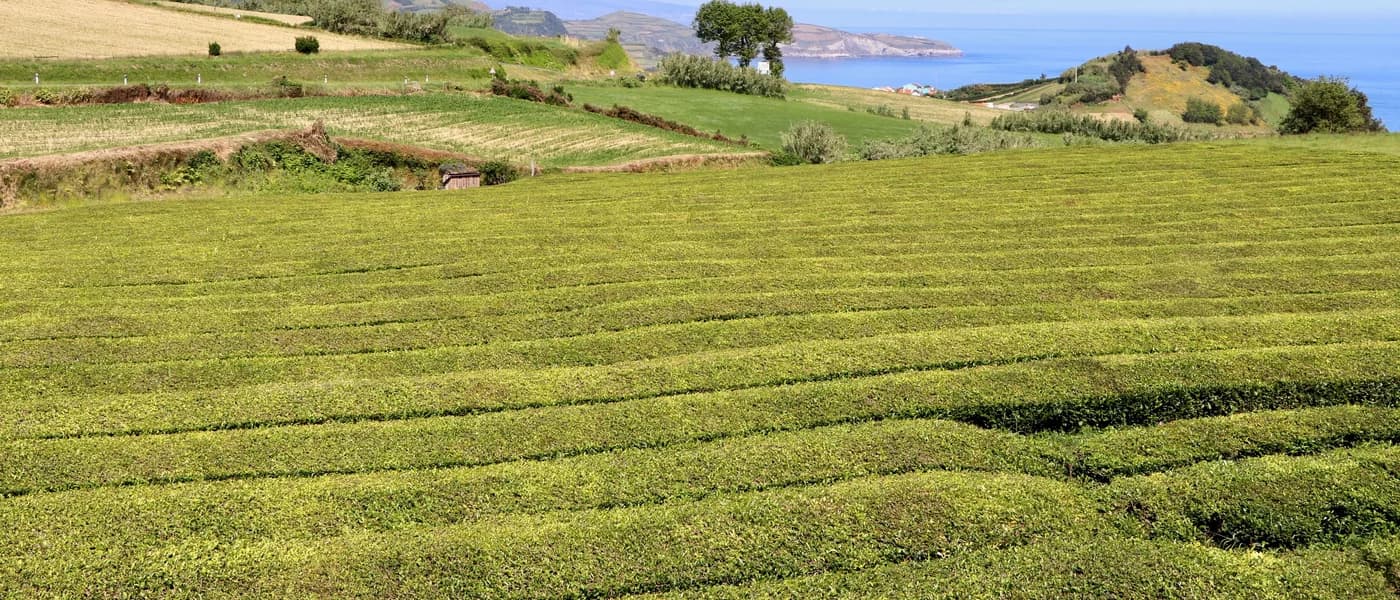
the only tea plantation in europe, and it's in são miguel
Since 1883 the family behind Gorreana has grown tea on the slopes of Maia, in Ribeira Grande. It isn't a historical reconstruction or a staged museum: the factory produces tea for real, with period machines still running, and you can see the whole process without paying anything.
The plant that grows there is Camellia sinensis, the same one green tea and black tea come from. It reached São Miguel around 1820, brought by a Micaelense returning from Brazil. Later, in 1878, two Chinese technicians from Macau taught the preparation techniques that Gorreana still preserves. The clayey, acidic soil of that specific 75-hectare parcel results in a tea with a flavour and aroma distinct from those produced in other areas of the island that also tried the cultivation.
What sets this visit apart from any other museum is the context: you enter through the plantation before entering the factory. The rows of shrubs stretch across the valley with the dark-green landscape of São Miguel around them, with no fence and no mandatory route. The cup they offer you at the end came from those leaves, from that ground.
five generations without pesticides
Gorreana has never used pesticides, herbicides or fungicides. It isn't a recent certificate won through market pressure: it's the practice it has always had, kept across five generations of the same family. The volume produced varies with the year and the weather, and the maximum ever recorded was 42 tonnes.
The production includes black tea, traditional green tea and special green (more aromatic), plus a semi-fermented variety. Each type goes through different phases in the factory, and you can grasp the differences in the process just by watching the machines at work.
what you'll find
- drying and sorting machines from the early 20th century still in use
- a plantation accessible on foot, with no mandatory guide
- a free cup of tea at the end of the visit
- a shop with teas produced on site, including blends with island ingredients