three circuits in an old convent of nuns
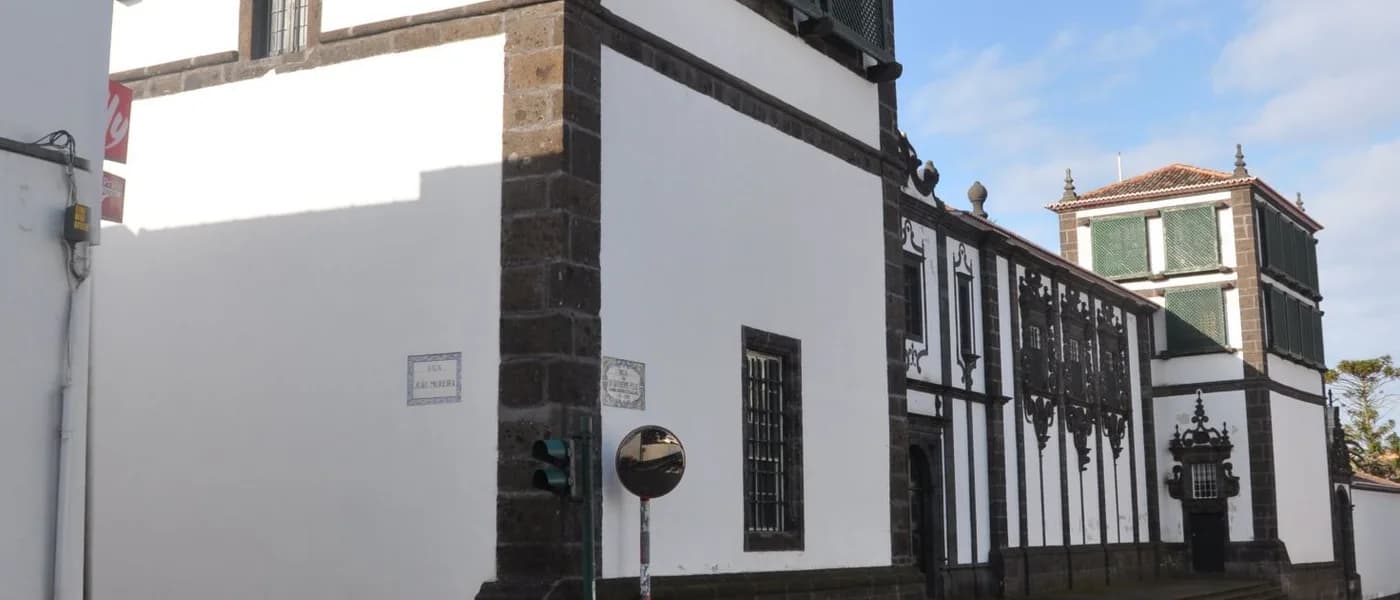
The building says more than any display case. The Núcleo de Santo André operates inside an old convent of the Poor Clares, the female Franciscan branch, and that monastic origin is everywhere: in the corridors, in the proportions of the rooms, in the logic of the space. This isn't a museum installed in a convent for convenience; it's a museum that uses the convent as an argument.
The Museu Carlos Machado organises the visit into three distinct circuits. You can follow the conventual memory, which reconstructs the architecture and daily life of the Poor Clares. You can head into natural history, with eight rooms of naturalist collections including zoology, geology, mineralogy and botany. Or you can enter the Igreja do Colégio, where the baroque does what baroque knows how to do: pile up layers until you don't know where to look first.
the church that steals the show
The Igreja do Colégio is the strongest argument in the building. The facade, the main altar retable and the 17th-century tiles form a set that doesn't apologise for excess. Azorean baroque has its own characteristics, shaped by isolation and by the materials available on the islands, and this interior is one of the places where that reads most clearly. The adjoining sacred art gallery extends the argument with pieces from the 16th century and a religious-themed collection heavy enough to hold your attention.
The natural history collection was the founding basis of the museum. It has that cabinet-of-curiosities tone of the 19th century, where the exotic and the scientific coexisted without clear distinction, and that tension is still there in the eight rooms.
what you'll find
- three circuits that work separately but share the same space with logic
- 17th-century tiles inside the church, intact in their original context
- naturalist collections with specimens rarely seen in museums of this scale
- the conventual space as a piece in itself, not just a container