serious rock art, not decorative
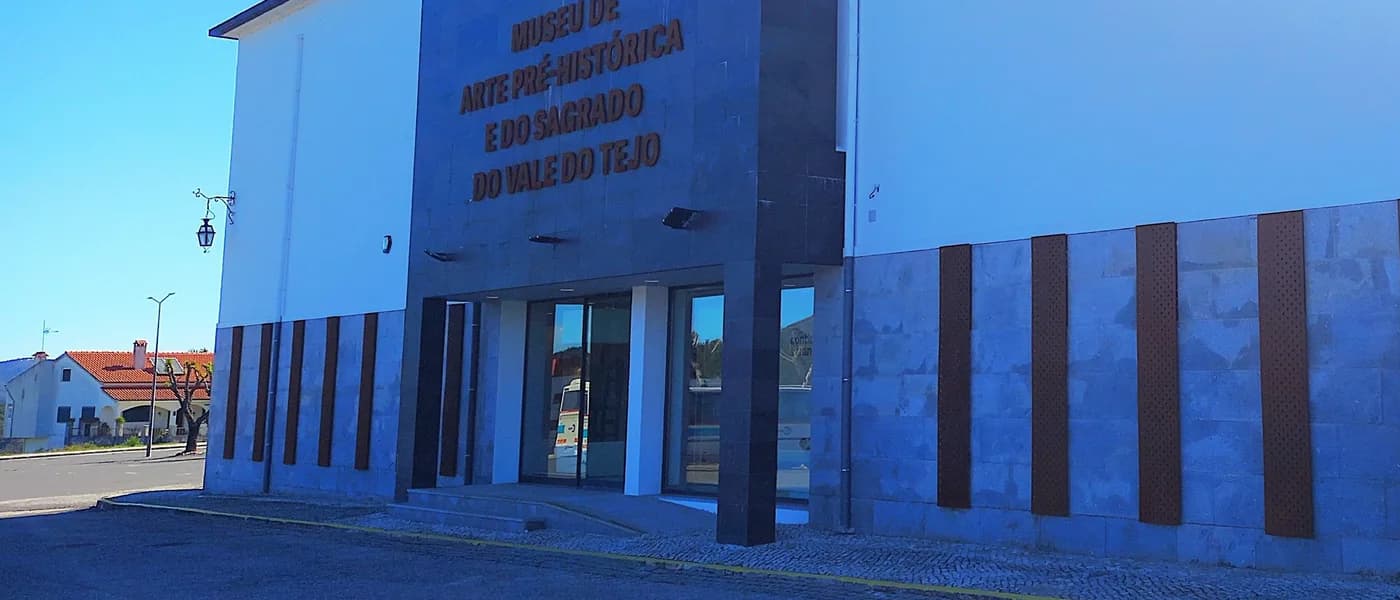
In 2000, on the banks of the Ocreza river, they found carvings more than twenty thousand years old. That find changed the museum that had been around since the eighties and reoriented everything: research, teaching, international partnerships. The Museu de Arte Pré-Histórica e do Sagrado no Vale do Tejo wasn't born out of a cultural strategy. It was born out of concrete discoveries in the field.
The origin goes back even further. In 1943, João Calado Rodrigues found archaeological material at Porto do Concelho. Decades later, the historian Maria Amélia Horta Pereira studied the collection and drew up the project that opened to the public in 1986. What you see today is the result of three generations of accumulated work, with around six thousand pieces obtained in surveys and excavations.
It runs in partnership with the Instituto Politécnico de Tomar and is part of the Instituto Terra e Memória, which means it's not a display-case museum. There's a library specialised in rock art, a conservation and restoration laboratory, and active research with international reach. Mação sits in the deep interior, between the Tagus and the Ocreza, and this museum is the main reason for coming all the way here.
what no one notices
- the permanent exhibition is called "Gestarte" and starts from a simple idea: the human gesture as the origin of all communication
- the library is specialised in rock art, it isn't a generalist archaeology library
- the scientific director, Luiz Oosterbeek, has ties to the International Federation of Rock Art Organisations
- the Ocreza carvings are in the valley right next door, they're not an abstraction