the capital's postcard, no filter
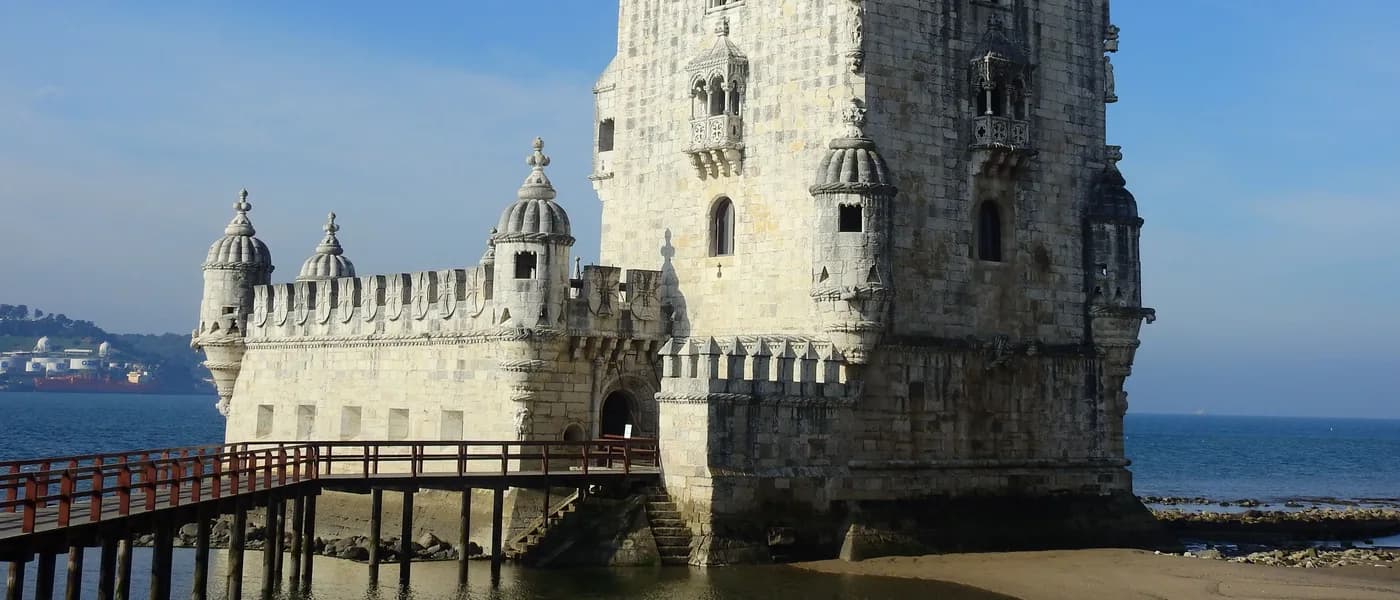
Not many things in Portugal have this level of instant recognition. The Torre de Belém appears on t-shirts, souvenir tiles and travel guide covers worldwide. What those brochures don't tell you is that the building was constructed between 1514 and 1519 on a basalt outcrop, some distance from the north bank of the Tejo. It wasn't touching land. It was in the water.
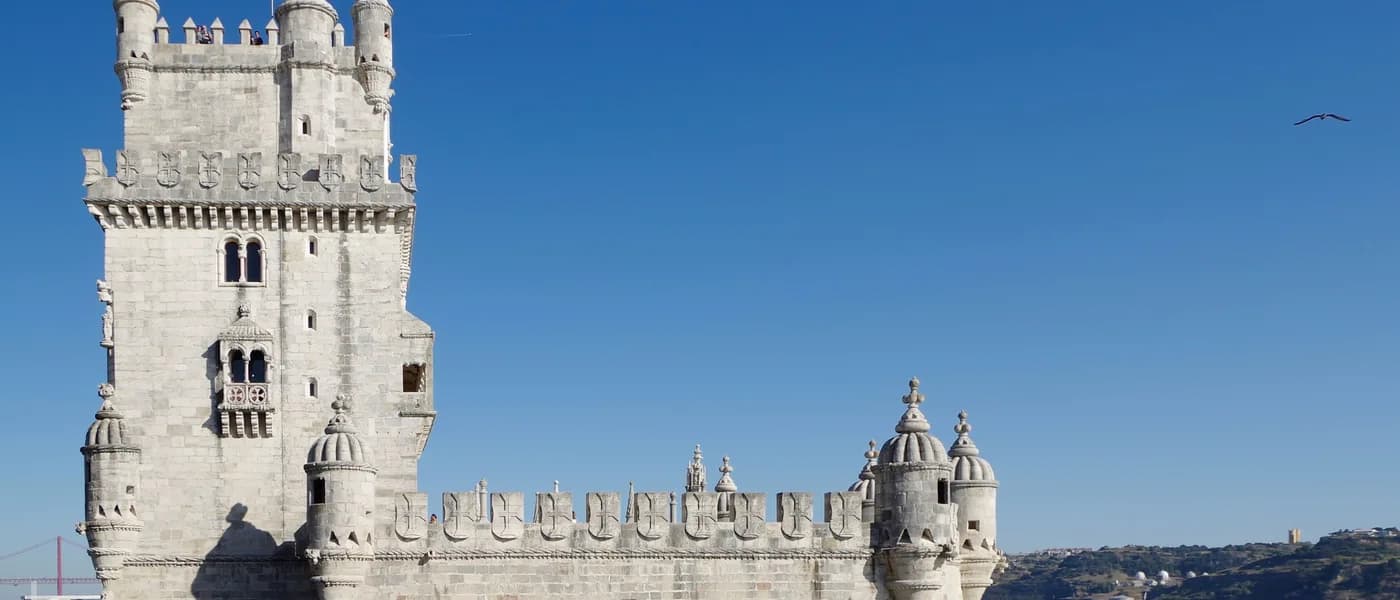
The function was defensive: controlling the entrance to the Tejo estuary and ensuring no vessel passed without authorisation. Damião de Góis wrote in 1566 that "no sail can pass without being seen". The architect was Francisco de Arruda, a specialist in military structures, but what came out of his hands is almost too decorated to look like a fortress. The overlay of Manueline motifs is dense: ropes sculpted in stone, knots, animals, royal heraldry repeated to exhaustion, plus Moorish references that appear mainly in horseshoe-shaped windows.
The balcony on the south facade is not a minor architectural detail. It was a loggia designed for court ceremonies, for the arrival and departure of the fleets that sailed out into the world. There's a deliberate theatricality to this building that most people miss because they're too busy with the photograph.
Even closed for redevelopment works, the tower remains part of the Belém itinerary. The Mosteiro dos Jerónimos is ten minutes on foot, and the two monuments were built at the same time, on the same territory, during the reign of D. Manuel I. Seeing them together is the only way to grasp the scale of the project that created them.
manueline with intent
The decoration isn't ornament for ornament's sake. The Manueline of this period is a language of power: every knot, every armillary sphere, every reference to maritime expansion asserts the reign of D. Manuel I and Portugal's position in the world of the time. The Torre de Belém was inscribed on the UNESCO World Heritage List in 1983, together with the Mosteiro dos Jerónimos, precisely for representing this moment.
What distinguishes this building from others of the same period is the combination of two different models in a single volume. The tall tower follows the medieval logic of the keep. The bastion below is a modern military structure, designed for artillery. Two technologies of war in layers, covered with decorative celebration.
go prepared for
- the tower is closed for works, check before you go
- the south facade is the side with the most sculptural detail
- the relationship with the Jerónimos makes more sense if you see both on the same day
- crowds even outside peak season, especially late morning