manueline taken to the limit, right here in belém
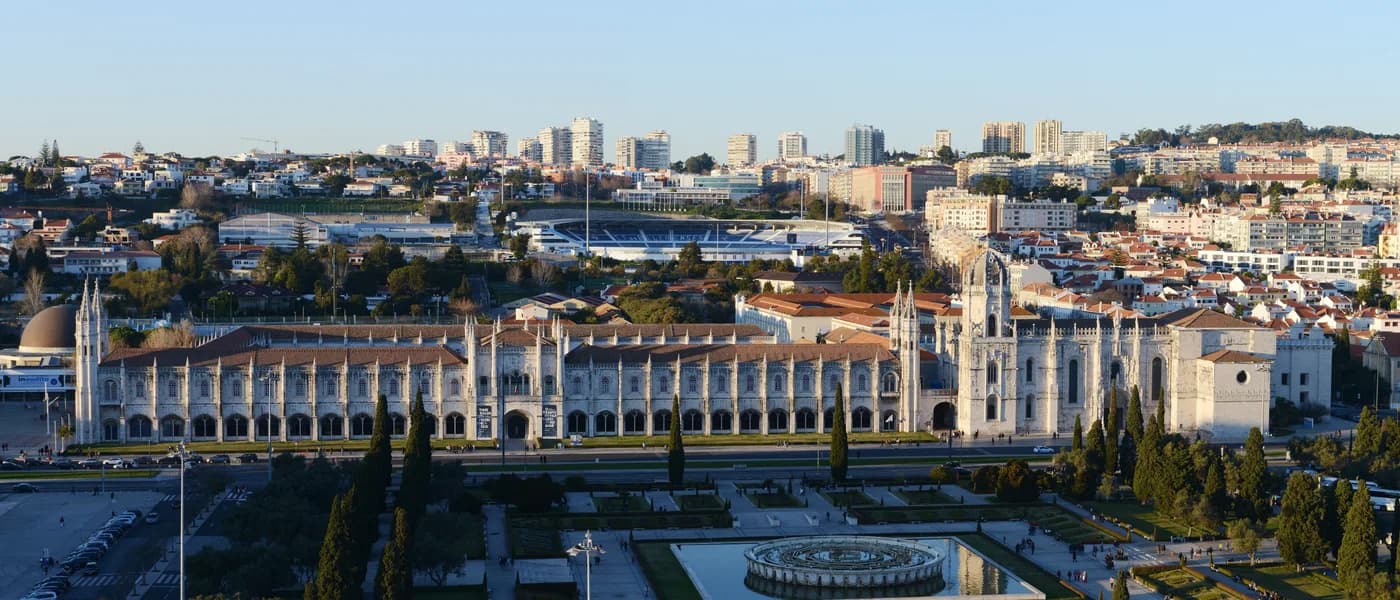
A hundred years to build. That's how long the Mosteiro dos Jerónimos took to be finished, with four different master builders passing the reins between themselves: Diogo de Boitaca, João de Castilho, Diogo de Torralva and Jerónimo de Ruão. The result is right there in front of you: lioz limestone, quarried a few kilometres from here, turned into one of the densest accumulations of sculpture in all of European architecture.
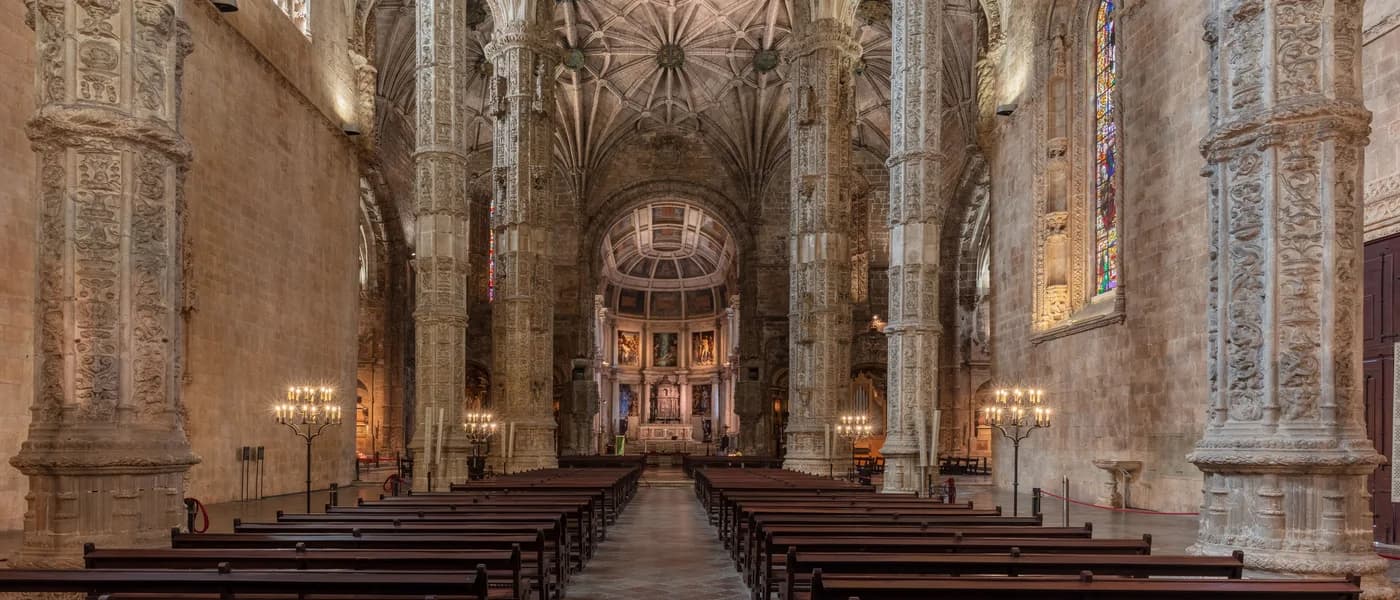
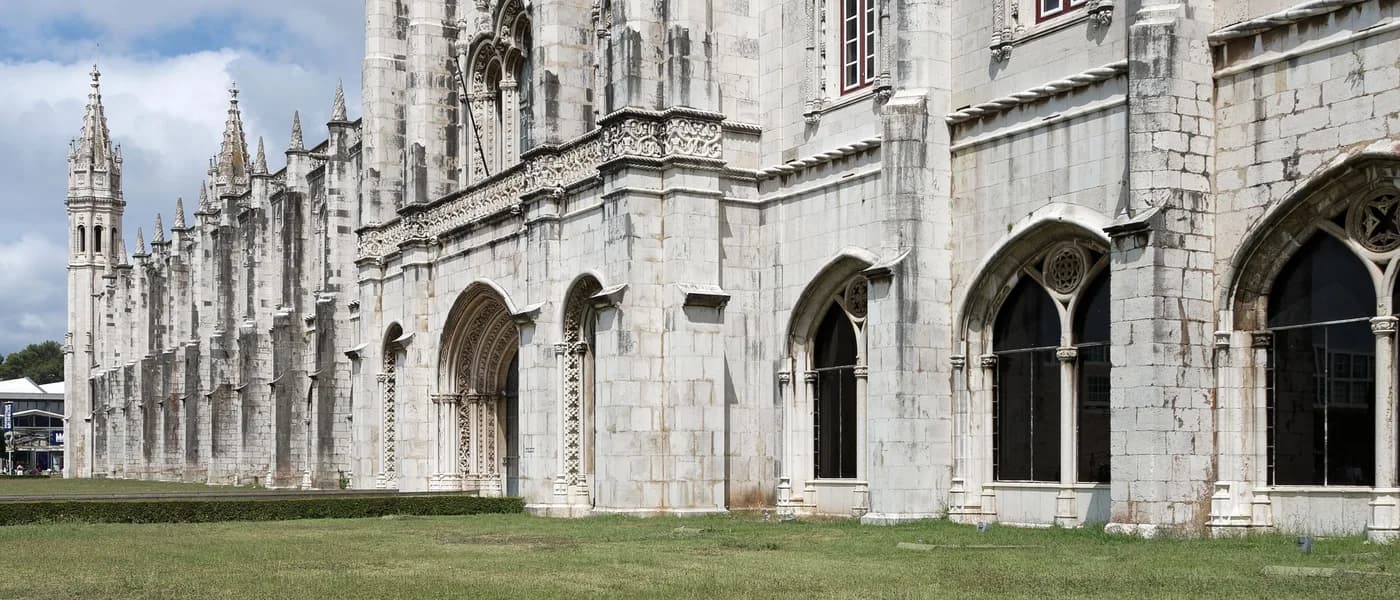
What sets the Jerónimos apart from anything else in Portugal is the scale on which ornament dominates the structure. The southern portal and the pillars of the nave are where you feel that most strongly: there's no surface at rest. Ropes, armour, vegetal elements and nautical motifs overlap without ever creating noise, which is a considerable technical achievement. It's Manueline architecture at its peak, not as a textbook definition, but as a physical thing standing in front of you.
The link to the territory is direct: the navigators who left from the Restelo for India, Africa and Brazil kept vigil in the chapel that existed here before the monastery. Vasco da Gama and Pedro Álvares Cabral passed through this place before the voyages that changed the map of the world. D. Manuel I himself wanted to be buried here, and the monastery became a National Pantheon in 2016. You're inside a building Portugal has been using for more than five centuries to say who it is.
Belém is today one of the most visited areas in the country, and the Jerónimos carry the weight of being the most visited monument in Portugal. You feel it. But the two-storey cloister, with the morning light coming in through the arches, still does what it has always done: it stops you in your tracks.
four architects, a hundred years, a quarry nearby
Diogo de Boitaca laid down the initial plan. João de Castilho, who took over the direction in 1517, was at one point coordinating 250 workers at the same time, and he gets credit for much of the sculptural exuberance you see today. The lioz limestone that runs across the whole building comes from quarries in the Lisbon municipality itself, which explains the consistency of texture and colour across constructions spread out over decades.
After the extinction of the religious orders in 1834, the monks left and the Real Casa Pia took over the cloister space until 1940. A lot of the original contents was lost in that period. What survived, plus what was restored and turned into museum display, is what you can see now.
come prepared for
- queues at the entrance, especially early in the morning and in high season
- the southern portal as a non-negotiable arrival point, not to be skipped on the way to the main queue
- the upper floor of the cloister, less congested and with another perspective on the ornament
- the tombs of Vasco da Gama and Luís de Camões in the nave of the church