faith kept in a wayside chapel
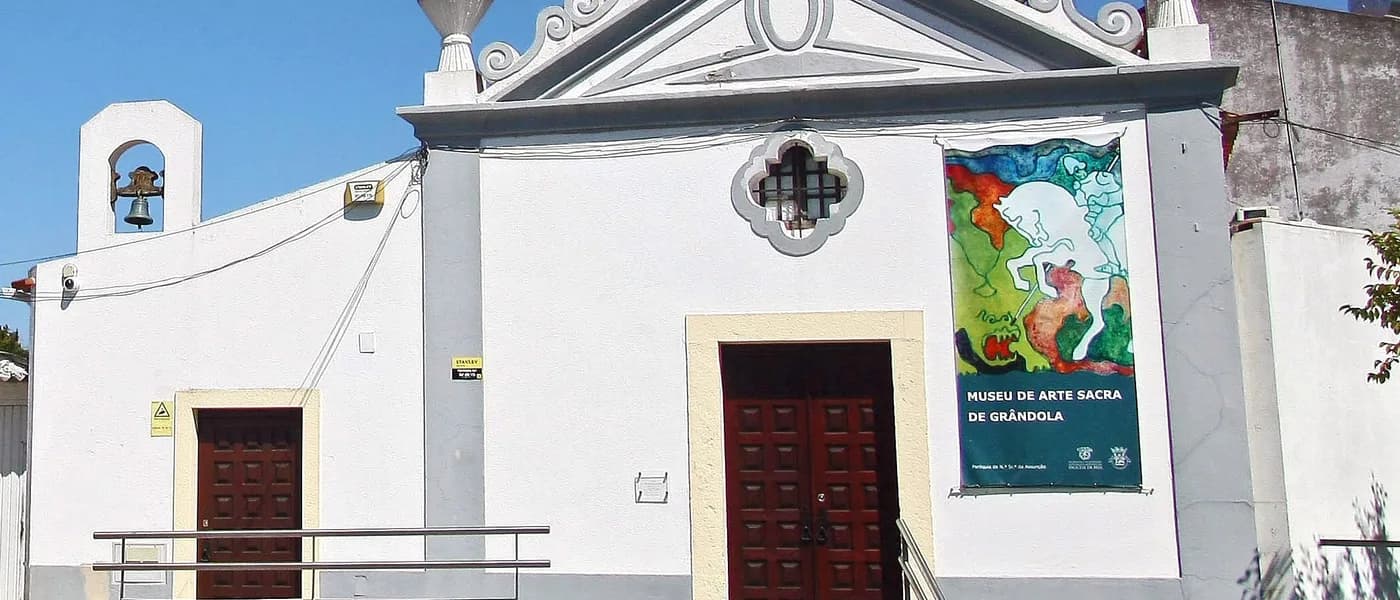
You walk in through an old door and the smell of ancient stone tells you straightaway that this space wasn't built to be a museum. The ermida de São Sebastião has stood in Grândola for centuries, and this is where the Diocese of Beja and the municipality decided to keep what was left of the parishes and brotherhoods of the county: sculptures, paintings, decorative art pieces that were scattered around and needed somewhere with memory.
The Museu de Arte Sacra de Grândola opened in 2011 with an exhibition on the Caminho de Santiago, which is no coincidence: the Caminho passes right here, a few metres from the chapel. Pilgrims heading to Compostela walk past the door of this museum without knowing it, or knowing and stopping. It's one of those places where the route and the collection make sense together.
What's on display comes from the territory itself: pieces from the churches and brotherhoods of the Grândola municipality, many removed from spaces that no longer had the conditions to preserve them. It's not a museum with great national collections or international names. It's a local archive in the shape of a chapel, and that changes how you look at each piece.
If you're in the coastal Alentejo and want to understand what stayed when life started moving elsewhere, this is the right place.
what you'll find
- sacred sculpture and painting from the parishes of the municipality
- a seventeenth-century chapel as exhibition space
- the Caminho de Santiago passing right nearby