the museum that was born to be a museum
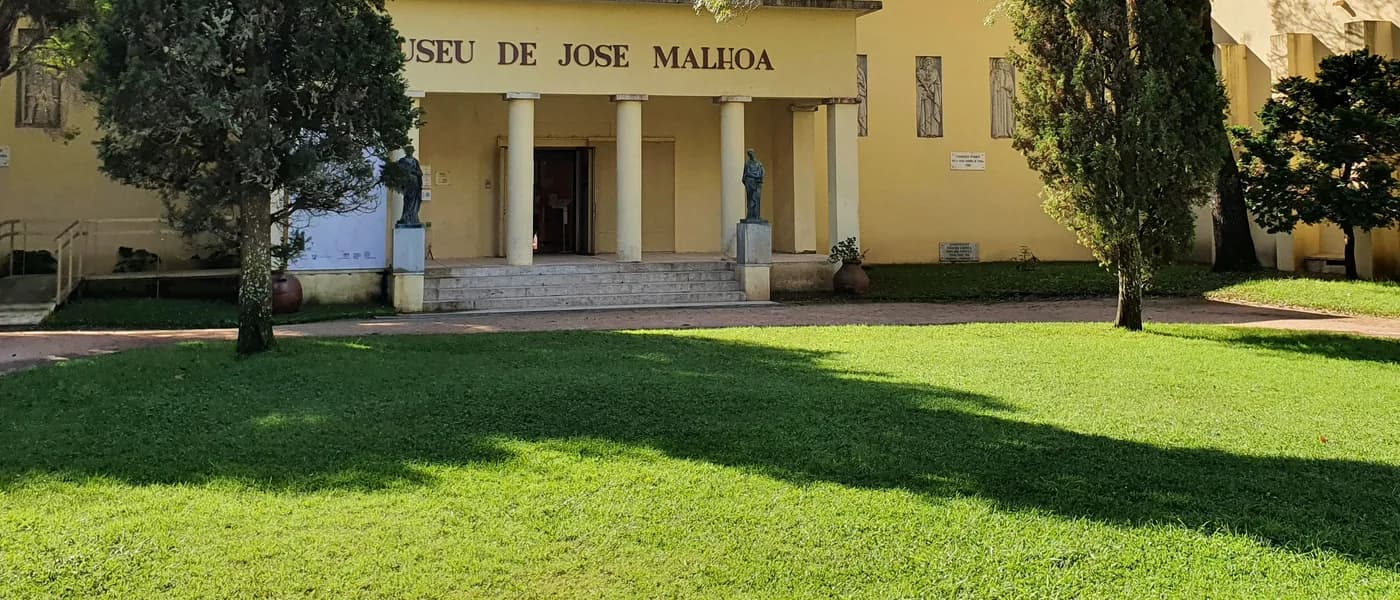
There's something rare about this building: it was thought up from scratch to hold and show art, not adapted from a palace, a convent or a manor house. In 1940, when it opened in Parque D. Carlos I, the Paulino Montês and Eugénio Correia design was already a statement of principles, with high-ceilinged rooms, natural light calculated for painting and proportions that still work today. The Museu de José Malhoa has, because of that, a quality of space that many more famous museums can't match.
The collection centres on Portuguese naturalism, and Malhoa is its axis. The popular figures he painted, ordinary people from the late 19th and early 20th centuries, have a physical presence that catches off guard anyone walking in without much expectation. But the collection stretches well beyond him: Columbano, Vieira da Silva, Rafael Bordalo Pinheiro, sculptures by Leopoldo de Almeida. It isn't a single-author museum with repetitive work, it's a map of an era.
The collection doesn't stay indoors. In Parque D. Carlos I, among the gardens and the trees, there are scattered sculptures that most people walk past without noticing. Part of the visit happens outdoors, without the museum announcing it with posters.
Caldas da Rainha isn't a city that needs excuses for a visit, and the museum slots into a day that can include the Park, the market and the Bordallo ceramics that define the city's visual identity.
the history of the building
The idea came from the writer António Montês, who wanted to anchor Malhoa to his hometown. In 1926, the painter himself gave a work to the city; seven years later, the State authorised the creation of the museum. The opening, in April 1934, happened a few months after Malhoa's death; he never got to see the final project completed.
The building you see today was inaugurated in 1940, as part of the Centenários celebrations. It went through several administrative reorganisations over the 20th century and a deep refurbishment between 2006 and 2008. The most recent version opened in December 2023, after another round of upgrading works. It's always been a museum in update mode, and you can see that in the visitor facilities.
what you'll find
- rooms with natural light designed for painting, not for Instagram
- the largest collection of Malhoa's works in one place, including portraits of popular Portuguese figures
- sculptures in the outdoor park, with no display case or caption in sight
- a library specialising in Portuguese art and culture, with more than five thousand volumes
- temporary exhibitions that link the historical collection to contemporary artists