franciscan friars with views over cascais
In 1559, the fist of power and faith raised a convent here. The one who had it built was Lourenço Pires de Távora, a name that still gives its title to the access road today. Two centuries later, the Távora family was wiped out by Pombal following the famous trial of 1759, and the convent started to die with them.
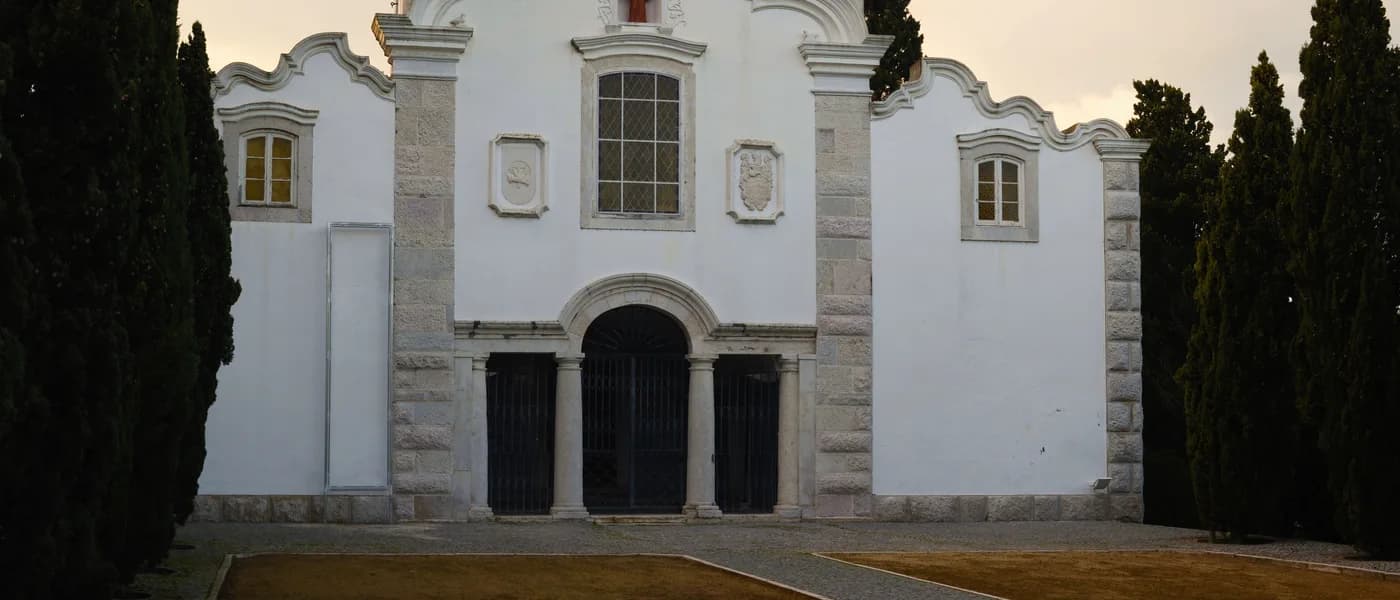
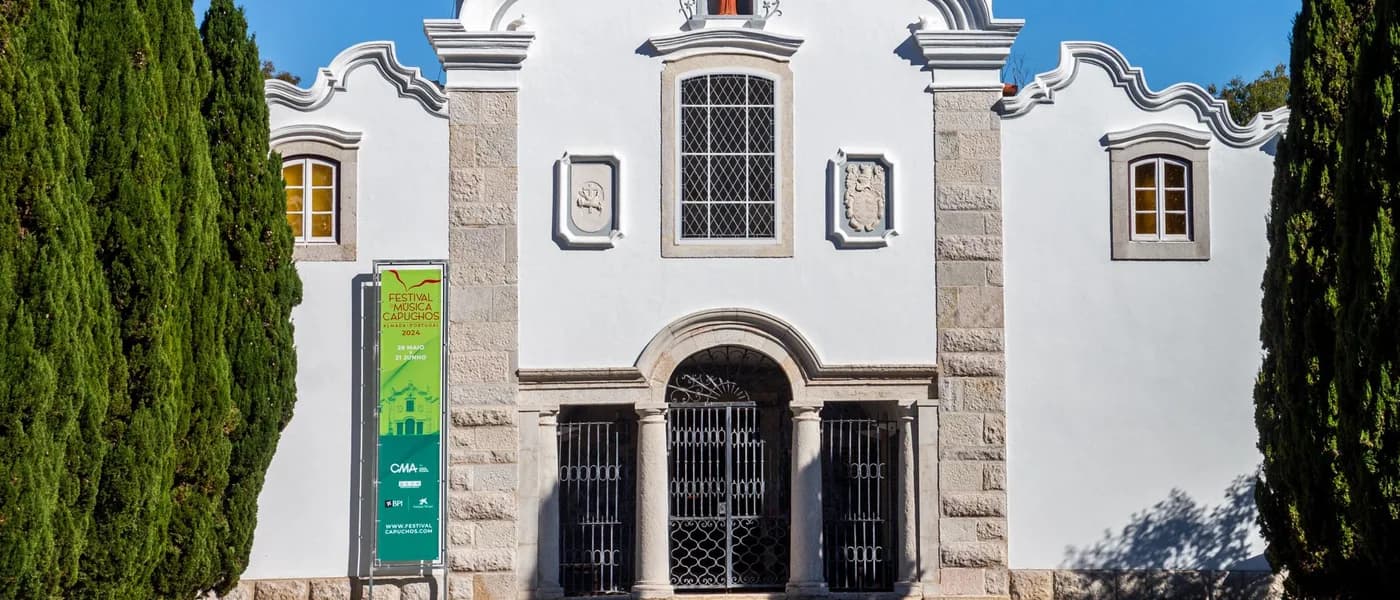
The Convento dos Capuchos carries that history in its frontispiece: the triple portico with simple columns, the central arch, the wrought iron that filters the light in the galilé, the Távora coat of arms engraved in the stone. The Franciscan Order didn't build to impress, but the result impresses all the same. The azulejos lining the interior came with the 1952 restoration and depict the sermons of Saint Anthony.
The viewpoint nearby closes the argument. From here you can see the Costa de Caparica from above, the Atlantic fringe of the municipality, and then, on the other side, Lisboa, Estoril, Cascais. It's an unusual orientation: you're in Almada, but your gaze goes entirely towards the estuary and the north coast.
Today it works as a gallery and events space for the municipality, with a permanent exhibition on the history of the convent and a regular programme of classical music and visual arts. Maybe that's not what the first friars expected, but the silence and the gardens around it still hold something of the original reason this place was chosen.
the fall of the távoras
The family who had this convent built was literally destroyed. On 13 January 1759, the members of the Casa dos Távoras were publicly executed, accused of plotting against D. José I. The Processo dos Távoras was one of the most violent episodes of the Portuguese Enlightenment, with Pombal using the accusation to eliminate one of the most powerful noble families.
The decline of the convent followed the fate of the family: without the patronage of its founders, the institution lost strength until the dissolution of the religious orders in 1834. The municipality only bought it in 1950. This isn't just a religious building: it's the material trace of a family that disappeared by decree.
what you'll find
- the Távora coat of arms engraved on the façade, a detail most people rush past
- 1952 azulejos depicting scenes from the sermons of Saint Anthony
- permanent exhibition on the history of the convent
- viewpoint with simultaneous views over the Costa de Caparica and the Estoril and Cascais coast
- gardens that work as an anteroom before you go in