where the earth has 5,000 years of memory
Beneath the Alentejo there is copper, zinc, lead and silver. There always has been. Mining in Aljustrel began in the Chalcolithic, continued with the Romans, and hasn't stopped since, which makes this territory one of the oldest polymetallic deposits still in operation in the world.
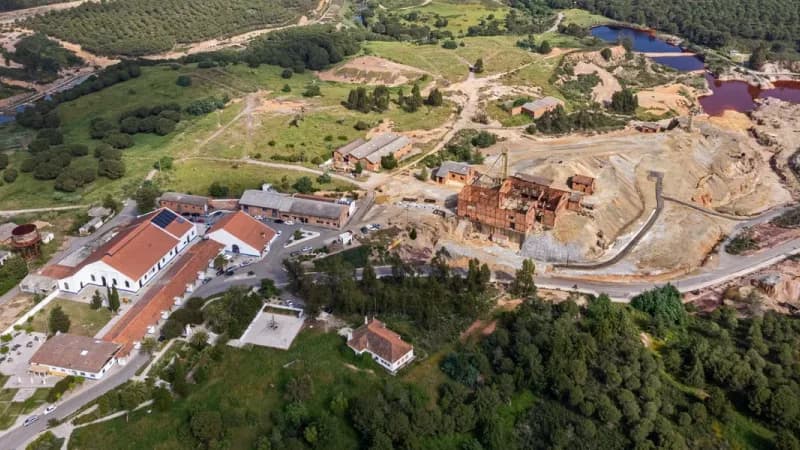
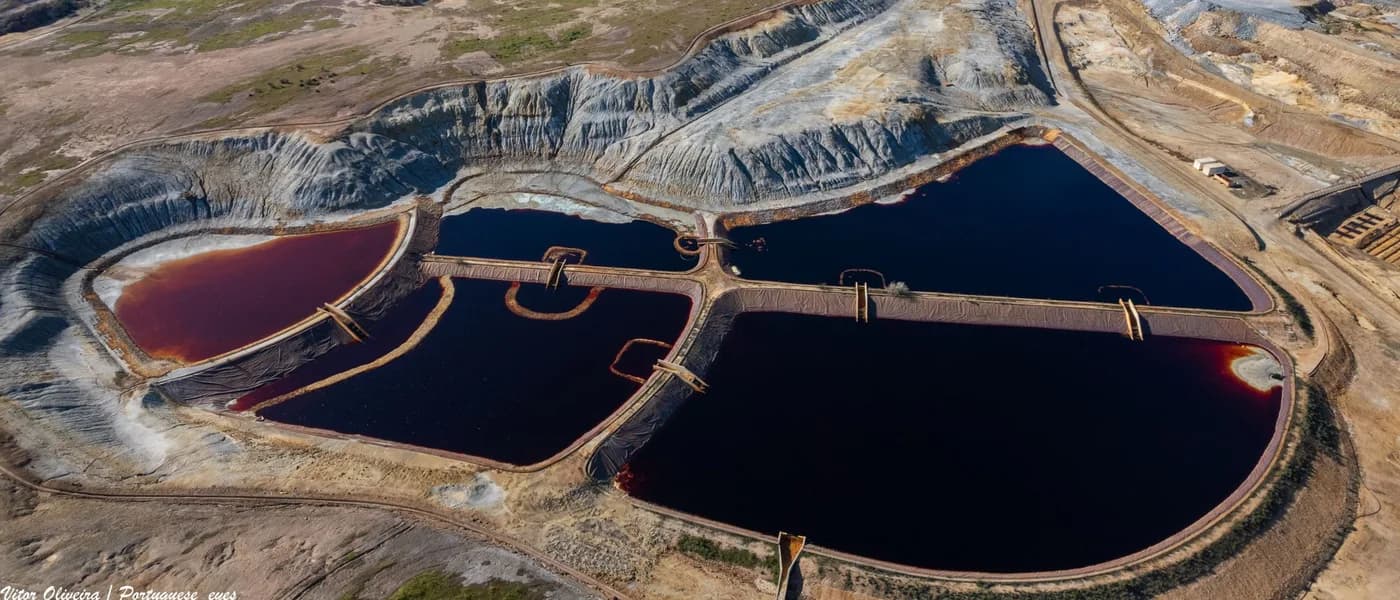
The Parque Mineiro de Aljustrel organises all that continuity in a single place. You can see the landscape marked by open-pit workings, step into the dimensions of the underground, and grasp how the same deposits the Romans worked are still part of an active mining operation today. It isn't a reconstruction: it's a layering of times.
What sets this place apart from other mining museums is exactly that: the mine isn't dead. The history wasn't embalmed. As you walk the route, extraction continues somewhere in the depths. There's a productive strangeness in that idea, of being in a museum and a workplace at the same time.
Aljustrel is a small town in the Alentejo interior, and the park doesn't try to disguise that with grand installations. The scale is human, the narrative is local, and what stays with you is the sense that the ground you tread has more layers than you can imagine.
five millennia in a sulphide deposit
The Romans left something rare in Aljustrel: bronze tablets with mining regulations written on them (the so-called Vipasca tabulae), documents that describe in detail the social and economic organisation of a 2nd-century mining community. They're among the few records of this kind known in the Roman world, and the context where they were found is directly tied to this territory.
The Aljustrel deposits belong to the Iberian Pyrite Belt, one of the largest metallogenic provinces in Europe, stretching from the Alentejo to southwestern Spain. The local geology isn't just scenery: it's the reason this place exists and survived every era.
what you'll find
- an open-air route with the landscape transformed by centuries of extraction
- an underground dimension that shows what you can't see from the surface
- Roman context with reference to the Vipasca tablets
- an active mine right next door, which gives the whole timescale another dimension