the only hat museum in the iberian peninsula
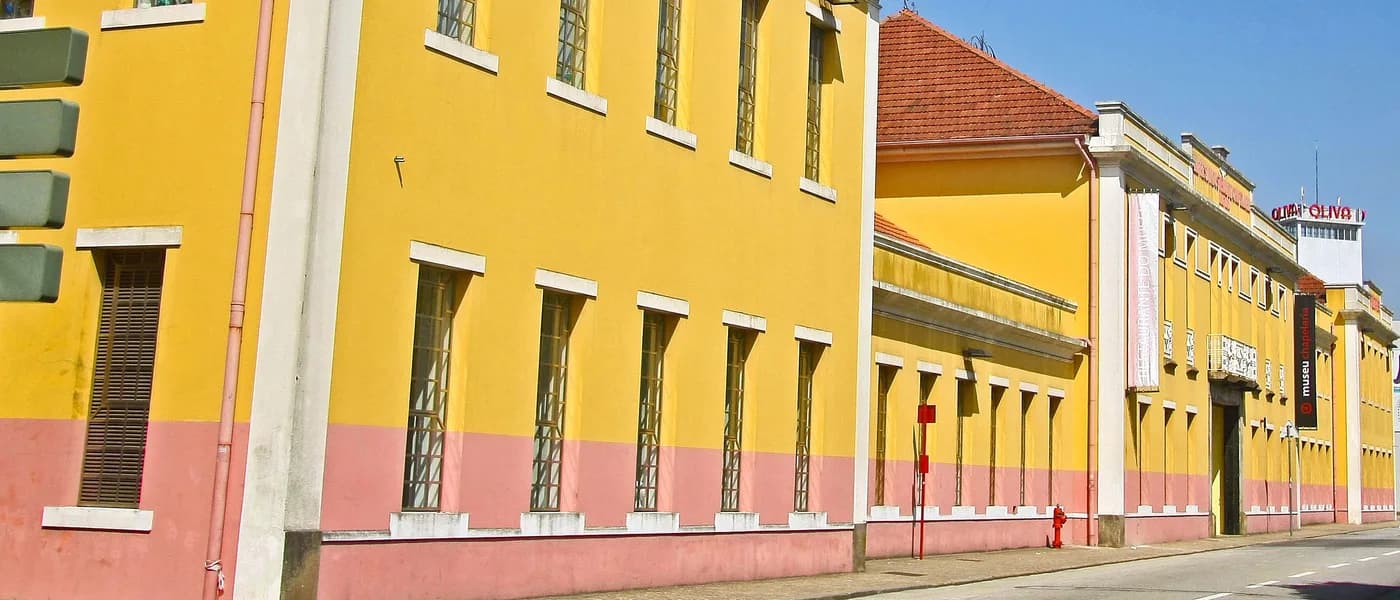
São João da Madeira built its identity around an industry. For decades, the city was the largest centre of hat production in Portugal, and the building that today houses the Museu da Chapelaria was the heart of all of it: the Empresa Industrial de Chapelaria, founded in 1914, was at one point the biggest factory of its kind in the whole Iberian Peninsula.
The factory closed in 1995. Ten years later, the space opened as a museum, and what you find isn't a sanitised reconstruction. The machines are the original ones, the tools are the real ones, and the permanent exhibition is laid out along the stages of the production process, with the sounds of the boilers and the equipment going alongside the visit as if production were still happening.
In the courtyard, the "Unhas Negras" monument tells a story worth stopping to read. It was the name given to the hatters, whose nails were permanently damaged and darkened by the work at the fulas, the steam boilers. The expression spread so widely that for decades it was used to refer to any resident of São João da Madeira. There's a novel with that title, there's a monument in the courtyard, and there's a whole city that still carries that memory on its skin.
The international collection includes hats from several continents, from China to Mexico, including a cowboy hat allegedly made for the Dallas TV series. It's the kind of detail that turns an industrial collection into a longer conversation about what people have put on their heads across the centuries.
the workers' movement as a temporary exhibition
The current temporary exhibition gets right to the point: the hatters' workers' movement was one of the most organised and combative in the history of Portuguese labour. The museum brings together period workers' press, documentation and memories of factory work to show how those workers built forms of collective resistance that had influence well beyond the industry.
It's an exhibition that makes sense in exactly this place. It isn't abstract history: it's the history of the people who worked on these machines, in this building, in this city.
what you'll find
- original industrial machines, with reconstructed ambient sound
- a hat collection from several continents, including some with a specific history
- the "Unhas Negras" monument in the outdoor courtyard
- a temporary exhibition on the hatters' workers' movement