a thousand instruments, one palace
There's a cello here that belonged to D. Luís I and was played by the king himself. There's a harpsichord that Louis XVI commissioned for himself, built by Pascal Taskin. There's a piano that Franz Liszt brought over personally from France in 1845. The Museu Nacional da Música moved in 2025 to the Palácio Nacional de Mafra and brought with it more than a thousand instruments from the 16th to the 20th centuries, in one of the most important collections in Europe.
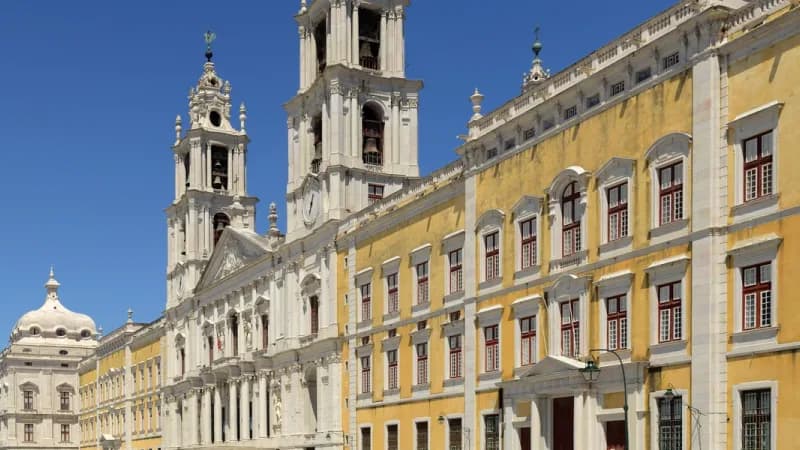
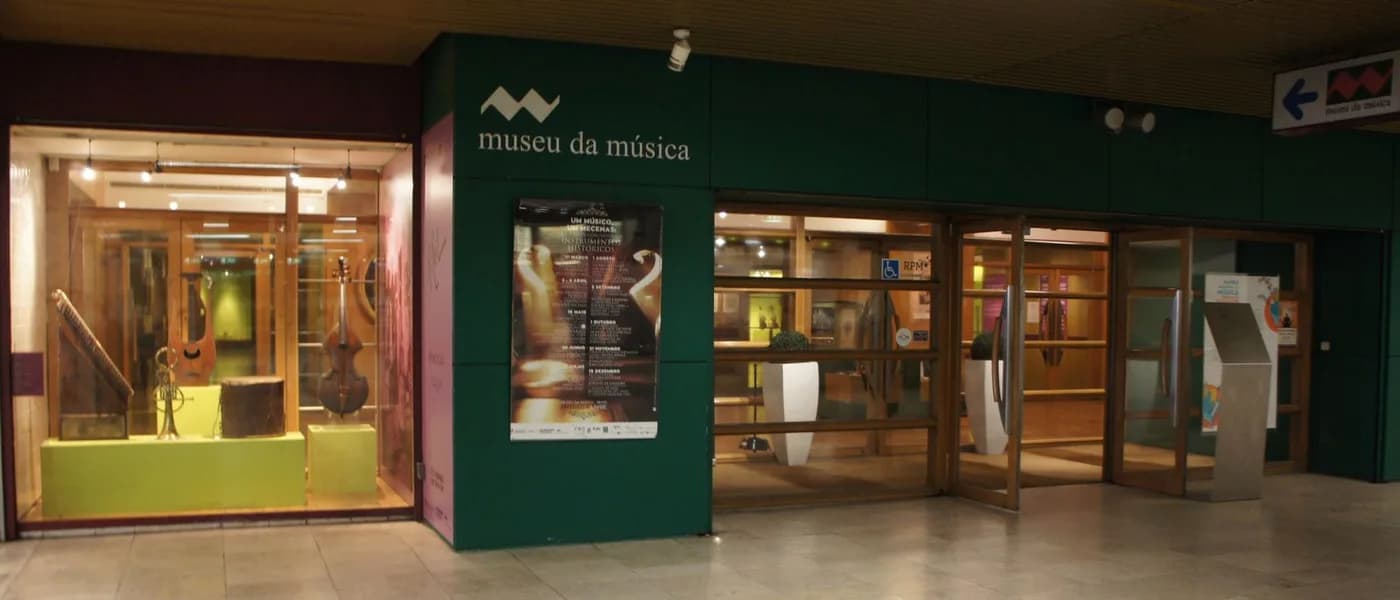
The move from the Alto dos Moinhos metro station to Mafra wasn't only logistical. The context changes everything: the instruments take on another weight when they're inside a palace built by D. João V, surrounded by woodwork, tiles and stone. The scale of the Real Edifício absorbs any museum without swallowing it.
The collection isn't just famous instruments. There are walking-stick flutes, pocket violins, a glass flute. There are African and Asian instruments next to harpsichords from 18th-century Lisbon workshops. The display includes five hundred instruments visible to the public, interactive experiences and a regular concert programme inside the space itself.
You leave with a different idea of what Mafra holds beyond the basilica and the library.
the weight of the provenances
Many of the instruments came to the museum through three private collectors: Alfredo Keil, Michel'angelo Lambertini and Carvalho Monteiro. Keil was a composer and a painter, Lambertini was a musicologist, Carvalho Monteiro was the same eccentric who had the Quinta da Regaleira in Sintra built. Three different obsessions, one collection.
The Stradivarius cello followed an unusual path: from the luthier to the king, from the king to the museum. The Pascal Taskin harpsichord passed through Louis XVI, through the Marquise of Cadaval and ended up classified as a National Treasure. The iconography includes a portrait of Luísa Todi painted by Vigée-Lebrun and canvases by José Malhoa with Beethoven as the central subject. The history of each piece is, in itself, a map of musical Europe across the last three centuries.
come prepared for
- the Stradivarius cello a king played
- the Taskin harpsichord made on Louis XVI's request
- the piano Liszt brought from France in 1845
- instruments you didn't know existed (the glass flute, the pocket violins)
- concerts in the palace itself, check the schedule before going