the museum inside the cemetery that most of lisboa doesn't even know exists
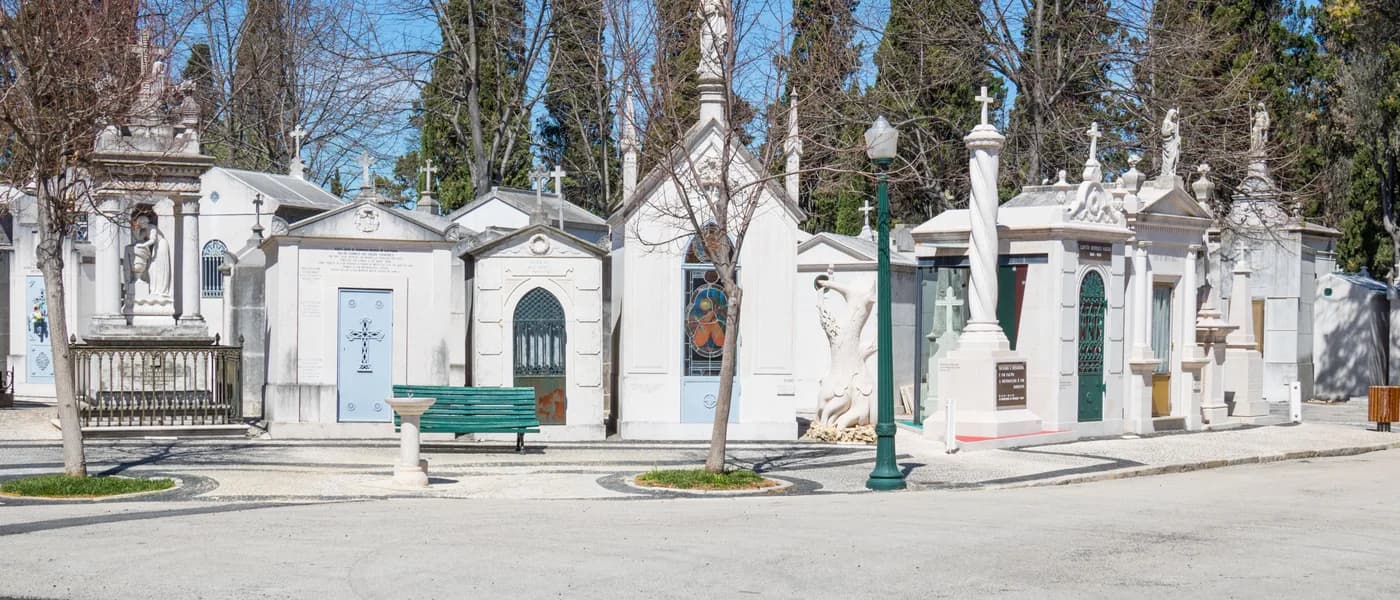
You walk in through the main gate of Prazeres and most people head straight for the famous tombs, the statues, the expected silence. Few turn right in time to find the Núcleo Museológico. It's a small, contained space that explains what's around you with a seriousness the cemetery itself deserves.
The Cemitério dos Prazeres opened in 1833, during the cholera epidemic, when Lisboa could no longer bury its dead inside churches. The núcleo museológico picks up exactly at that break: the moment when the city decided to separate the living from the dead and create its own space for grief outside sacred walls. It's not a minor curiosity. It's a fundamental change in how Lisboa organised itself.
Inside you'll find funerary pieces, historical documentation and context about the families and figures who chose Prazeres as their final destination. The Braganças vault is a few metres away. Almeida Garrett's too. The museum gives you the mental map to understand what you're looking at when you leave.
It's the kind of place that turns a visit to the cemetery into a visit to Lisboa. You leave with a different reading of the city, the surrounding neighbourhoods, the Tapada da Ajuda itself, which you can just make out on the horizon.
what you'll find
- funerary pieces with real historical weight
- context on 19th-century Lisboa you won't find in the usual museums
- few visitors, even at weekends
- the direct transition to the cemetery right outside


