the river is literally in the walls
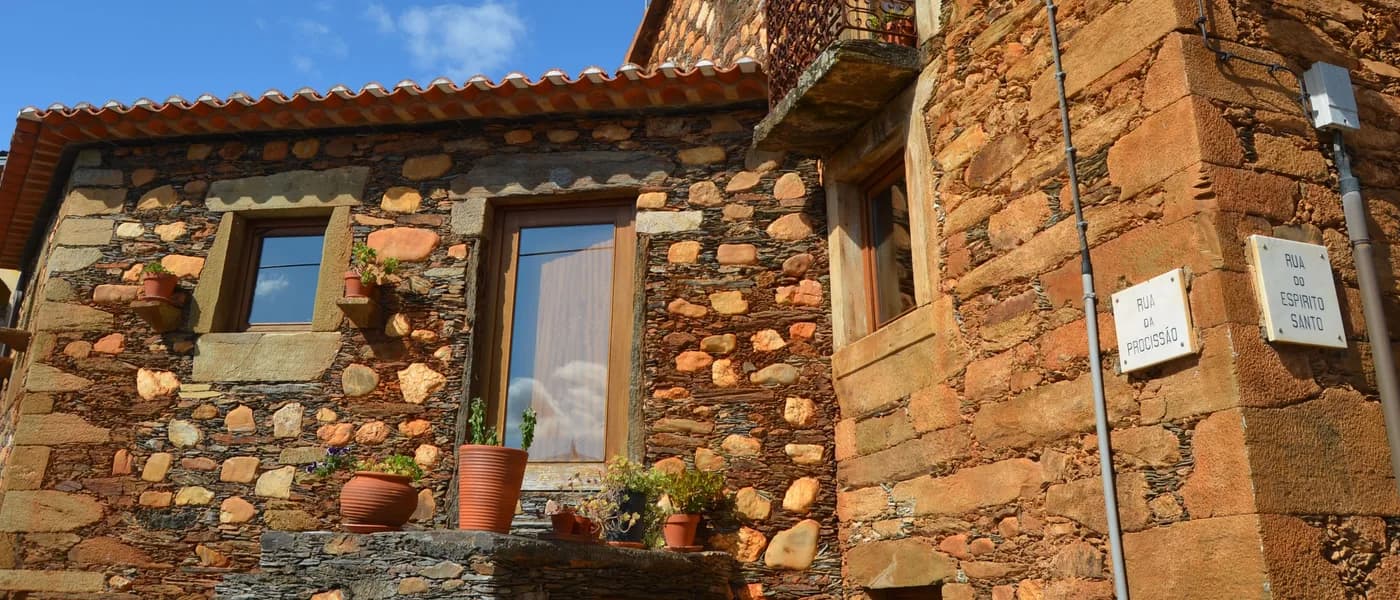
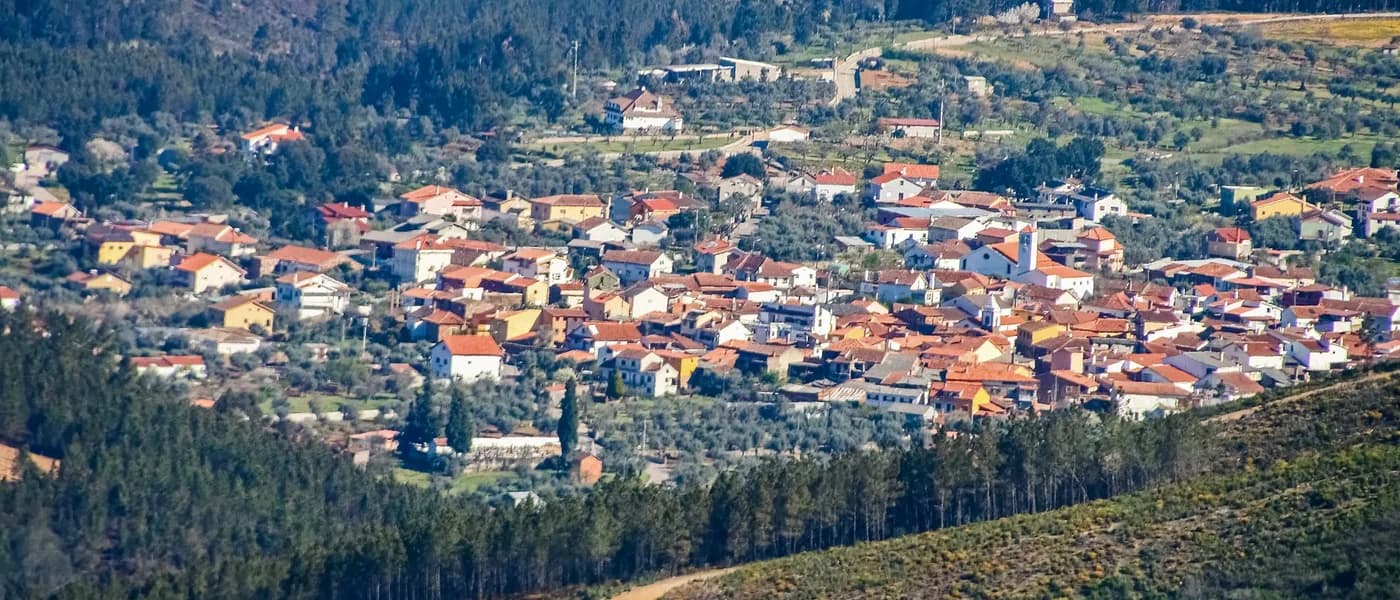
Janeiro de Cima sits on the left bank of the Zêzere, facing Janeiro de Baixo on the other bank. The first thing you notice, as soon as you enter the narrow streets, is what's in the walls. White, smooth river pebbles, collected directly from the riverbed, embedded in the schist. They appear on house facades, on garden walls, on doorframe trimmings. That's the river built into the construction.
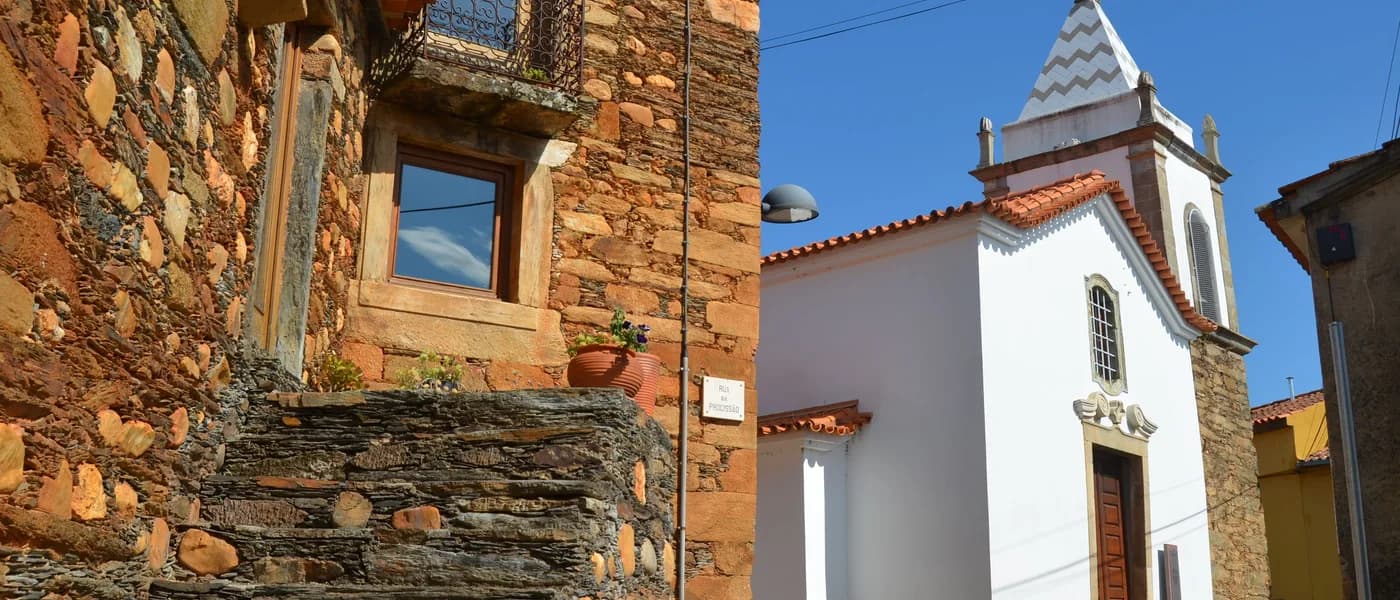
The medieval nucleus grew around the Igreja Velha, and from there a tangle of streets, alleys, lanes and quelhos spreads out, with the houses leaning into each other. The original core of the church is pre-15th century, but what you see today is the result of an 18th-century overhaul, with three carved woodwork altars and a semicircular chancel arch. When it could no longer hold its congregation in the 20th century, the Igreja Nova was built on the outskirts.
The village's productive life depended on the river. Linen was grown on the banks, and the weavers of Janeiro made a name for their cloth: even today, in the historic centre, the Casa das Tecedeiras keeps the craft alive, with handlooms making pieces to order. At the Parque Fluvial da Lavandeira, on the Zêzere bank, is the Praia Fluvial de Janeiro de Cima, and from here boat trips still run today, heirs to the traditional "Ó da barca!" that called the ferryman to cross to the other bank.
good to know
- the walls have smooth white pebbles from the Zêzere bed; it's the village's signature
- the Casa das Tecedeiras has handlooms and makes linen pieces to order
- boat trips leave from the Parque Fluvial da Lavandeira
- the twin village, Janeiro de Baixo, is on the other bank; there's now a road bridge linking them


