one of the two left in the whole country
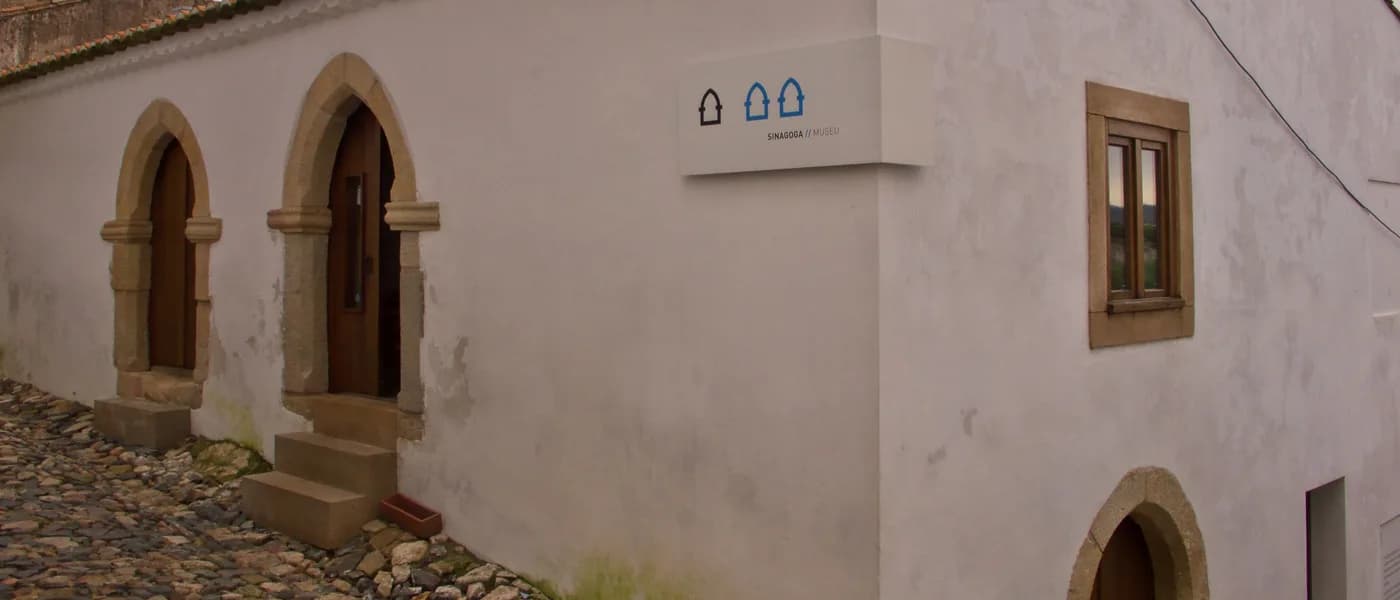
Two floors, stone walls, pointed arches on the three doors. There's no excessive signage or scenographic reconstruction: the space speaks for itself, and what it has to say is seven hundred years old. The Medieval Synagogue of Castelo de Vide is one of only two buildings of its kind that survived in Portugal from before the expulsion of the Jews in 1496. The other is in Tomar.
After the decree of King Manuel I, those who stayed kept using the space in secret. Crypto-Jews gathered here as a school and clandestine place of worship until the mid-16th century. Later, the building changed hands and functions several times, even becoming a private home in the 18th century. The tabernacle, the Aron Kodesh carved in stone in the 15th century, only reappeared in 1972, during work on an exterior wall.
what the building holds
The tabernacle has two levels: the Sacred Books went on top, and below were three cavities for water, oil and wine. On the left, a corbel with seven balls at its base represents the six days of creation and the day of rest. On the jamb of one of the doors there's still the groove of the mezuzah, where the scroll with the Shema Israel was kept. Small details that only make sense when you're right there, looking up close.
The building is on Rua da Judiaria, in the heart of the medieval Jewish quarter of Castelo de Vide, by the castle's main gate. The neighbourhood around still has the scale and geometry of the 14th century, which completely changes the way you enter this place.
come ready for
- a small space, no staging, where absence is part of the message
- the stone tabernacle rediscovered by chance during building work
- the mezuzah on the jamb, almost imperceptible if you don't know what to look for
- a medieval quarter that still exists around it, not as decoration


