museum or house, you decide
There's a room here that's going to put you off balance in the best way: 18th-century tiles covering the walls from floor to ceiling, faience pieces from every origin, and the feeling that you've walked into someone's house who never stopped collecting. Because that's exactly what happened.
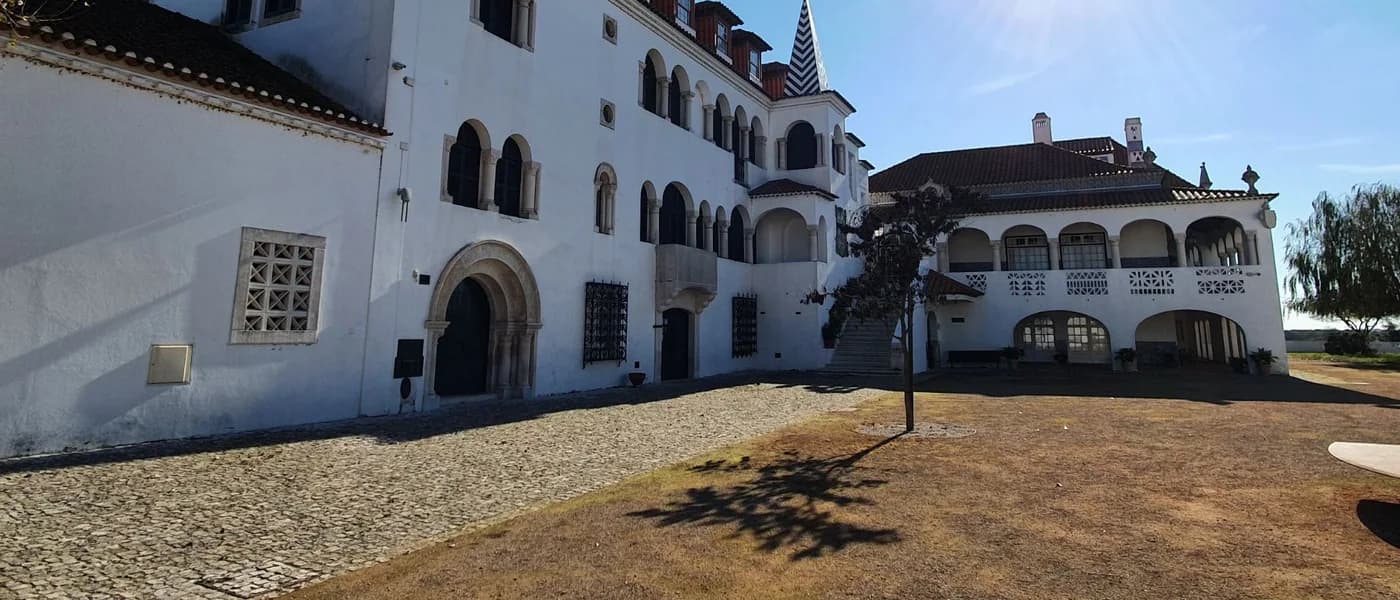
The Casa dos Patudos was the country house and residence of José Relvas, politician and patron who represented Portugal at the proclamation of the Republic in 1910, and who spent decades piling up art, furniture, textiles and archaeological pieces. He died in 1929 and left everything to the municipality. What you visit today isn't an exhibition mounted after the fact, it's a house that stayed as it was, turned into a museum without losing its domestic logic.
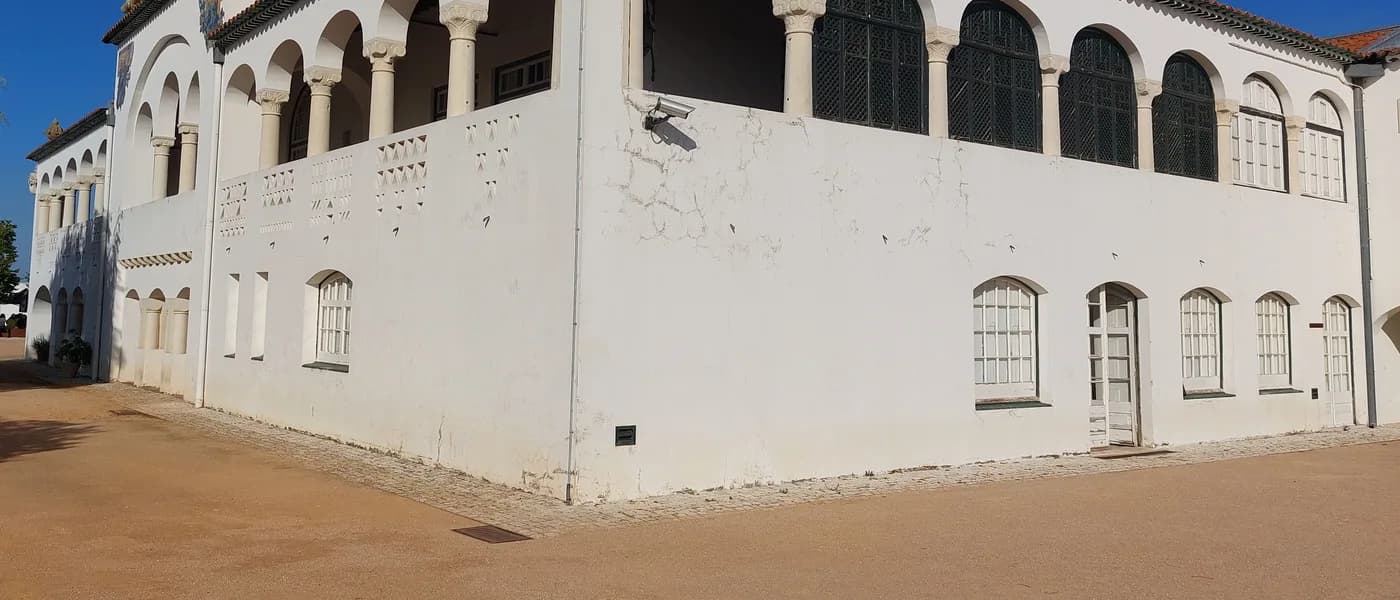
The building itself was designed by Norte Júnior, one of the most active architects of late 19th-century Portugal, and it has features that mix different influences without falling into easy eclecticism. The gardens around have the scale of a good-family Alentejo estate: formal in layout, imposing in stature, with species that shade you as if they'd been planted for that more than a century ago, because they were.
You're in Alpiarça, a few kilometres from Santarém, in a Ribatejo area that produced collectors with taste and the money to back it. The house confirms that with every room you open.
what's specific about the collection
José Relvas brought together regional archaeology alongside 19th-century Portuguese painting, Delft ceramics, Portuguese faience and embroidered textiles. It's not a thematic collection with an obvious thread: it's the portrait of the taste of a person with access to a lot of things. That makes it uneven and interesting at the same time.
There's a painting section with names like José Malhoa, Columbano and Silva Porto, artists who defined what Portuguese painting was before modernism arrived. Seeing these works in a house instead of a fine-arts museum changes the reading: they feel less institutional and more what they were, paintings chosen by someone who wanted them close.
what you'll find
- gardens with a formal structure and centuries-old trees that are worth the visit on their own
- full-wall tilework, in several rooms, from different periods
- Portuguese realist and naturalist painting in a domestic context
- an archaeological collection of local finds that rarely gets highlighted on other routes