where the kings of portugal went to sleep forever
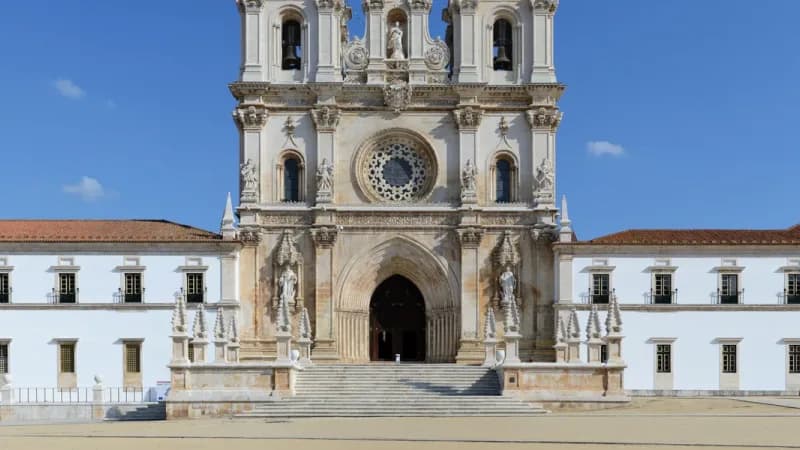
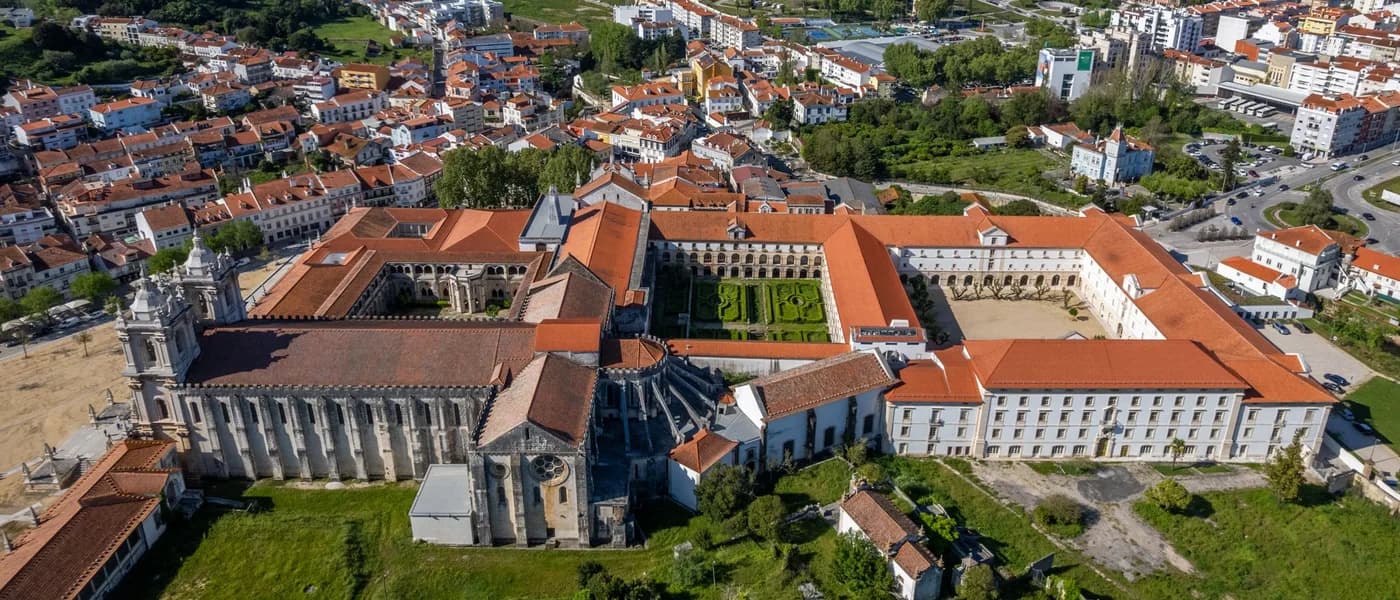
Founding it was a war promise. Afonso Henriques promised Bernard of Clairvaux a monastery if he beat the Moors at Santarém, and the Mosteiro de Alcobaça was born out of that debt, in 1153. Six centuries of Portuguese monarchy took root here: it's the pantheon of the country's first kings, the place where the nation kept burying itself while it was still figuring out what it was.
What stops everything else are the tombs of D. Pedro I and D. Inês de Castro, facing each other in the church's transept. It isn't easy sentimentality: it's 14th-century Gothic sculpture on the level of the best Europe produced at the time, with narrative figures carved in stone that tell the whole story without needing a caption. Pedro ordered the building of Inês's tomb after he came to the throne, when there was nothing left to hide.
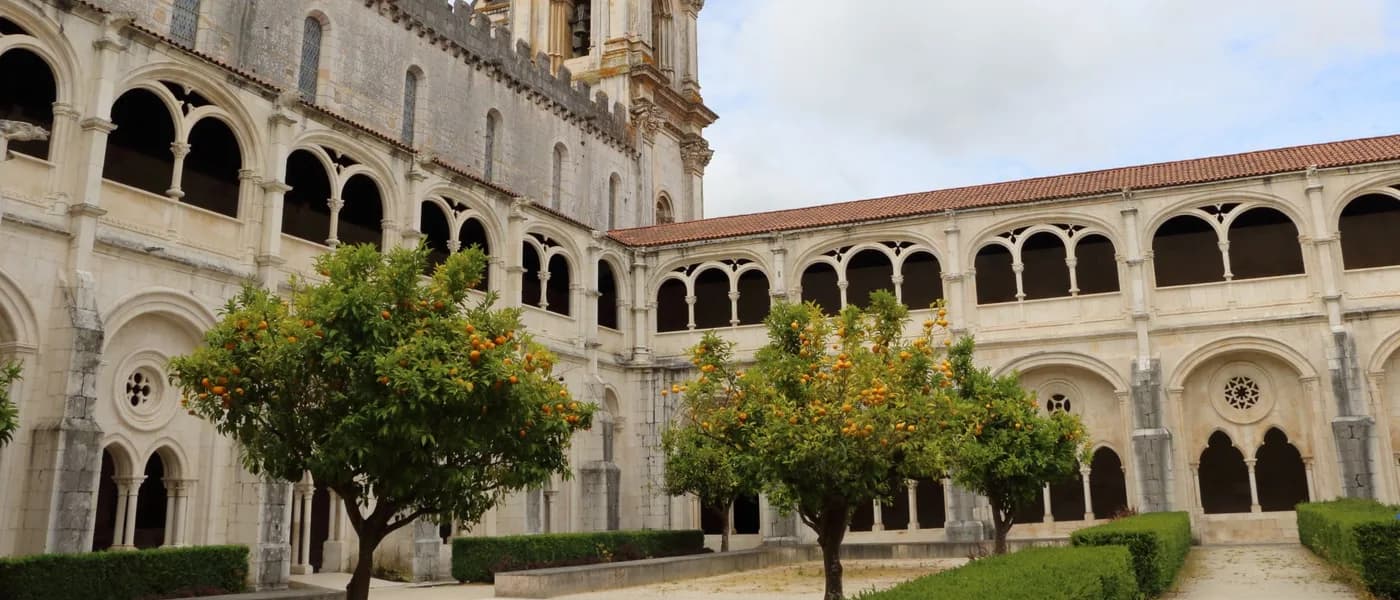
The scale of the Cistercian nave does what religious architecture rarely manages today: it leaves you speechless. It's one of the largest medieval churches in the Iberian Peninsula, and Cistercian austerity, with no excess of ornament, lets the space breathe in a way that isn't common in Portuguese monasteries. The cloister of D. Dinis, in Ança limestone, combines Gothic and Manueline in a transition that only makes sense up close.
The ongoing exhibition on the monastery's terracotta sculptures, the result of a partnership with the Museu Nacional de Arte Antiga, gives access to pieces being conserved: watching the restoration happen is another reading layer the normal visit doesn't offer. Walking out of here without getting that Alcobaça was, for centuries, the symbolic centre of the country is hard.
stone, terracotta and what conservation reveals
The project to safeguard the terracotta sculptures is underway and the exhibition "Anjos... de visita à família" turns that into something you can visit until June 2026. They're pieces that spent decades in the background, now with their own light and context.
The limestone used in the construction comes mostly from the quarries of the Ança and Alcobaça region, the same material that defines Gothic sculpture in central Portugal. You see it in the cloister, in the tombs, in the window frames: it's a stone that works well in fine detail and that ages with a particular colour, somewhere between white and a soft gold.
what you'll find
- the tombs of D. Pedro and D. Inês, which justify the visit on their own
- a Cistercian nave without ornament that shifts your sense of scale
- the cloister of D. Dinis with Manueline detail on the gargoyles and capitals
- terracotta sculptures in a context of active conservation
- a shop with publications on history and heritage above the usual standard