between the Tejo and an idea of a water city
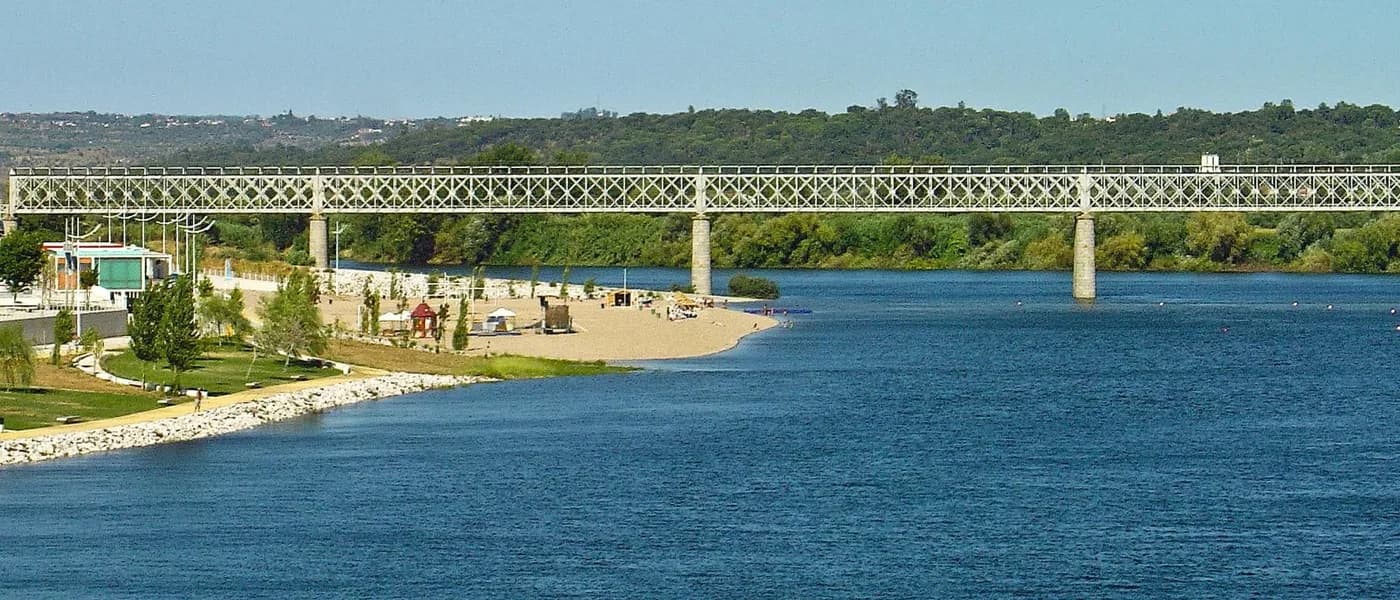
There's a place in Abrantes where the Tejo isn't just background scenery: it's the central argument. The Zona Fluvial Aquapolis was born from a conversion of the riverfront, with floating structures, boardwalks and a marina that transformed a historically industrial bank into a leisure area on an urban scale.
The Aquapolis occupies a position on the river that few Portuguese riverside leisure spots can match: the Castelo de Bode reservoir begins nearby, which means the Tejo, in this stretch, has the width of a lake and the depth of a dam. The water behaves differently from the free-flowing Tejo, calmer, more predictable, with reflections that shift throughout the day in a way the current normally doesn't allow.
The immediate surroundings combine the river with the silhouette of Abrantes up above, the castle and the Igreja de Santa Maria visible from the quay. It isn't a beach hidden in a valley, it's an open space with the city above and the Tejo in front, which gives it a different scale from the river beaches tucked into the mountains. You come to the Aquapolis and you have river, you have waterfront architecture and you have the feeling of being inside a city that decided to turn its back on the hill for a day.
the tejo upstream of the castle
Abrantes was for centuries a strategic point on the Tejo, used as a river port and defensive position. The bank where the Aquapolis now stands carried that memory of movement and trade. The conversion to leisure use is relatively recent, but the river-castle-city axis remains visible from the water, and grasping that overlap changes what you seem to be doing when you're simply lying in a sun lounger.
come prepared for
- a river with reservoir behaviour, influenced by Castelo de Bode upstream
- the view towards the castle and the Abrantes skyline on the hill
- floating structures and boardwalks that are part of the experience
- a waterfront on a city scale, not a rural retreat