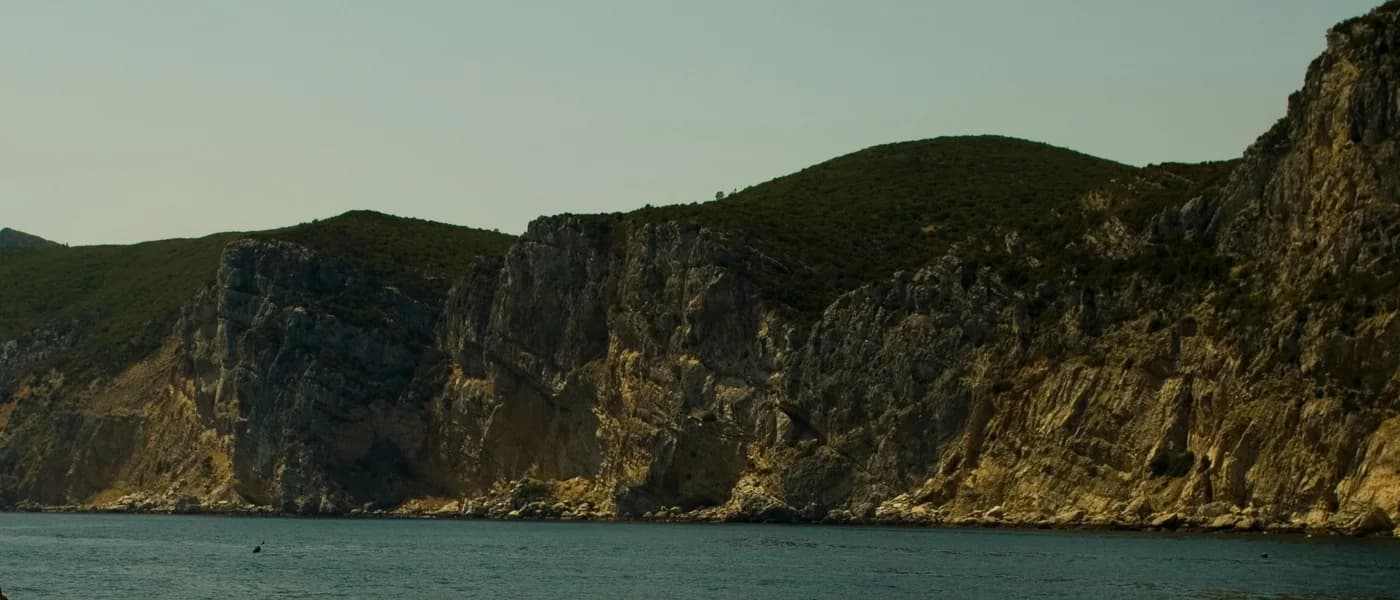
limestone, pine and serious sea
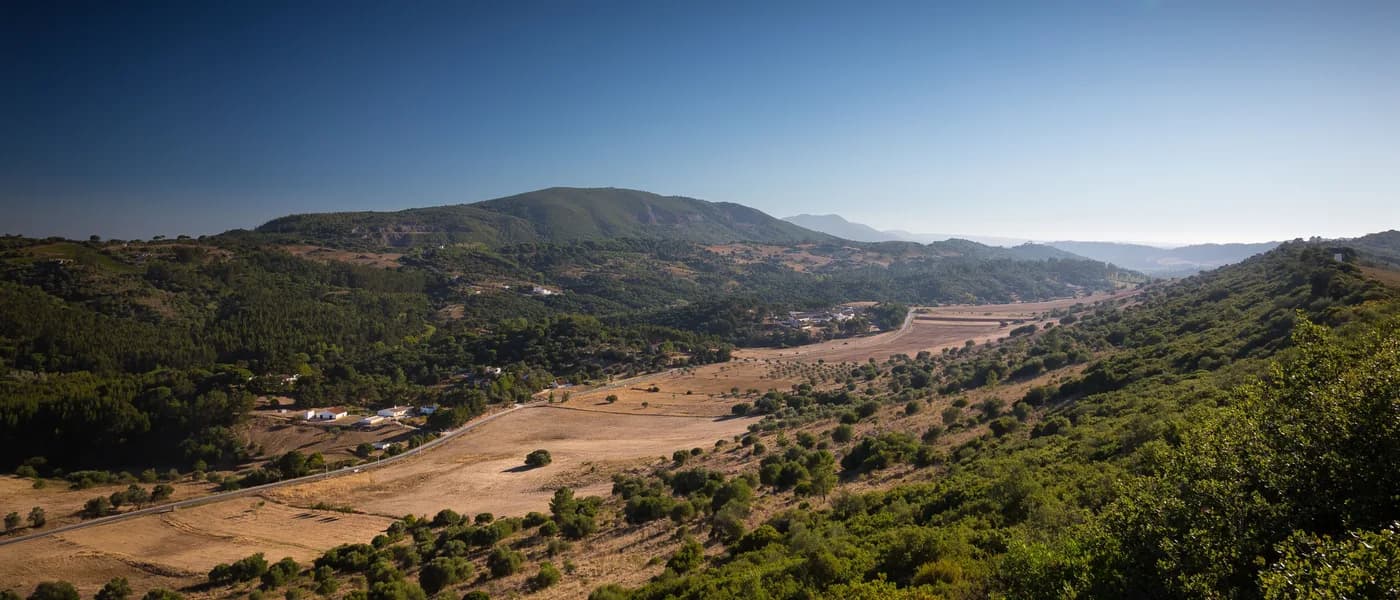
There's a ridge of rock that runs parallel to the sea for almost thirty kilometres, with its back turned north and its face exposed to the Atlantic. That orientation changes everything. The Parque Natural da Arrábida catches southern sun all year round, shields the interior from cold winds and creates a microclimate where Mediterranean species grow that you won't find anywhere else in mainland Portugal.
The serra is limestone, and limestone works differently from granite or schist: it dissolves, opens caves, forms white cliff faces that drop straight into the sea. That contrast, pale rock against deep water, is what gives the Arrábida coast that colour that looks edited but isn't.
The park is divided into zones with different levels of protection, and that directly affects what you can do and where. The Reserva Natural da Berlenga has the reputation, but the Reserva Integral da Arrábida, the most restricted core, is less known and is where the Mediterranean shrubland vegetation, called matagal, remains densest and oldest. Some patches have shrubs that have been growing undisturbed for decades, a rarity in a coastal strip this close to Lisbon.
You arrive via the road that winds along the top of the serra and you grasp the scale of the place before you see the sea. When the sea appears, you already know this is something else.
underwater too
The park's protection extends to the sea, and it's not just formality. The Arrábida marine reserve is one of the oldest and best-preserved on the Portuguese coast. The depth increases rapidly from the shore, the water is cold and clear, and the underwater biodiversity has been documented for decades by researchers from the Universidade de Lisboa, who have a station in the park.
For diving and snorkelling, there's a real difference between zones: some beaches have free access, others require authorisation. It's not empty bureaucracy. The species that still exist here, including large colonies of gorgonians and sponges, are directly due to that management.
go prepared for
- a mountain road with few guardrails and coaches passing in the same lane
- beaches with restricted summer access: limited numbers per hour, online booking required at some
- trails of varying difficulty, some without shade and with loose terrain
- Mediterranean scrubland with its own smell, especially after rain
- views towards the Sado on clear days, with the Tróia peninsula in the distance