portugal to scale, with 80 years of history
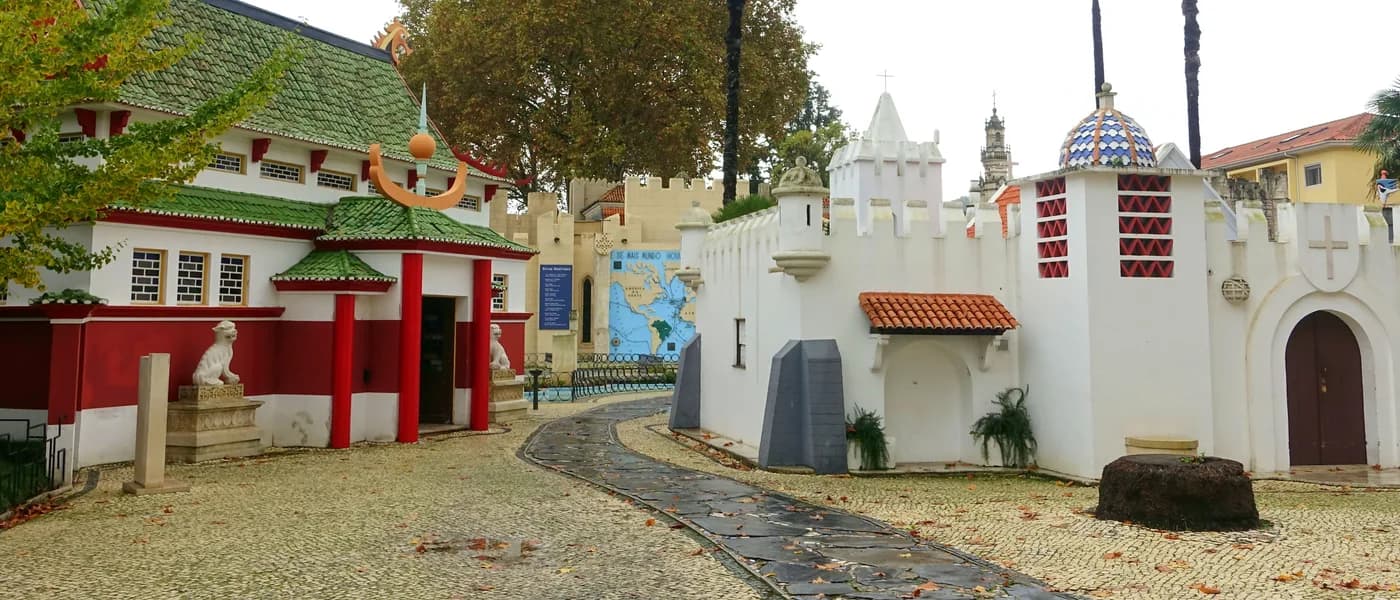
There are buildings here that come up to an adult's knees. Portugal dos Pequenitos was born in 1940, on the initiative of physician and philanthropist Fernando Bissaya Barreto, at a time when the country was presenting itself to the world with pride in its borders and its empire. That origin marks everything you see: the meticulous architecture, the choice of territories represented, the vision of Portugal the park crystallised.
The park is divided into themed areas that cover the mainland, the archipelagos and the former Portuguese colonies. Each zone has its miniature buildings, replicas of recognisable monuments, regional houses and historic buildings reproduced in detail. For a small child, the scale flips everything: you're the giant, for the first time.
Today the space is managed by the Fundação Bissaya Barreto and includes museums inside the park, with collections of regional costumes, toys and antique furniture. The education service has its own programming for school groups, which explains the organised visits you keep crossing paths with.
Even without kids alongside, it's worth going in with your eyes on the miniature architecture and the layer of time the whole thing carries. You're in Coimbra, a stone's throw from the Mondego, in a park that was built to teach an idea of a country and that today, almost without meaning to, teaches a great deal about the era it was made in.
what sets it apart from other theme parks
Portugal dos Pequenitos isn't an amusement park. There are no mechanical attractions, queues or special effects. The experience is of a different order: walking between representations of an entire country, at a scale that changes how you perceive space. The museum dimension inside the grounds, with real collections displayed in themed buildings, turns the visit into something with more layers than it looks from the entrance.
what you'll find
- miniatures of national monuments, the archipelagos and the former colonies
- museums integrated into the route, with costumes, toys and furniture
- school groups on organised visits, especially on weekdays
- the aesthetic signature of the 1940s in every architectural detail
- green space with shade, easy to walk around without much effort


